


I’ve started to photograph with slides not long ago, by influence of my mentor Steve McCurry and what he has done both with Kodachrome film back in the time, but also the way he does his modern digital workflow.
I got some slide film + chemistry, and learned the complex development process of developing with E6 chemistry (CC post). After developing my first 5 rolls, I took some interesting conclusions about this special media, which I want to share with you in this post.
If you like reading thoughtful processes, please consider subscribing to Camera Clara, it’s free and you have access to insightful topics regarding photography.
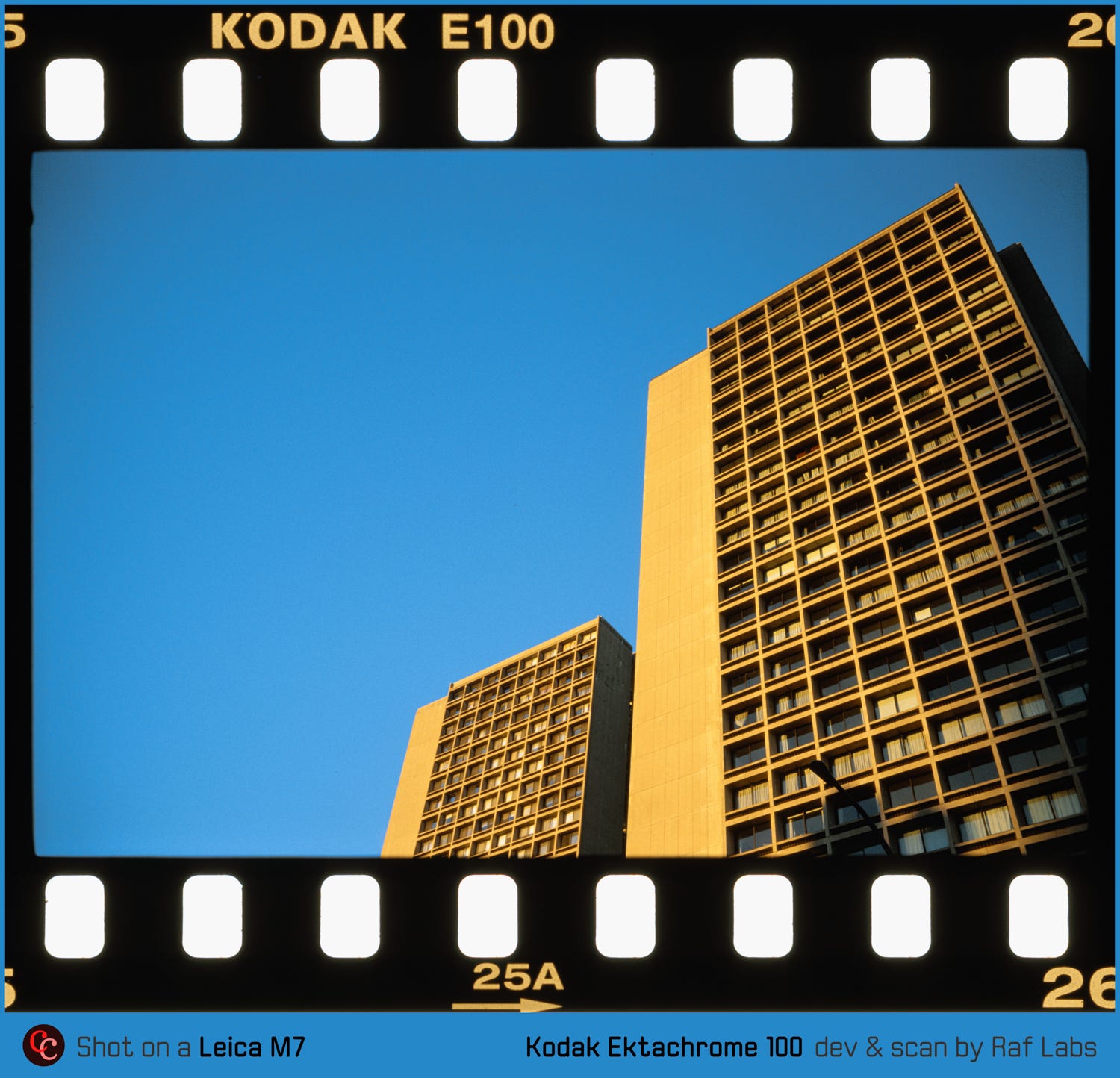
Slide film looks different than anything you have seen with your eyeballs. It’s like seeing the aurora borealis (a.k.a. Northern Lights), or seeing Saturn over a telescope. It’s just different because there are no screens, no projections, no printing involved, it’s a uniquely different and new type of media that cristalizes the satisfaction of seeing an image result as an end-to-end analog process, but it’s more engaging/entertaining than looking to a darkroom print from a negative film. I simply can’t explain with words the amount of resolution and sharpness I see when looking at a positive film against a light source.
I think that’s because in today’s world, our eyeballs are used to see, primarily, 3 types of objects:
Real life objects (duh)
Printed assets
Things on a screen (or projected)
Slide film is different from all these three. The amount of resolution a small 35mm frame shot contains is absolutely outstanding, and when you deal with medium format, it’s even better.
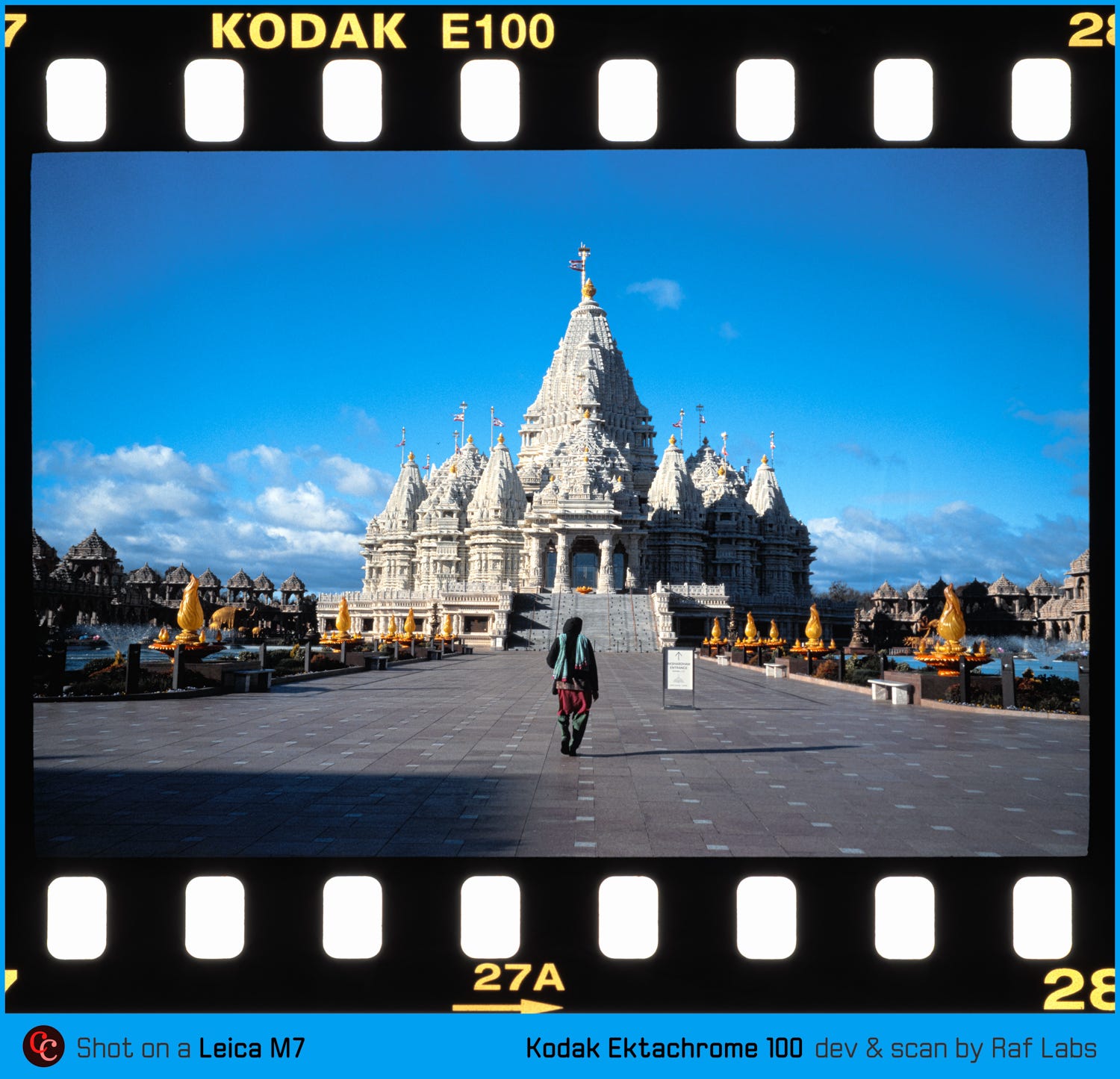
I am not even talking about the contrast and colors, I am purely talking about resolution here.
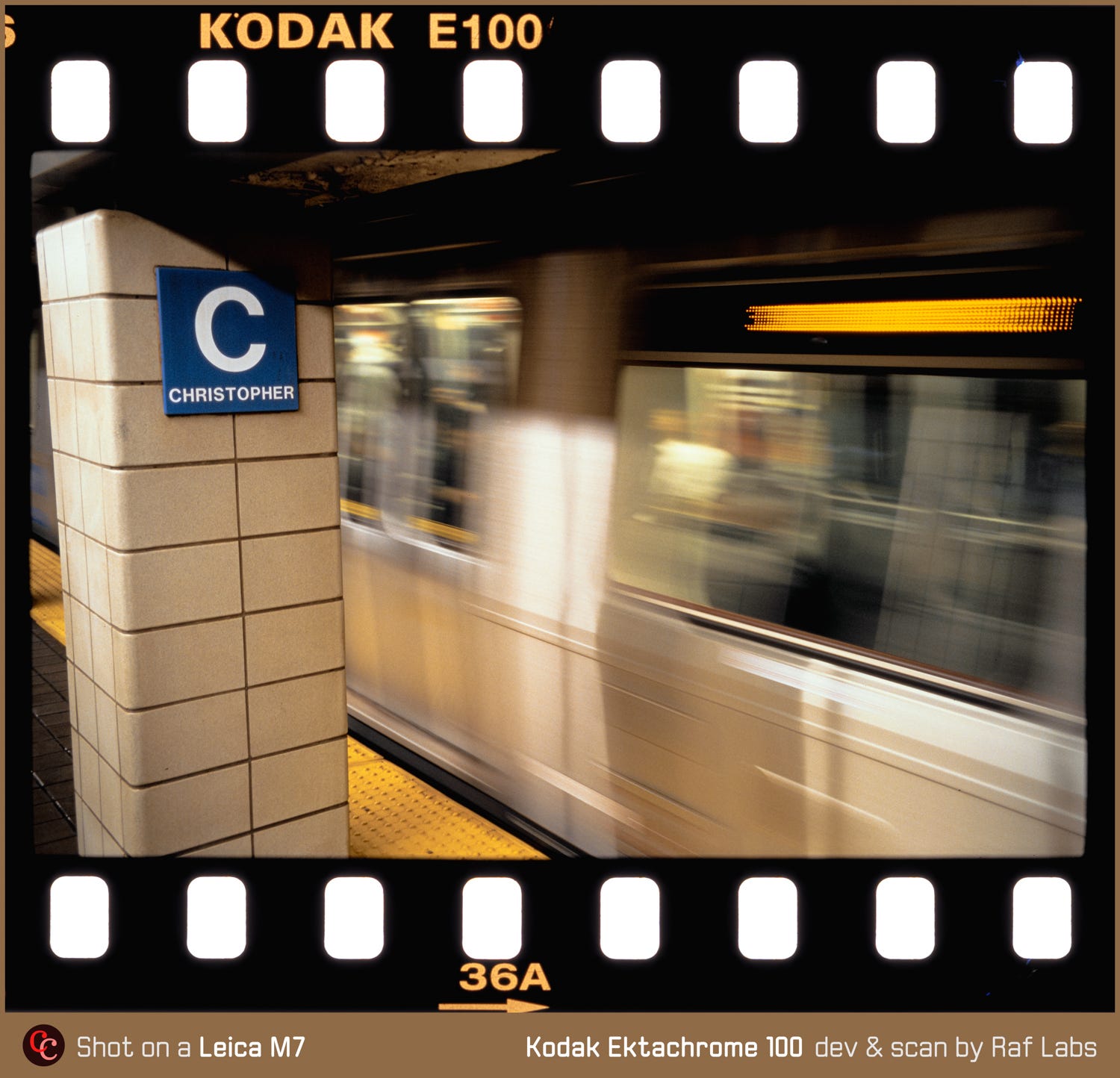
Now, leaving the media itself aside and focusing on the photographs itself, here’s another consideration: most slide films are low ISO, Like Ektachrome E100, ISO 100. That low ISO forces me to use longer exposures than I would typically do, and also kinda forces me to use lenses with a focal length lower than 35mm, to control camera shake, for example this photo inside the Christopher Street’s PATH station (NYC):
The contact sheets are also super interesting to look at, it’s beautiful.
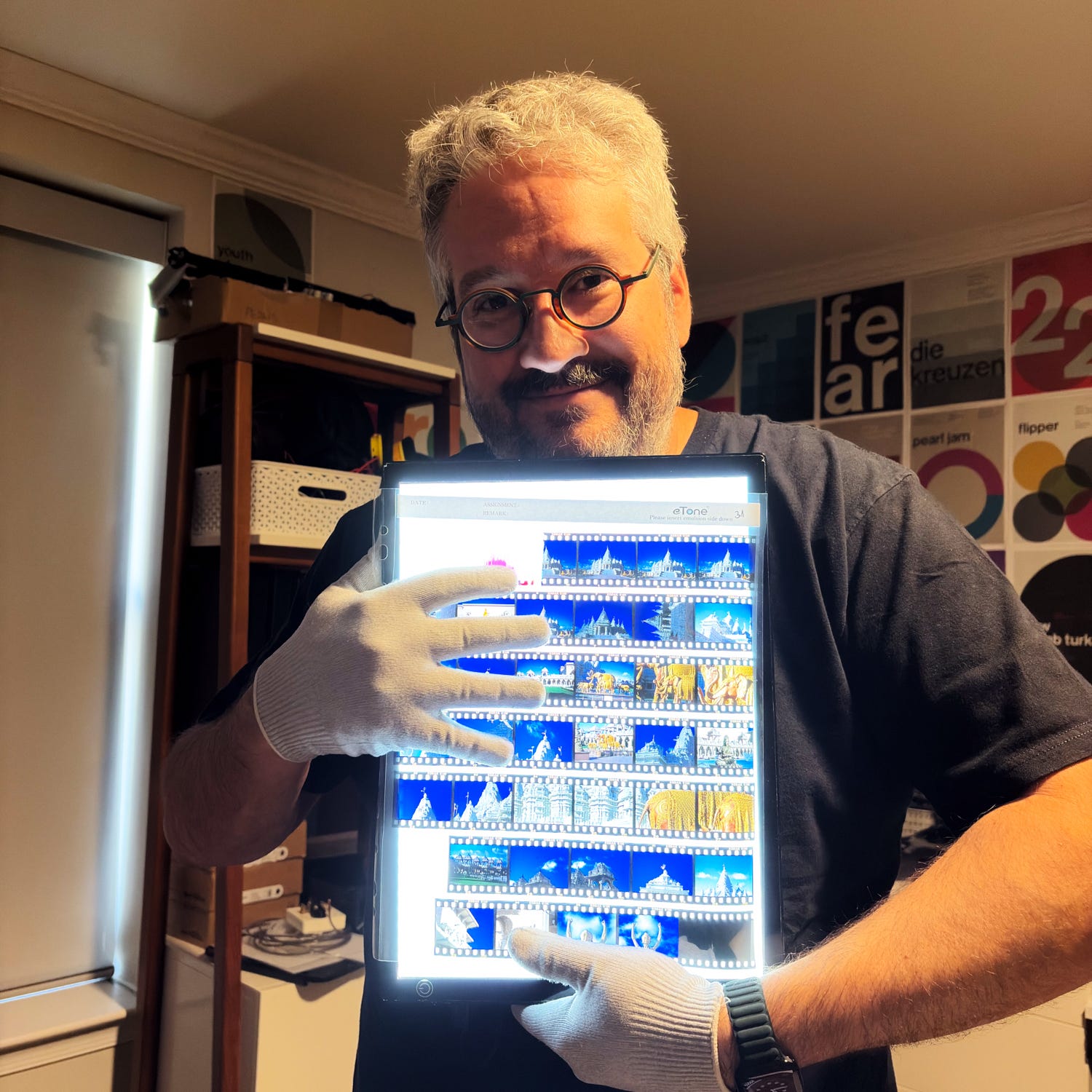
In addition, another advantage of slide film is that it’s easier to scan, simply because you don’t need to convert anything from negative to positive. The results of the chemical processes are already there, so a well-calibrated monitor helps in pushing sliders in Lightroom for easy matching.
If you develop at a Lab that develops slides, get the slides back and look at them with a naked eye.
How about you? Have you developed slides? Projected them? I can't imagine how cool it would be to gather at someone’s house and project slides and appreciate infinite resolution photos projected over a wall, during Sundays, with food and drinks.
Liked this post? Share it by clicking on the below button.

I have shot one single roll of Ektachrome medium format film and it is an amazing film. I'm glad I had that experience, maybe one day I will do it again.
There is something special about slides! I don't use slide film much anymore (or colour, for that matter). But I've had the chance to use it in 35mm, 120, and even 4x5. The large format stuff is magic!