


The last time I developed E6 at a Lab, it cost me $50, results were not satisfactory, and it took me a whole month of wait. That’s why I decided to do it myself.
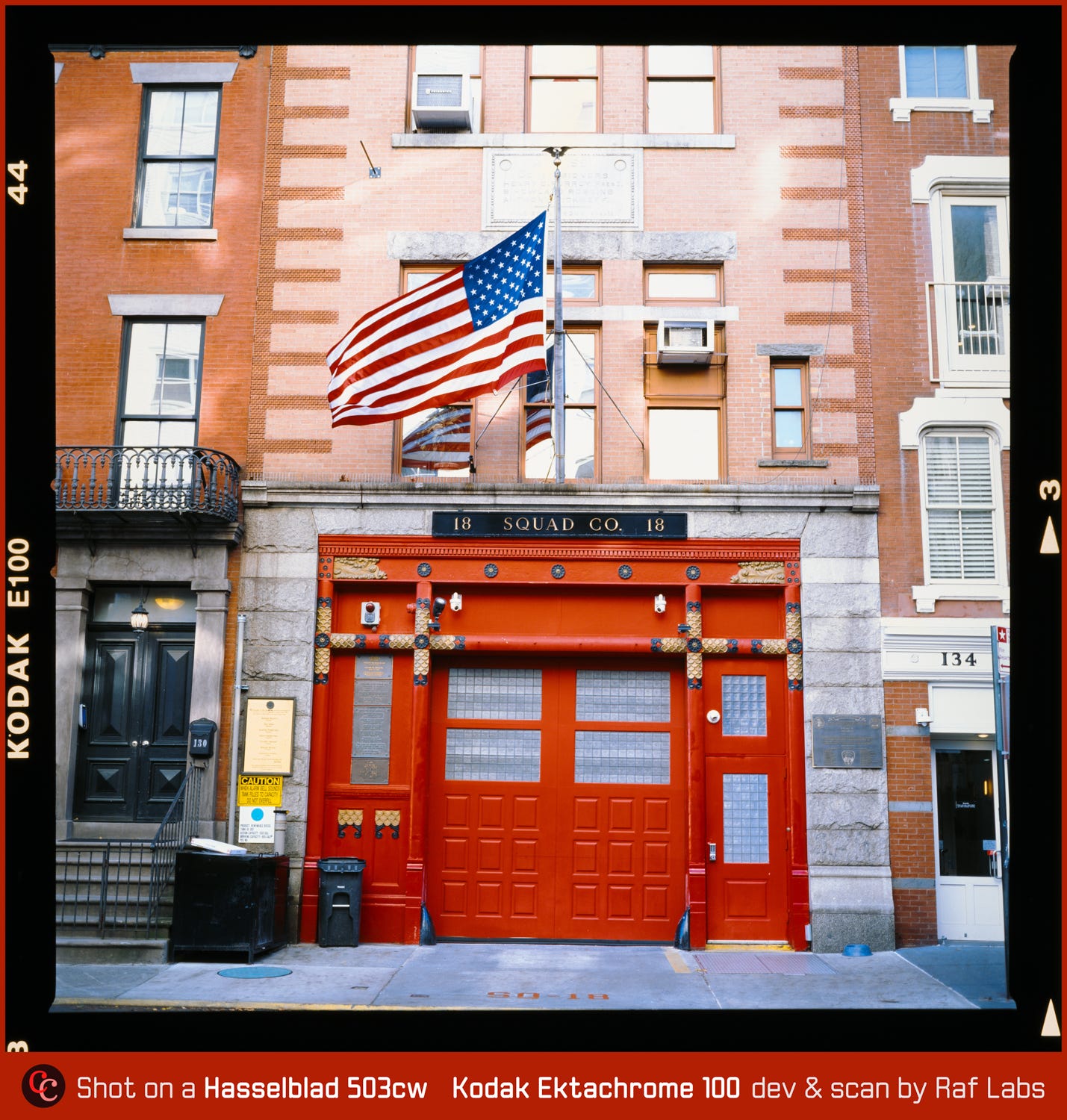
If you are not familiar, E6 is a different chemical process when compared to the C41 (color negative). It needs a positive film, like Kodak Ektachrome or Fujifilm Velvia, and produces positive images on the emulsion, which can be projected to a wall. Seeing the positive images with your own eyes on the emulsion hits different, especially if you are looking to medium format media like 6x6 or 6x7. They look like this:
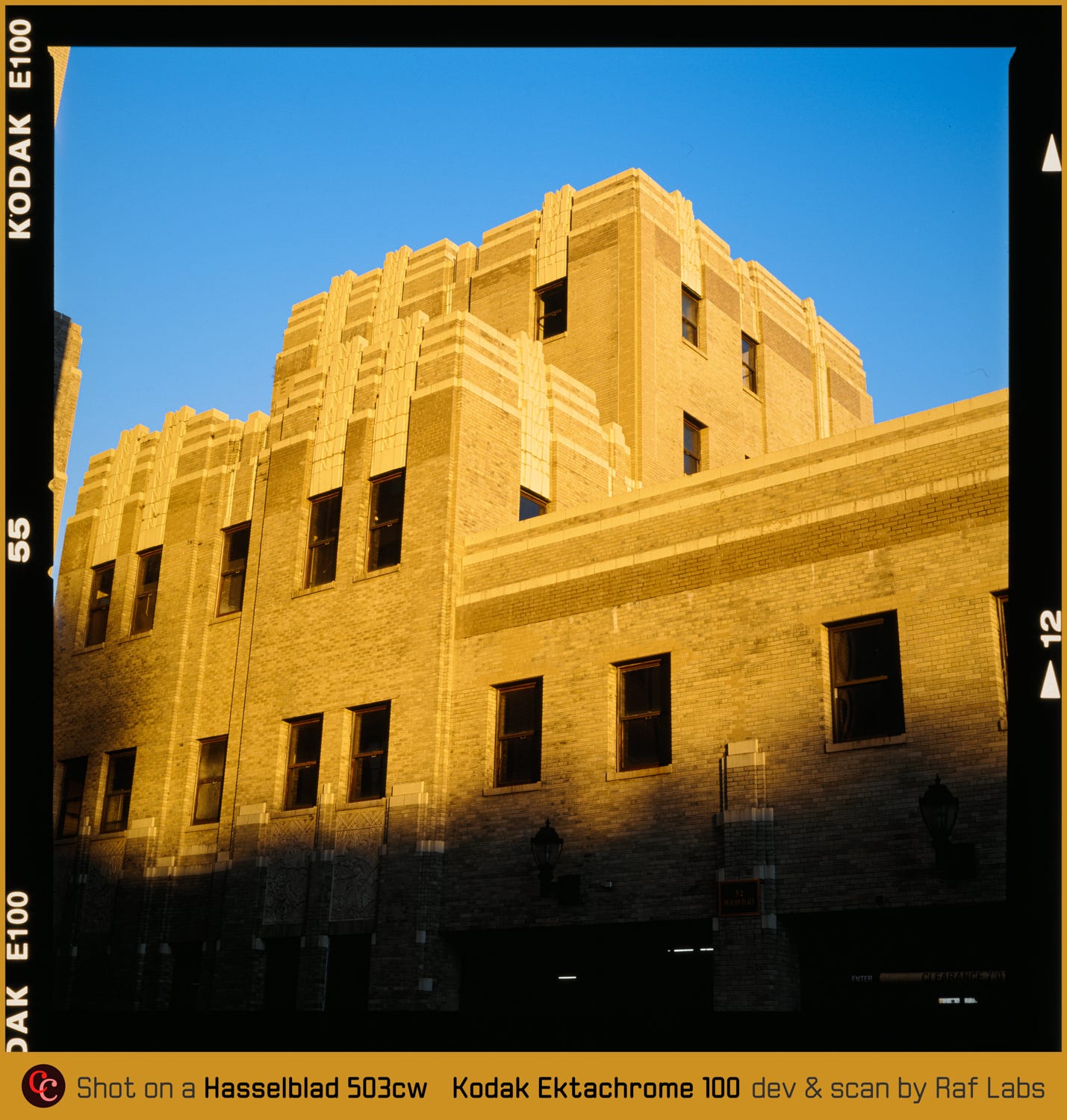
Contrast is also stronger on slide film, and scanning is easier because of two main reasons:
you don’t need to convert, and…
because of that, you can fine tune the image in the computer to match what you see in the real world. A calibrated monitor is key for that.
Note: I was gonna write “it hits differently, and here’s why”, but it sounds too much AI slop Fuck AI. I wrote this whole thing from scratch and I’m not giving AI a single credit for anything here.
Thanks for reading Camera Clara, the Publication that helps you learning more about photography culture, keeping high standards with fine art, publications, prints, books, and all the good elements photography can offer to us all. ❤️
Please consider subscribing to for more articles right in your inbox! Quality over quantity, with the forever love for film photography and its techniques. With a paid subscription, you can also send me a DM anytime, and we can arrange video calls where I can help you with your photograph needs, up to you, of course, no pressure!

The E6 developing process itself
It is labor-intensive and requires discipline.
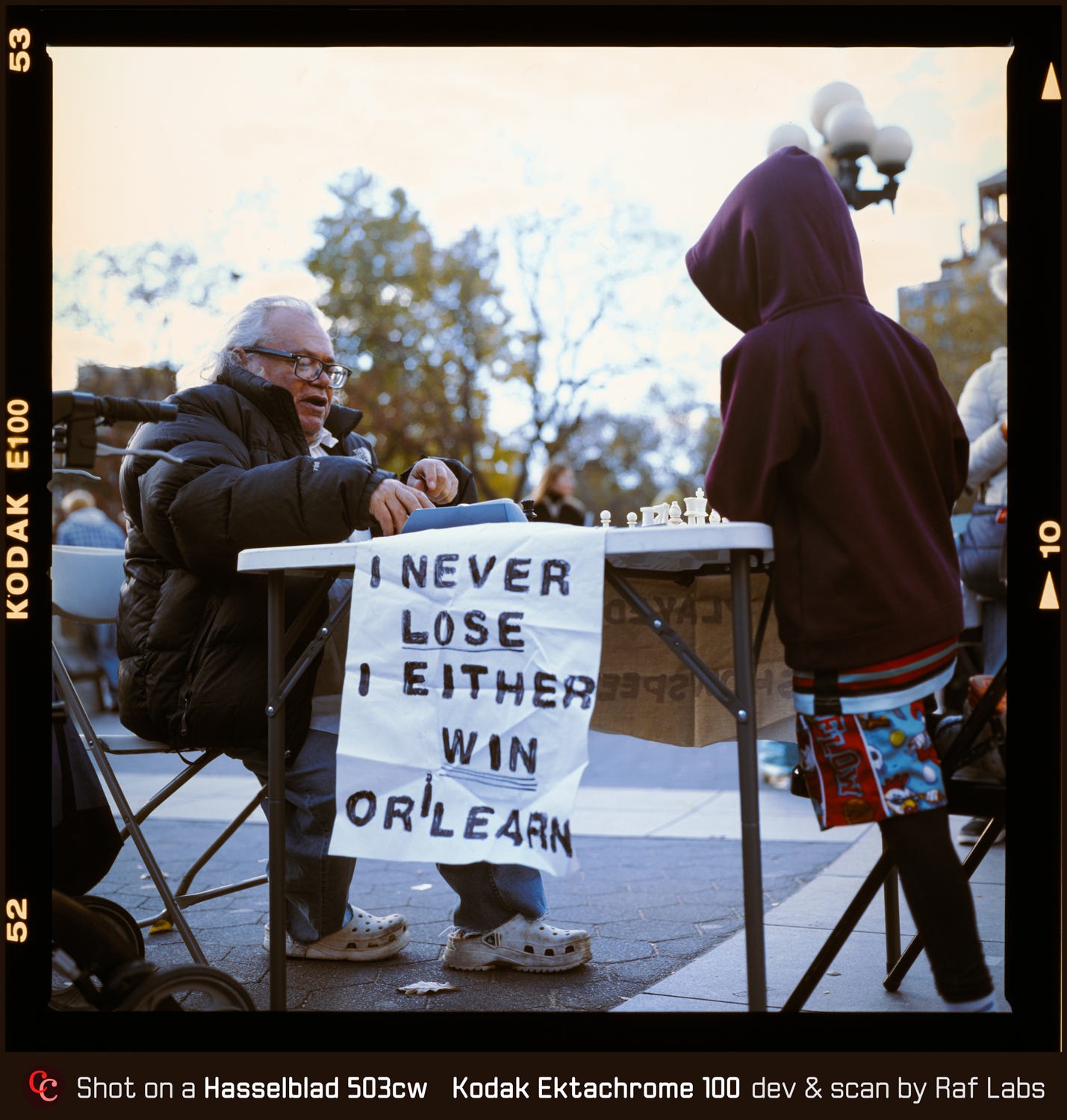
Slides in general require discipline: to buy, to shoot, to develop, to scan. But developing E6 requires more labor than anything I’ve seen so far in the film developing journey. Here are my thoughts on the E6 developing process. I’ll finish this article saying if I recommend doing it at home or not.
I got the Bellini E6 kit, composed of 7 (yes, SEVEN) baths. It’s a lot of bottles, and the first advice I give you is: use gloves.
It might sound dumb, but it’s so many bottles and chemicals getting in and out, that eventually, one spill here or there will leak to your hands. I know gloves, masks, a fucking hazmat suit are recommended to develop film, and that’s what every pure soul on Reddit recommends, but reality is that nobody kinda does, since we’re not Lab workers dealing with dozens of liters of chemicals a day.
Use the gloves, even when home developing E6. That’s my first recommendation.
The easy part is that chemicals don’t need to be mixed at temperature, that makes chemical mixing so much easier. Mixing is one of the most annoying parts of developing film at home, and for E6 you don’t even need distilled water (which I used it anyway).
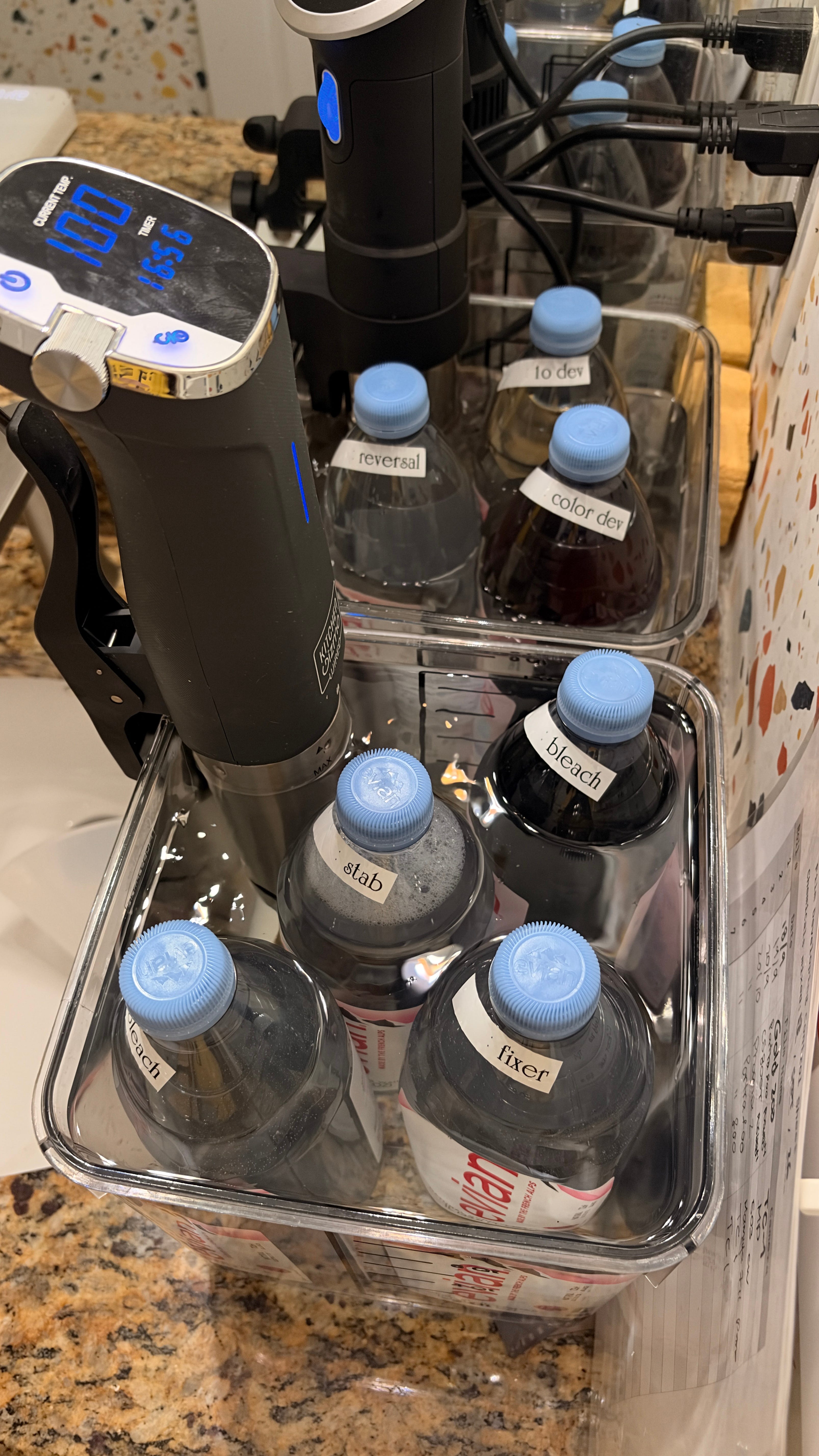
I used 1L plastic water bottles, they’re perfect for the Bellini 1L kit I bought especially because you can easily acquire new ones (just buy 1L water at the closest grocery store), and you can bring it all to your favorite Lab to discard, without having to wait them to rinse and give you back. It’s also easy to remove air from 1L bottles when you deal with a 1L chemical kit, just press the bottle a little bit, leave a minimal air gap, and you’re good to go.
Make sure that the bottle is not pressed when you’re pouring back chemicals from the tank to the bottle, that’s because chemicals expand and get some bubble with the agitation, and it may overflow if it encounters a smaller bottle when it needs to come back home — not good.
The end-to-end developing process takes 30 minutes…
…and you might think it’s harder to control temperature with such a long developing process, but it’s the opposite, it’s easier, and that’s because temperature gets stable after you hit every component involved with the target temperature for a while. You just gotta be attentive to one specific aspect:
The Bellini E6 manual advises warming the tank without water. That means no pre-rinse to warm things up (as we typically do), so I over-compensate temperature for the first developer, allowing it to cool down when it reaches the cold tank for the first time, reaching the 100.5 F target as required by Bellini.
Liquid Glass, lol.
That is why I use two sous vide water circulators with different temperatures. The first dev goes in one with that higher temp, the other chemicals in another at target temp (100.5 F). The process takes a freaking whole half hour, so by this time, the tank itself reaches a stable target temperature, so temperature control is easier.
There’s also two large rinsing parts in the process, and one of them asks to gradually lower the temperature, so playing with the faucets and monitoring with an external thermometer is key — I slowly close the hot water tap and open the cold one, bringing the film to room temperature and ready for the stabilizer bath, which is the 7th and last process.
As I said, there are a lot of bottles and you don’t wanna mess up with the process, otherwise it will be a costly mistake (each film roll is about $25)
The E6 (Slide film) economy
Cshot = cost per shot
Cfilm = cost of the film roll
Ckit = cost of the Bellini E6 kit
Nrolls = number of rolls a kit can process without quality degradation
Nshots = numbers of shots in a roll (i.e. 12 shots in 6x6, or 10 shots in a 6x7)
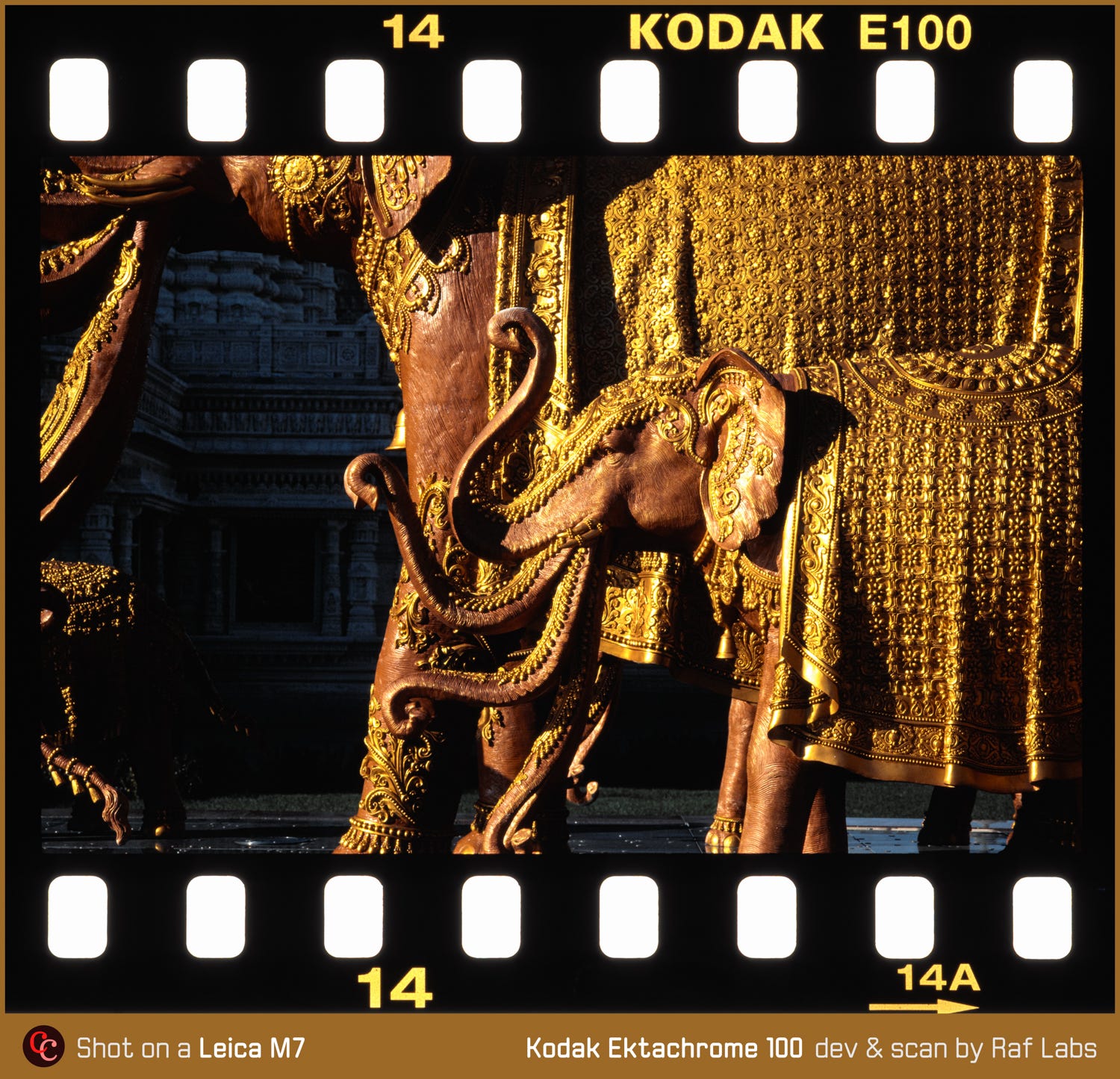
On a 6x6 film, the cost per shot is $2.46 (taxes included for film and chemicals), and I am not considering distilled water and Kodak PhotoFlo. In other words, it’s expensive.
The math gets worse with 6x7, from the Mamiya 7ii, for example:
That’s 3 dollars for a photograph.
Math gets easier on 135 film though (35mm).
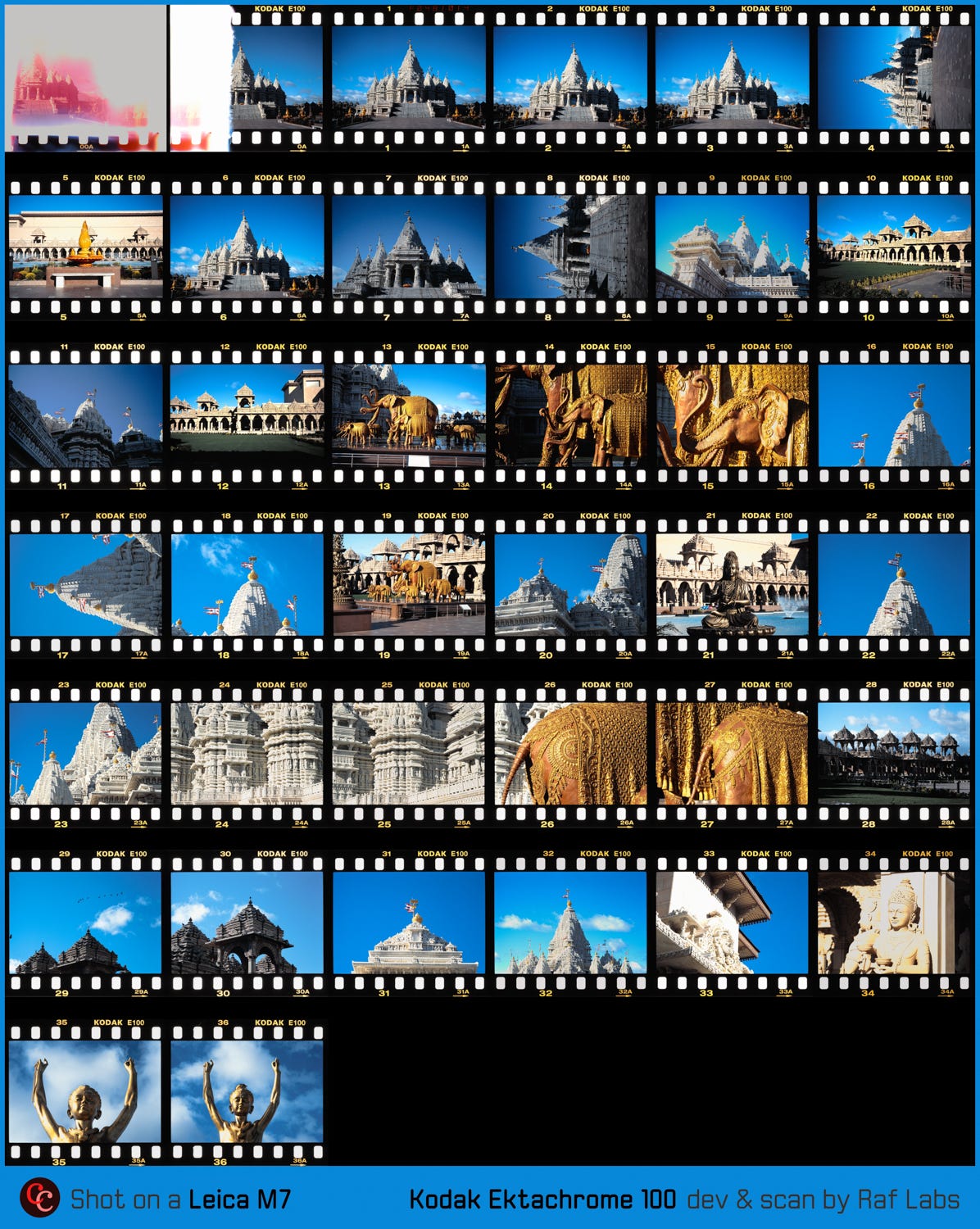
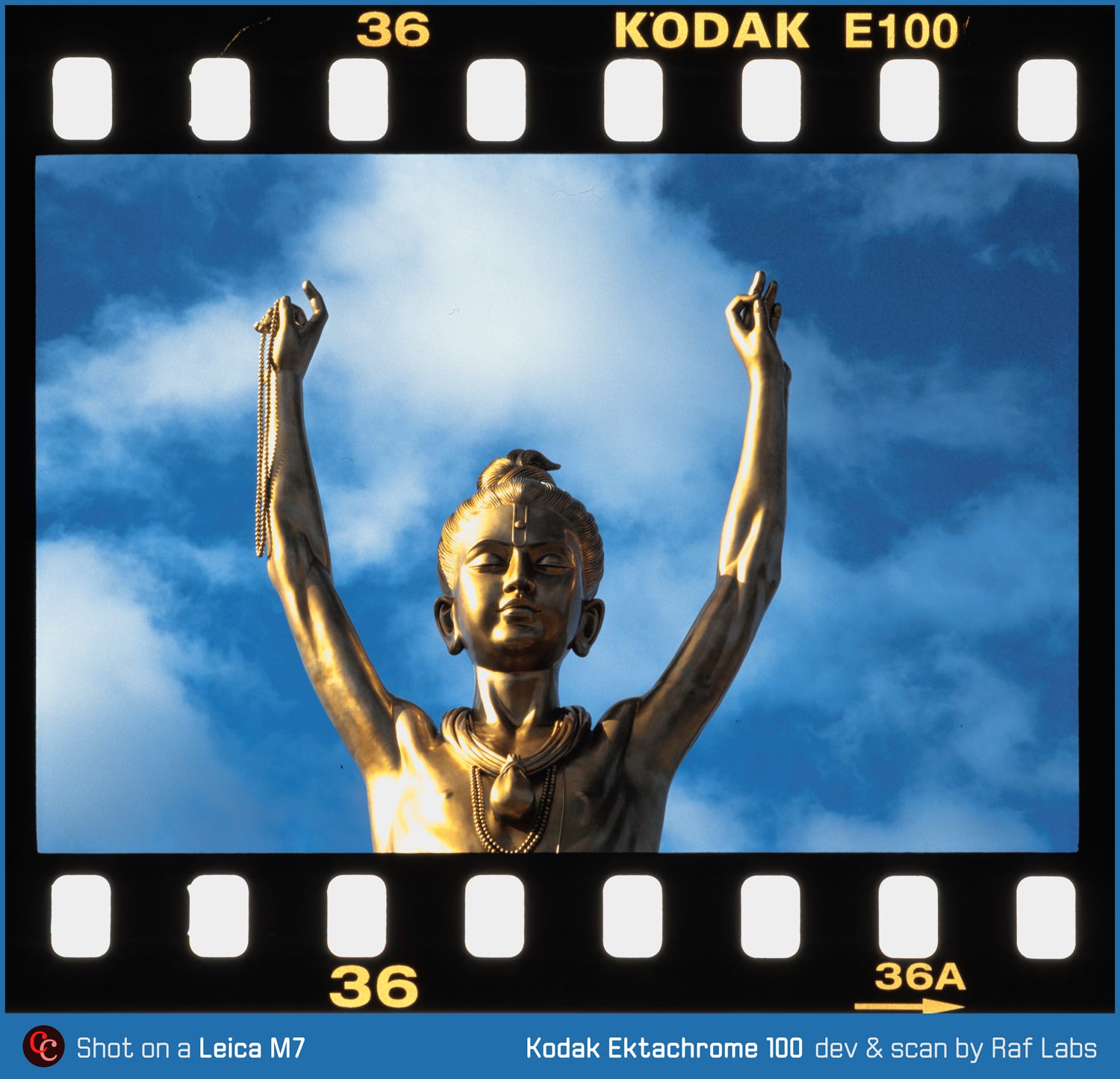
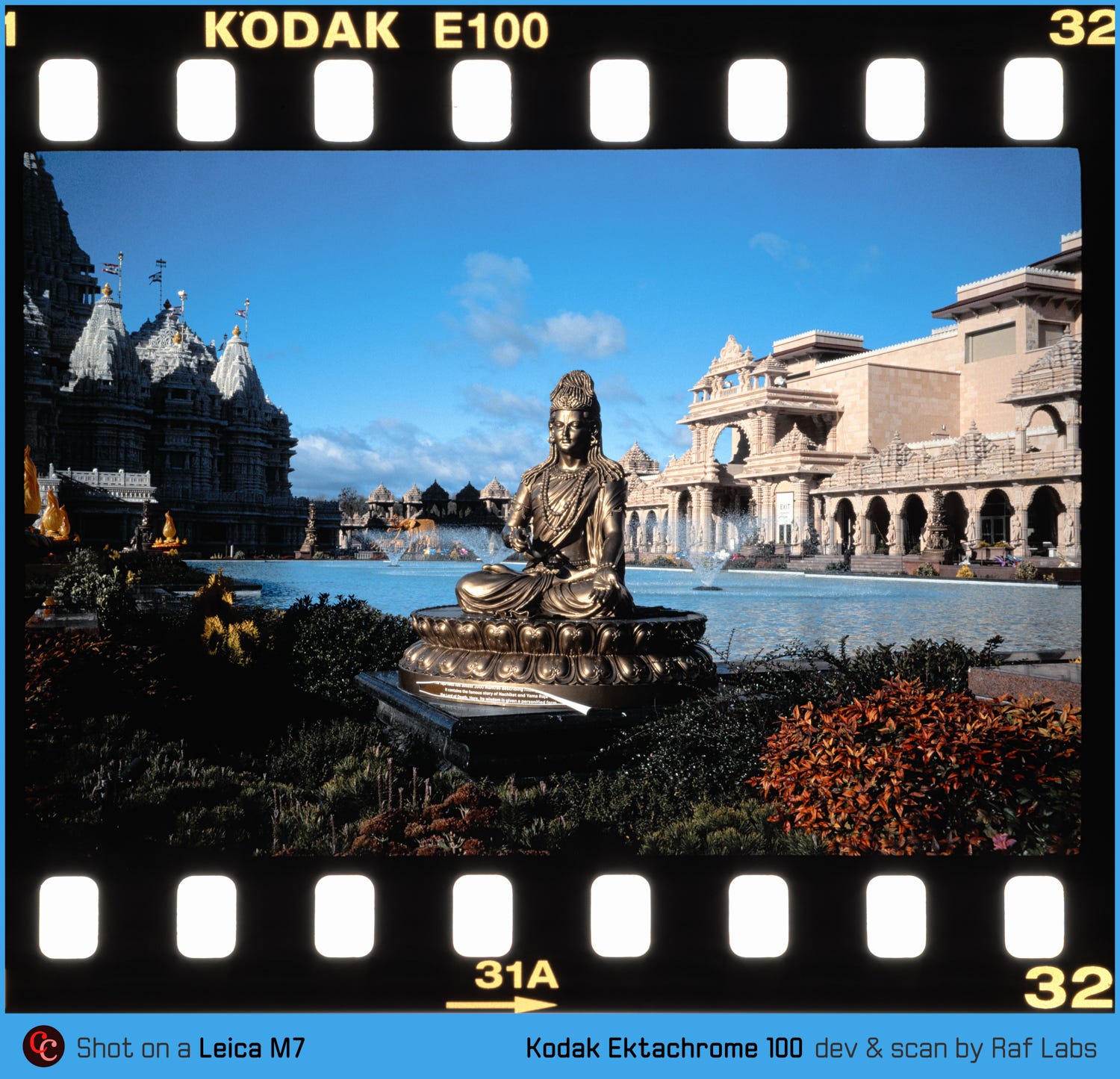
With an incredible $0.88 per 35mm shot like this one:
The inner steadiness gained though discipline
If you ask me if I recommend shooting slide film, the answer is depends if you have discipline or not, depends if you take photography seriously or not. Like, look at the above financial calculations. Who takes photography seriously enough to spend that amount of money per frame?
I do ¯\_(ツ)_/¯
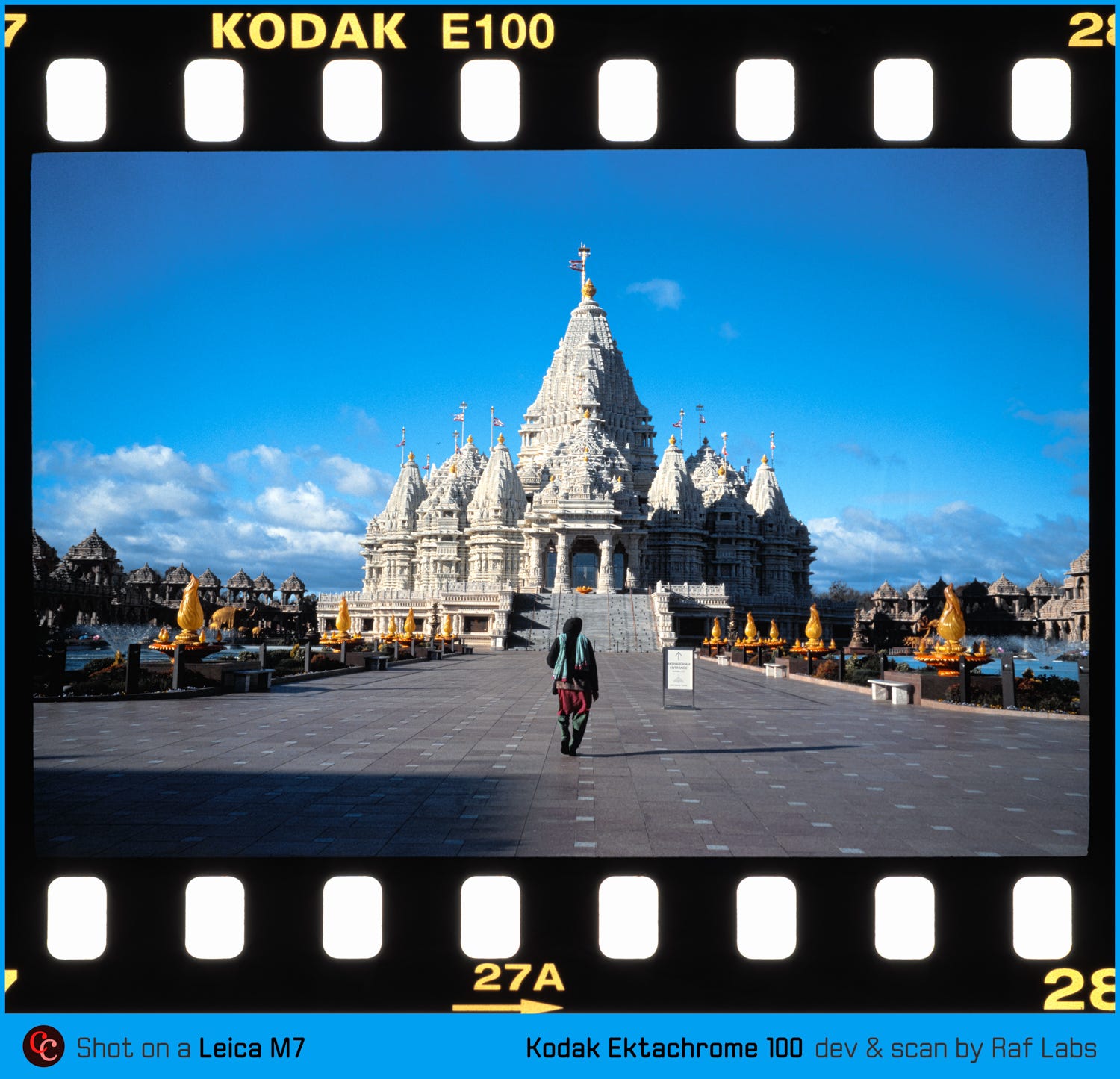
Look at those (full detailed post coming soon about the Indian temple in NJ):

That's cool! I still have a tank and some chemicals (for C41), but I never really got the colors right; it looked even more color-blind than I already am. Beautiful pictures!