


Note 1: this is a video-article. Make sure to click on the video to play the full thing (I know, Substack is confusing sometimes).
Note 2: This is not a traditional review in the sense we will fully cover tech specs. That’s not what CameraClara is for (go to PetaPixel or DPReview for that, they do a better job). Of course we will talk about specs here and there, but our conversation is focused on bringing the perspective from what an experienced street photographer thinks about Ricoh’s new street-photography camera.

Juno Morrow is a NYC street photographer known for her bold color work. Follow her at instagram.com/juno.morrow.
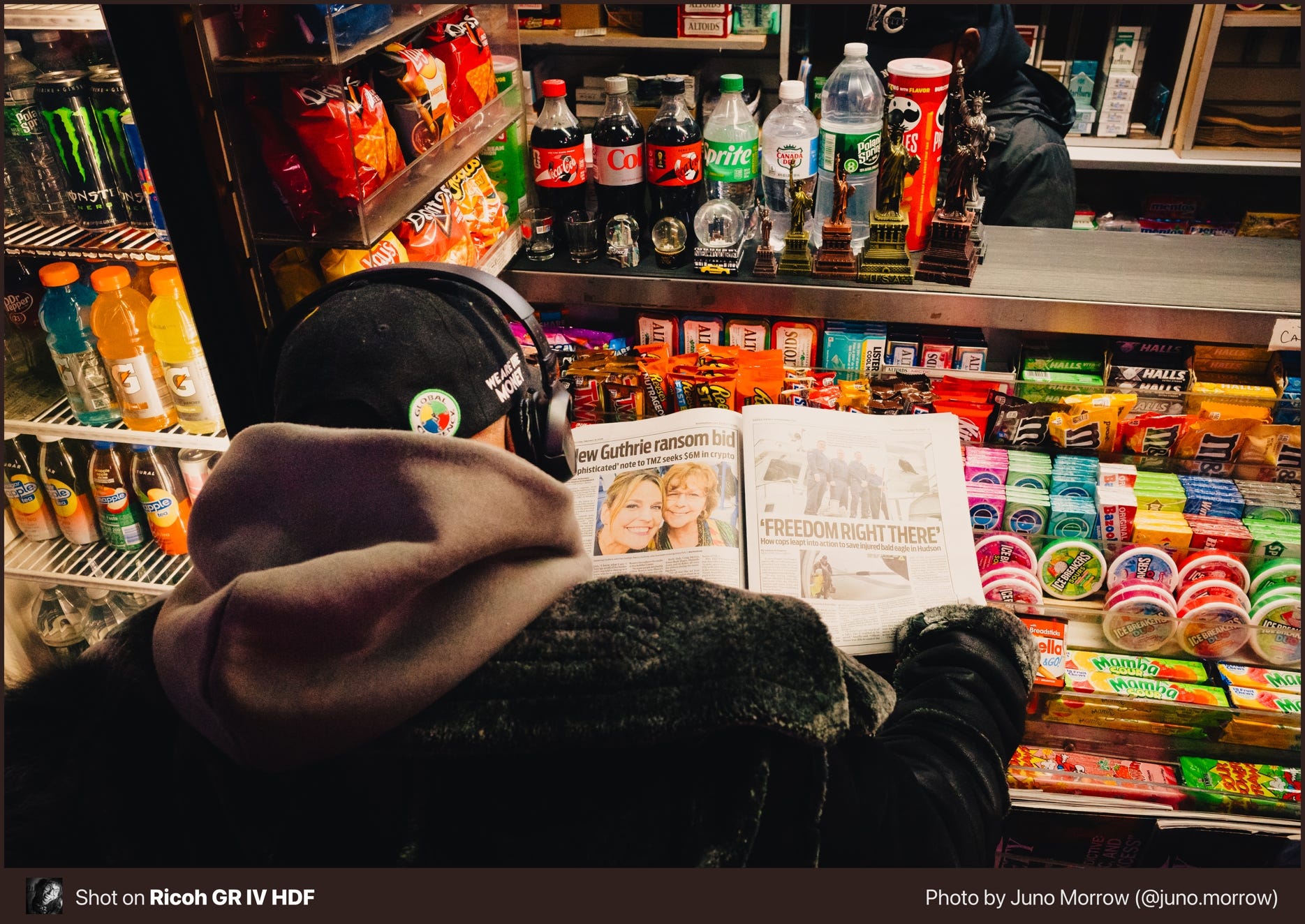
We sat down for a live stream to talk about her first weeks with the Ricoh GR IV HDF. Juno has been shooting street in New York for decades, mainly with a Nikon ZF. The GR IV is a big departure. Here is what she thinks so far.

What’s the HDF thing?
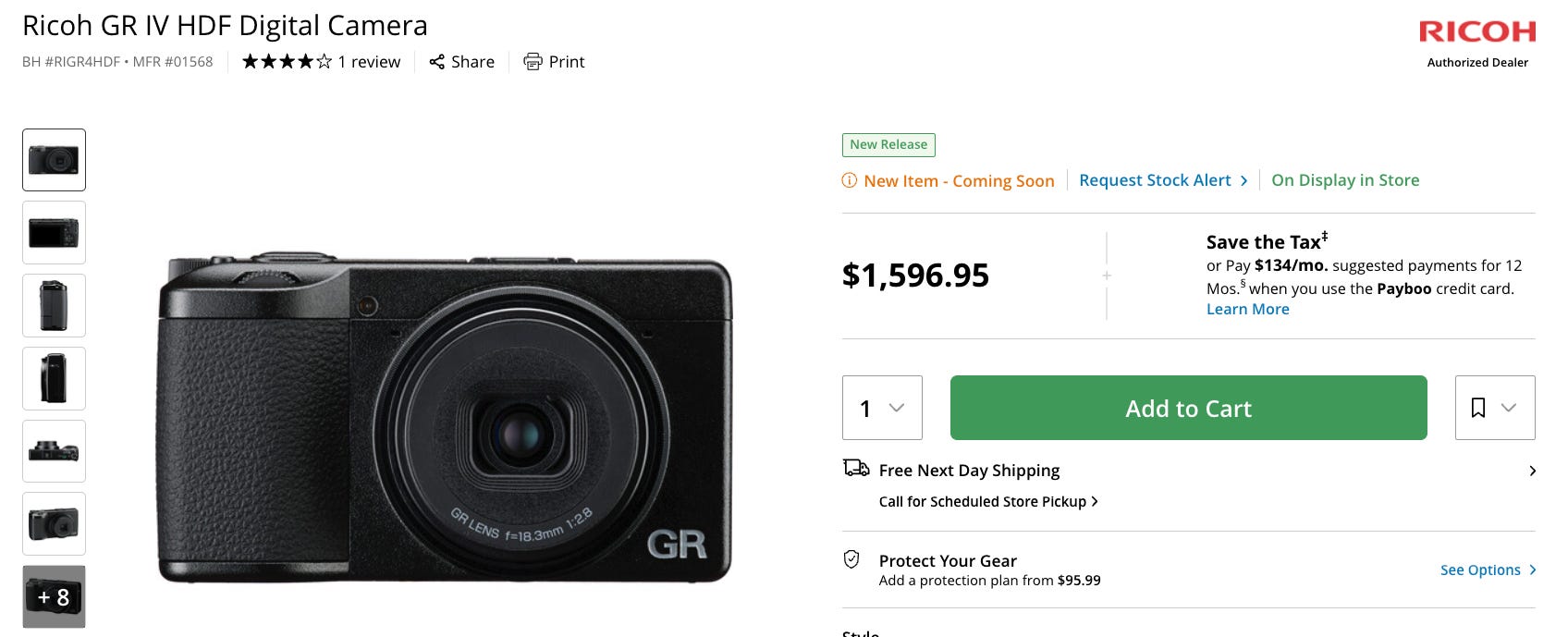
HDF stands for High Definition Filter. It’s a built-in diffusion filter on the lens that softens the image with a slight glow, similar to what you’d get with a physical filter in front of the lens. Ricoh sells it as a creative option for a more cinematic or film-like look. The HDF version costs $100 more than the standard GR IV.
The effect is more intense than Juno expected. The standard lens already has some diffusion built in, which she had only heard one other creator mention before buying. She has mostly kept HDF mode off and wonders whether she should have saved the $100 and bought the standard version. Still, it’s a nice option to have.

Positive points of the Ricoh GR IV HDF
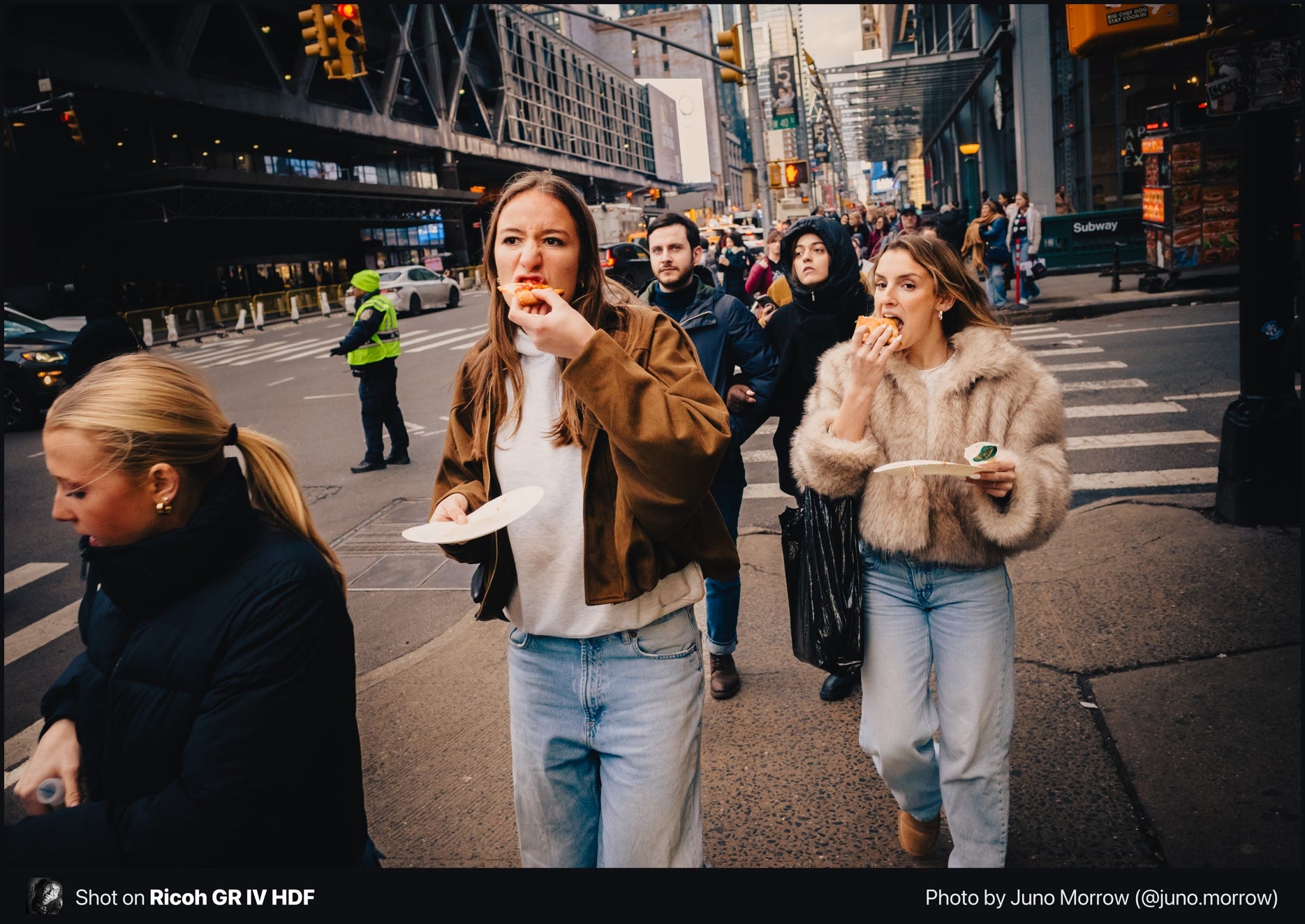
The size is the main draw, and it delivers. Juno is an overpacker by her own admission, often carrying several cameras and heavy lenses. Having something this light and pocketable is a real relief. She looks like a tourist with it, which works well for street. People notice it, shrug, and move on quickly.
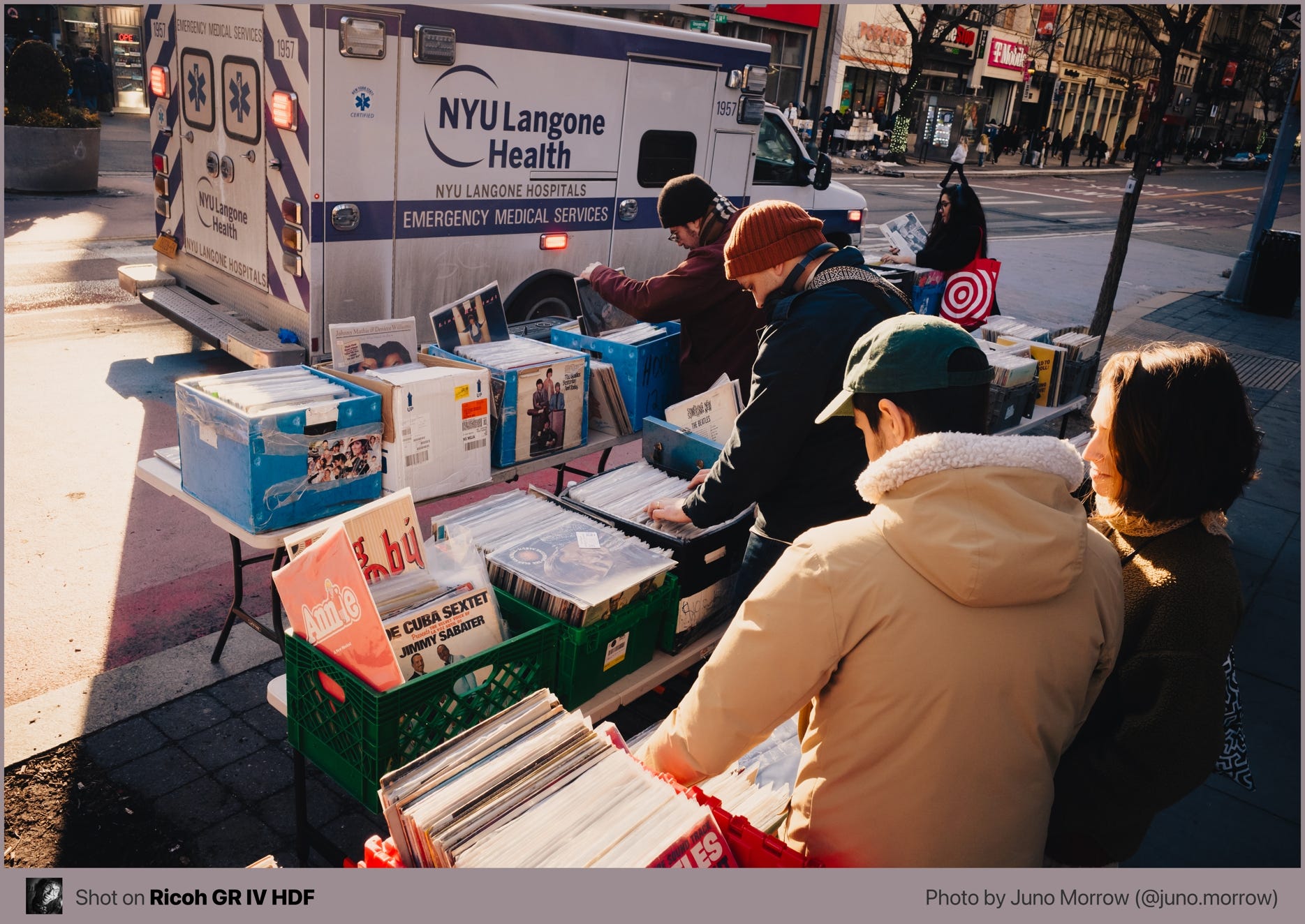
The lens is impressive. Zone focusing is also easier than expected, with the deeper depth of field on APS-C making snap priority mode much more forgiving than on full frame. The menu is well designed for street photography. If you skip auto-area AF and lean on snap priority, shooting is fast and straightforward.

Negative points of the Ricoh GR IV HDF
Build quality is the main concern. The buttons feel loose, the battery compartment is flimsy, and after just a few days, crud is already getting stuck in the lens mechanism. For a camera at this price, it does not inspire confidence.
The screen is bad. Low resolution, fixed, no tilt. Juno compared it to a screen from a 2008 DSLR, and the actual spec backs that up.
High ISO is a weak spot. Colors and dynamic range fall apart before noise becomes obvious. It’s acceptable at 3200 but nothing to celebrate. She notes this is her first APS-C camera in 14 years, so her tolerance for sensor limitations may be lower than most.
Metering is unusual. In night scenes, the camera meters for highlights and the results can come out very dark with no adjustments.
Framing from low angles is harder than expected. The camera is light enough, but the lack of a real grip makes it tricky to control the angle precisely.

What does she think?
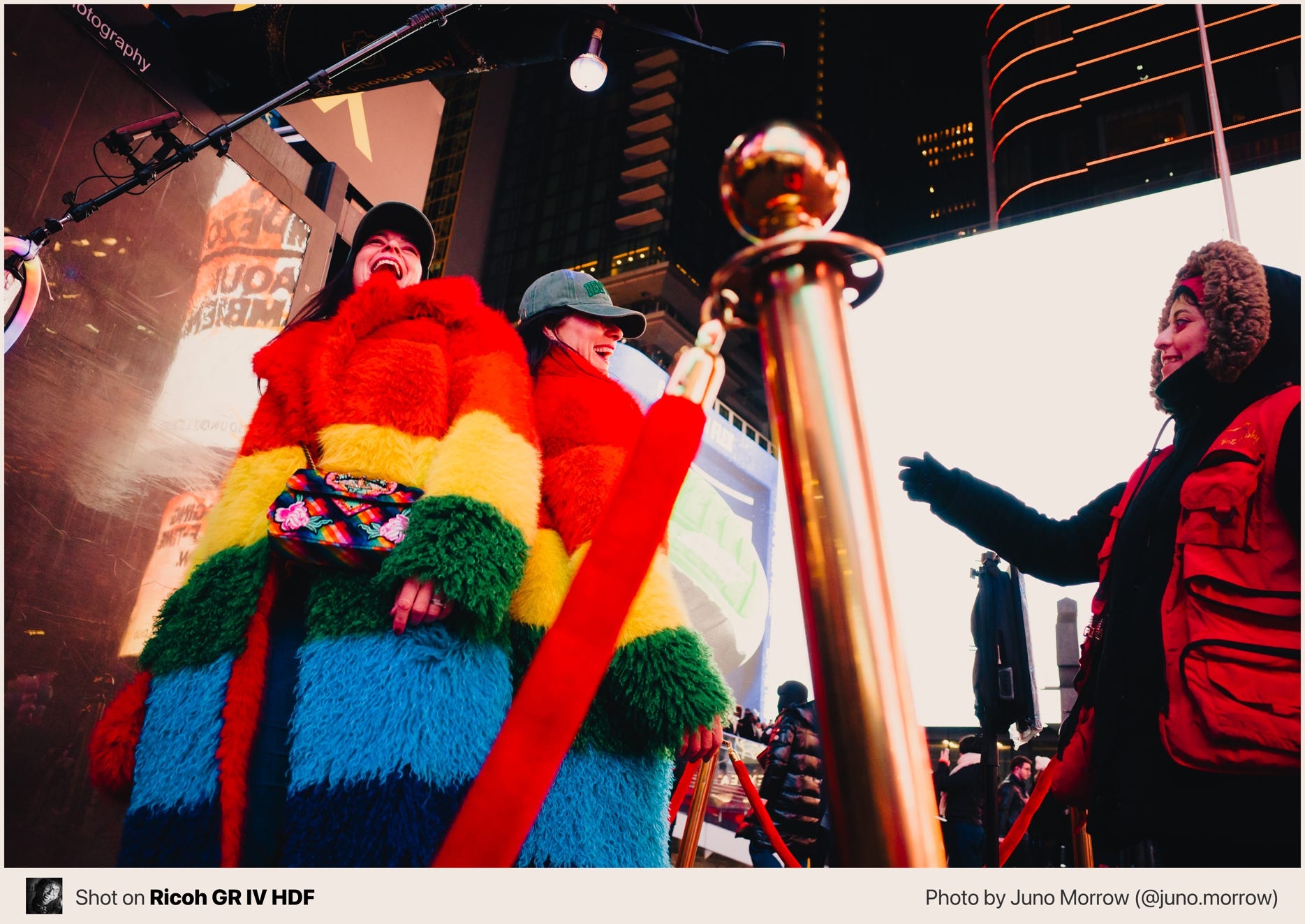
She went in knowing the trade-offs and so far the camera is doing what she needed it to do. Remember me to ask Juno again about the camera in six months.
Watch it now!


