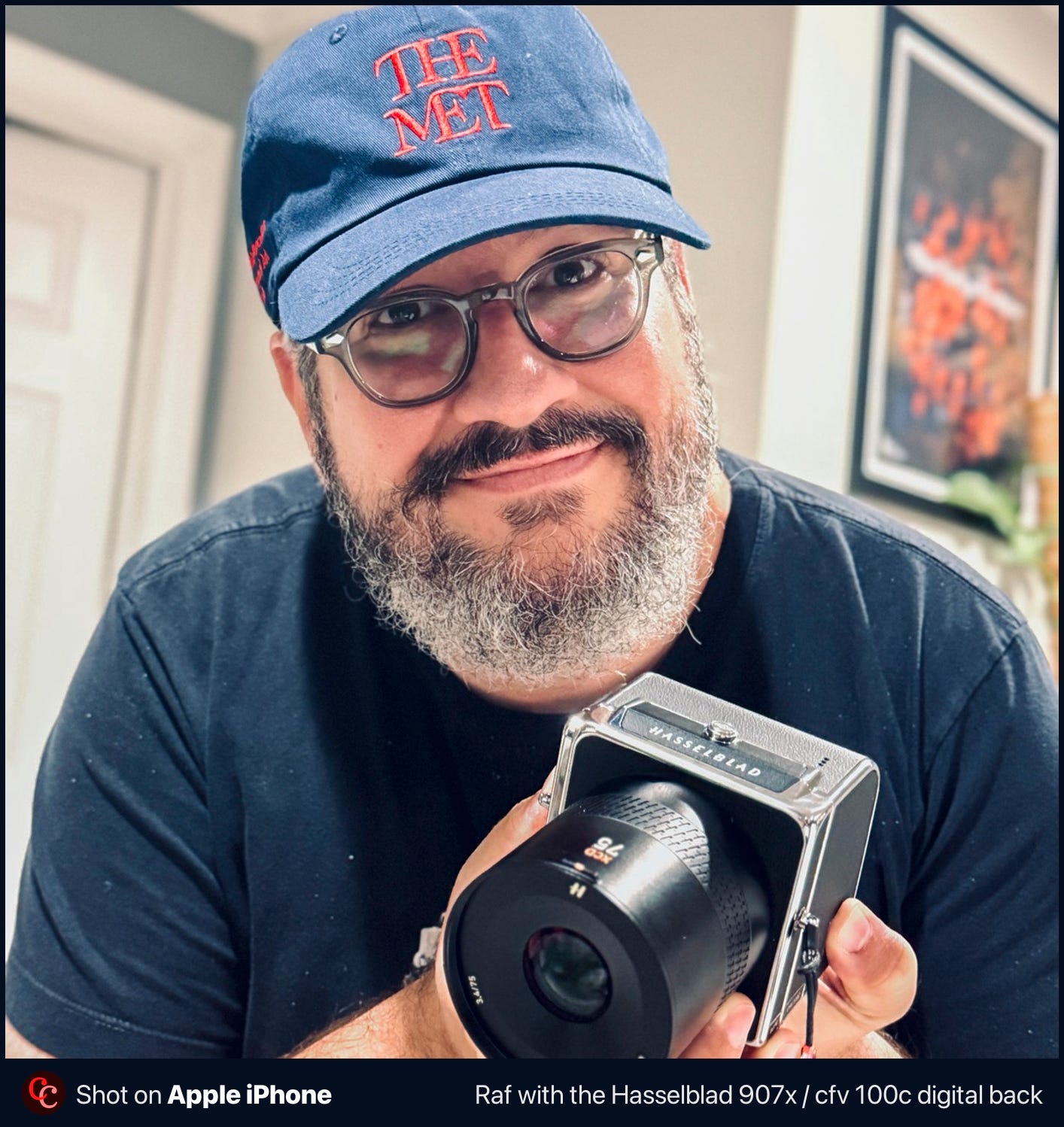
Yesterday (Thursday) I went to the Met and carried with me the new 100-megapixel Hasselblad 907X with a 75mm XCD lens. I didn’t think about making these shots when I arrived at the museum, but as I started taking photos of some artwork and zooming in on my camera’s LCD, I realized there was something cool in there that I wanted to show you.
All photos in this post were taken with this tiny medium format camera. The best in the world.
I tried to gather as much information as possible and add it to each photo’s caption, hoping to bring you the same feeling I had when looking at these in person, where I could get close and inspect the brush strokes, the texture, the patina, the cracking. If you are knowledgeable about painting, please add some interesting information in the comments section, as I’d love to learn more!
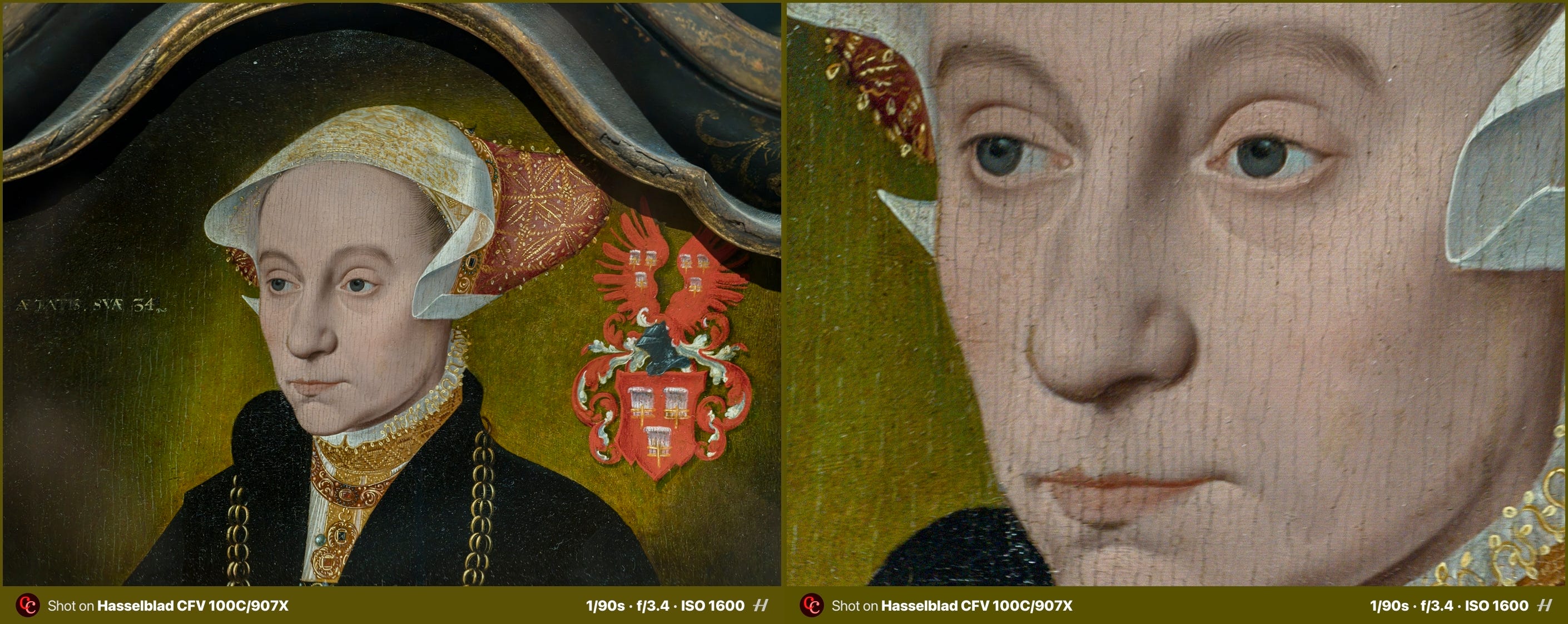
Portrait of a Woman of the Slosgin Family of Cologne by Barthel Bruyn the Younger (German, ca. 1530–before 1610), dated 1557, oil on oak, shaped top, 45.1 x 35.9 cm. The coat of arms behind the sitter's left shoulder identifies her as a member of a prominent family of merchants in Cologne, the Slosgins (variously spelled), whose progenitor, Johann Slosgin of Nijmegen, settled in Cologne in 1415. LINK.
Those fine vertical striations running through the flesh tones are the oak panel's grain telegraphing through the ground and paint layers after 470 years of the wood moving. Isn’t that incredible?
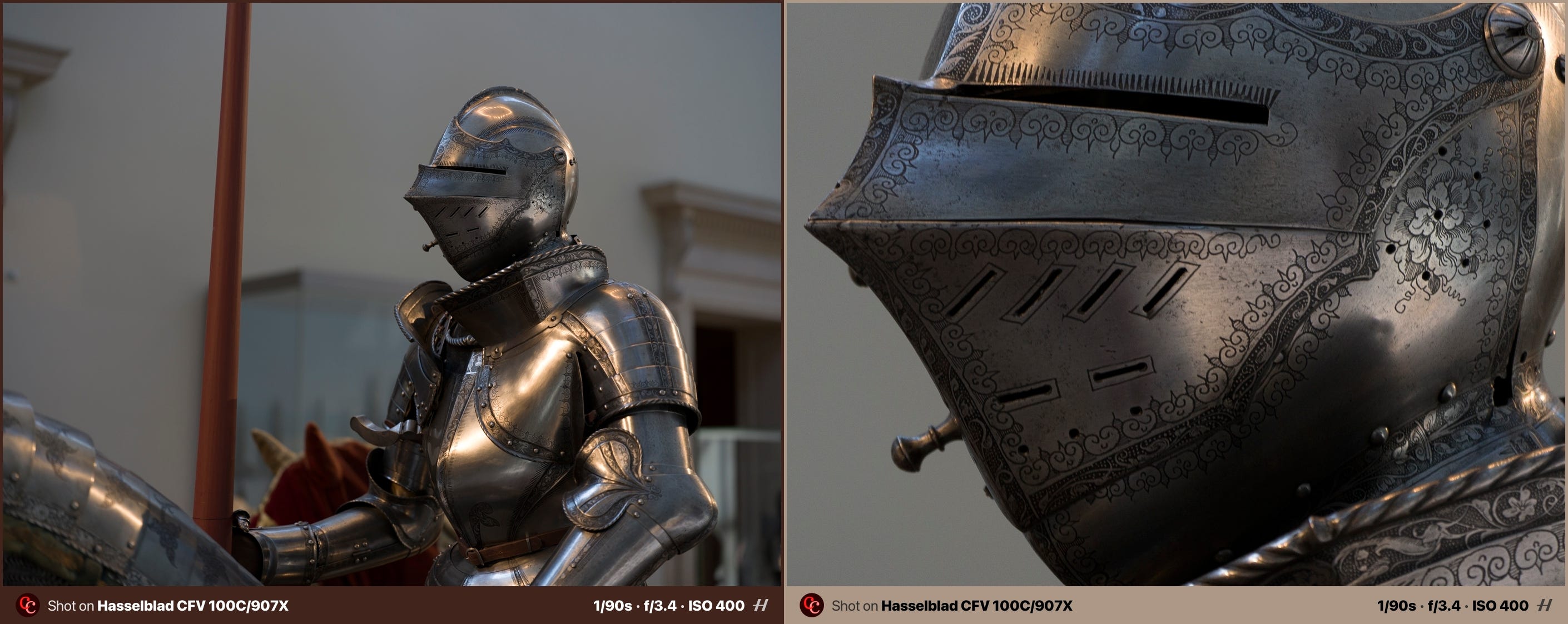
The 100-megapixel sensor allows some aggressive cropping, and it's such a joy because I can see the photos inside the photos I take. I think this is Hasselblad's main superpower. I hope you appreciate it as well!
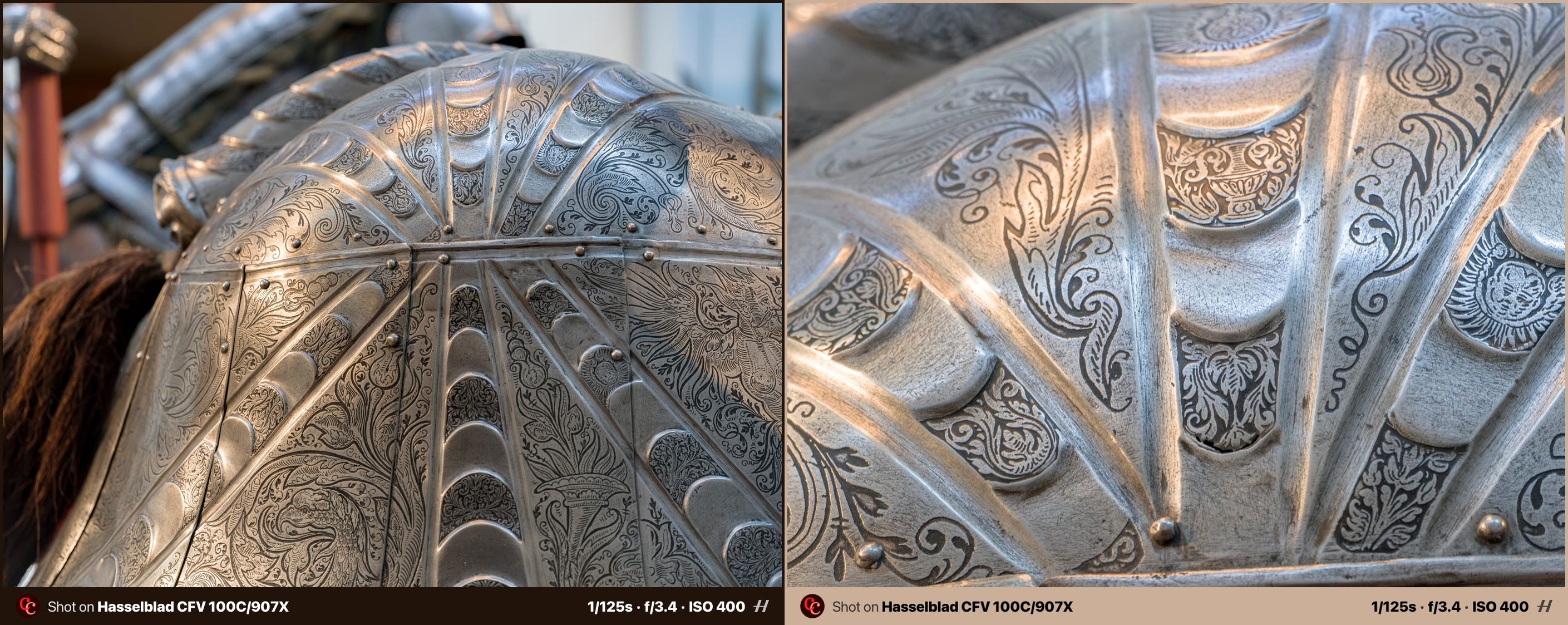
Armor for Man and Horse, Italian, probably Milan. Man's armor about 1575 and later, horse armor about 1560 and later. Steel, gold, leather, copper alloy, textile. The man's armor weighs roughly 21.5 kg, the horse armor with saddle 39.85 kg. LINK.
I arrived at the museum at around 4:10 PM, and it closed at 5, so I rushed a little and didn't have time to photograph the little description next to every artwork. I looked them up online afterward and tried to include as many links and references as possible. Some are impressively old, going back 500 years.
Same as above, this is a detail on the horse. Look at these textures, from
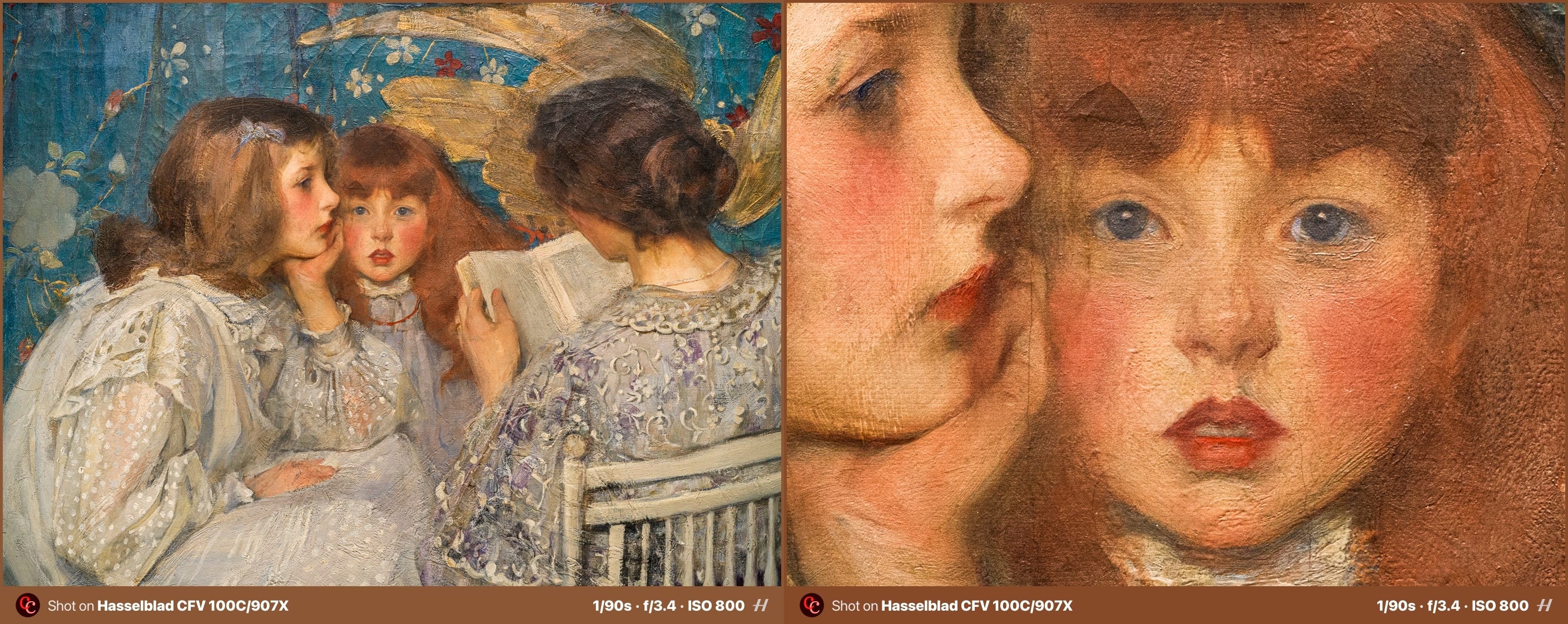
Jungle Tales (Contes de la Jungle), James Jebusa Shannon (1862–1923), American, 1895, oil on canvas, 87 x 113.7 cm. On view in Gallery 768. Shannon studied in London in the 1880s and stayed, making his name as a society portraitist. The painting shows his wife reading to their daughter Kitty, who is the girl in profile, and another child. The title, the date, and the London setting all suggest the three of them are deep in Kipling's Jungle Book, published in 1894. LINK.
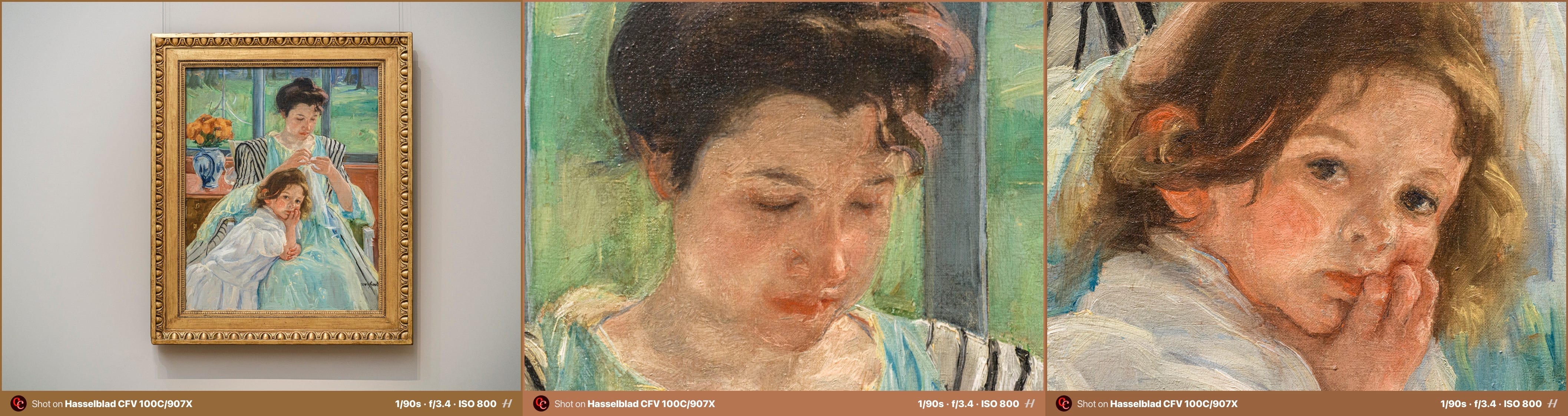
Young Mother Sewing, Mary Cassatt (1844–1926), 1900, oil on canvas, 92.4 x 73.7 cm. Object 29.100.48, H.O. Havemeyer Collection. Around 1890 Cassatt focused her art on children and women caring for children—themes that reflected her affection for her nieces and nephews and the prevailing cultural interest in child rearing. The artist enlisted two unrelated models to pose as mother and child for this painting. Louisine Havemeyer, who purchased it in 1901, remarked on its truthfulness: "Look at that little child that has just thrown herself against her mother’s knee, . . . oblivious to the fact that she could disturb ‘her mamma.’ . . . Mamma simply draws back a bit and continues to sew." LINK.
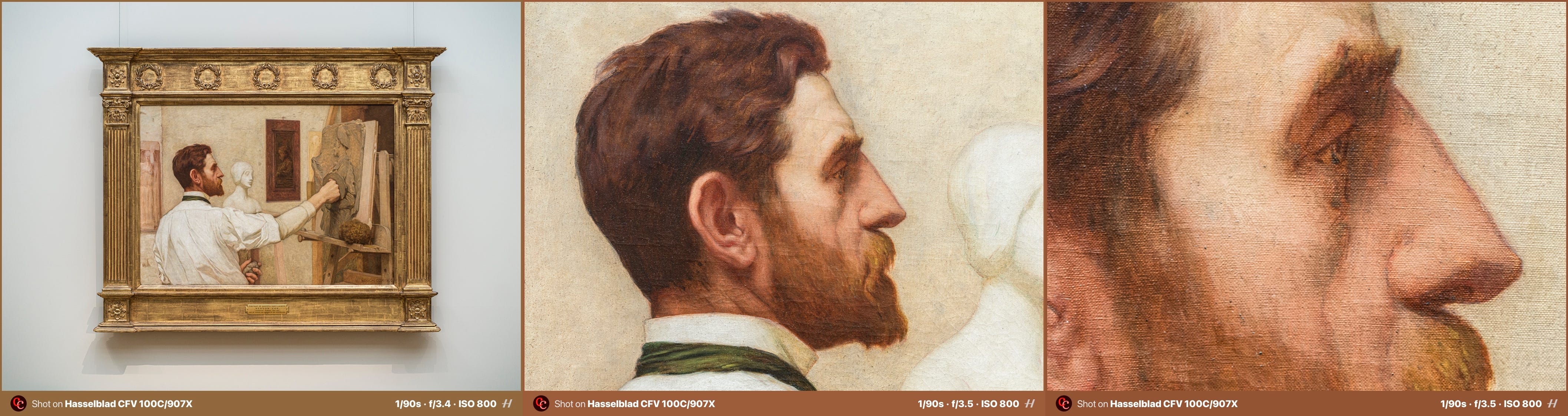
Augustus Saint-Gaudens, Kenyon Cox (1856–1919), 1887 with the replica painted in 1908, oil on canvas, 85.1 x 119.7 cm. Cox and Saint-Gaudens met in Paris in the 1870s and exchanged portraits in 1887, an oil painting for a bronze relief. The original canvas burned in Saint-Gaudens’s 1904 studio fire, so Cox painted this replica for The Met’s 1908 memorial exhibition of the sculptor’s work. LINK.
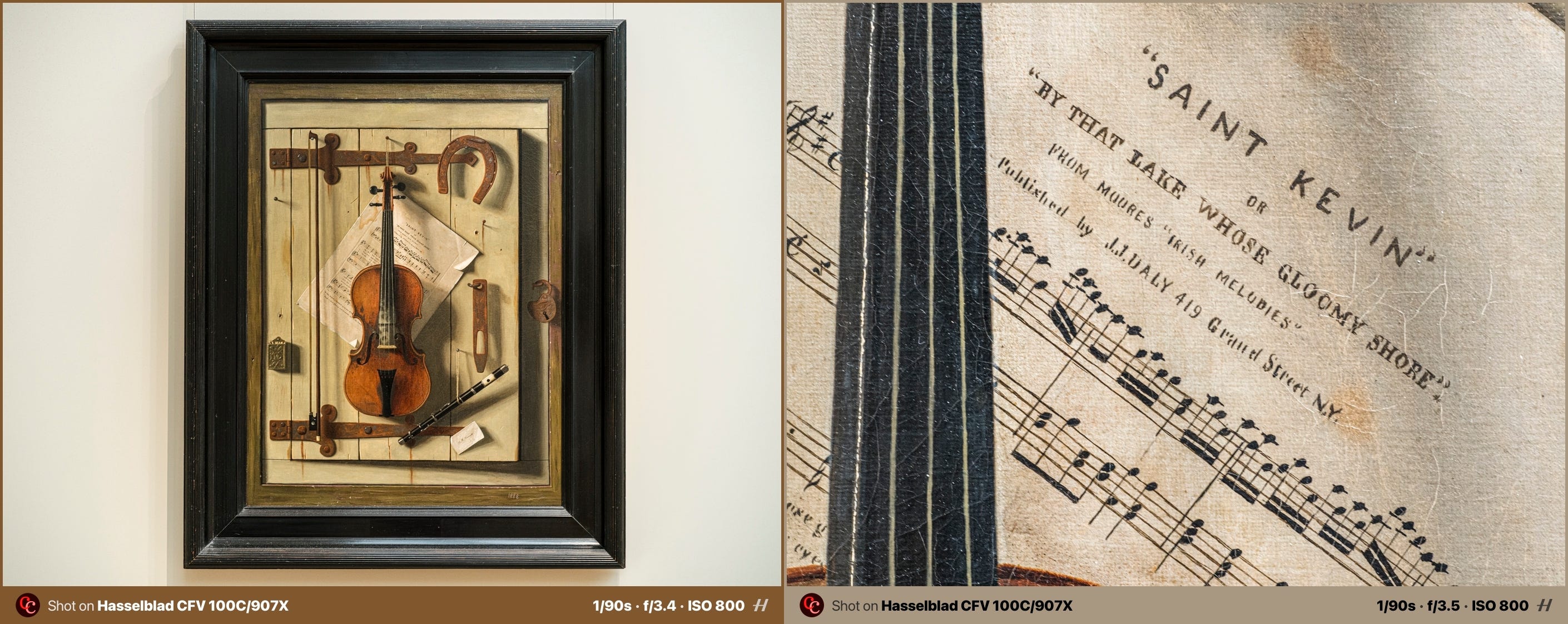
Still Life—Violin and Music, William Michael Harnett (1848–1892), 1888, oil on canvas, 101.6 x 76.2 cm. Cox and Augustus Saint-Gaudens (1848–1907) met in Paris in the 1870s and exchanged portraits in 1887—an oil painting for a bronze relief. The original canvas was lost in Saint-Gaudens’s 1904 studio fire, so Cox created this replica for The Met’s 1908 memorial exhibition of the sculptor’s work. Saint-Gaudens is shown in his New York studio, modeling in clay a portrait of the artist William Merritt Chase. LINK.
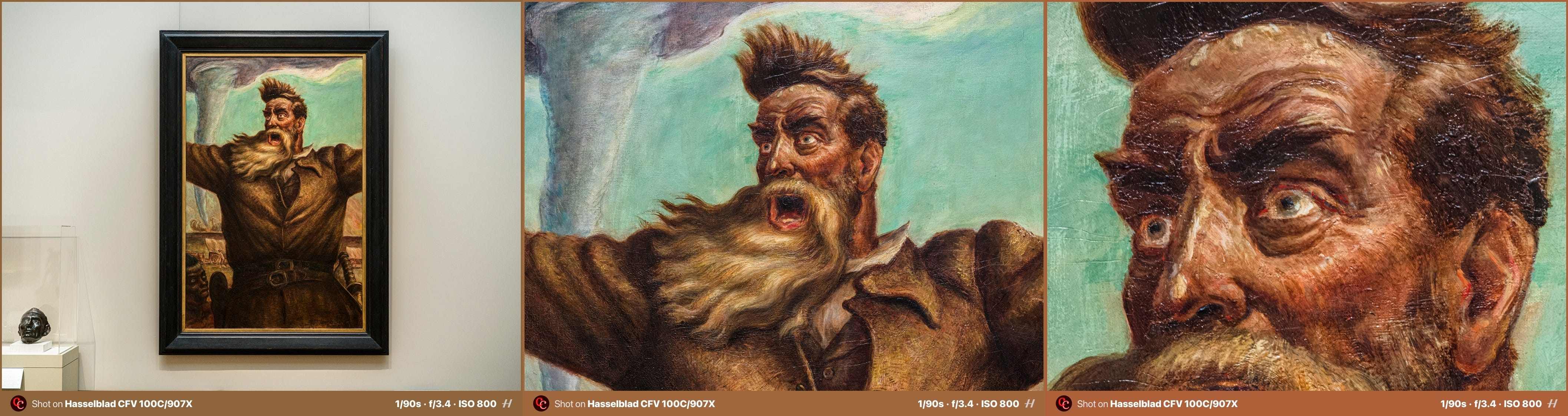
John Brown, John Steuart Curry (1897–1946), 1939, oil on canvas, 175.3 x 114.3 cm. Gallery 762. Object 50.94.1. Filed under Modern and Contemporary Art, not the American Wing, despite hanging in that run of rooms. Throughout the 1930s, Curry, a native of Kansas, was closely associated with Thomas Hart Benton as a member of the artistic movement known as Regionalism. This large painting by Curry is a large study for the artist’s mural in the rotunda of the Kansas State Capitol. One of the most compelling and controversial figures in nineteenth-century American history, John Brown devoted his life to opposing the extension of slavery in the 1850s into the Kansas Territory in battles that presaged the Civil War, which began in 1861. Curry depicted Brown larger-than-life in an open, stark landscape besieged by a tornado, a meteorological symbol for the conflict, and with an enslaved man at his side. The abolitionist’s crazed expression and animated hair and beard suggest the messianic fervor that fueled his opposition to human bondage. LINK.
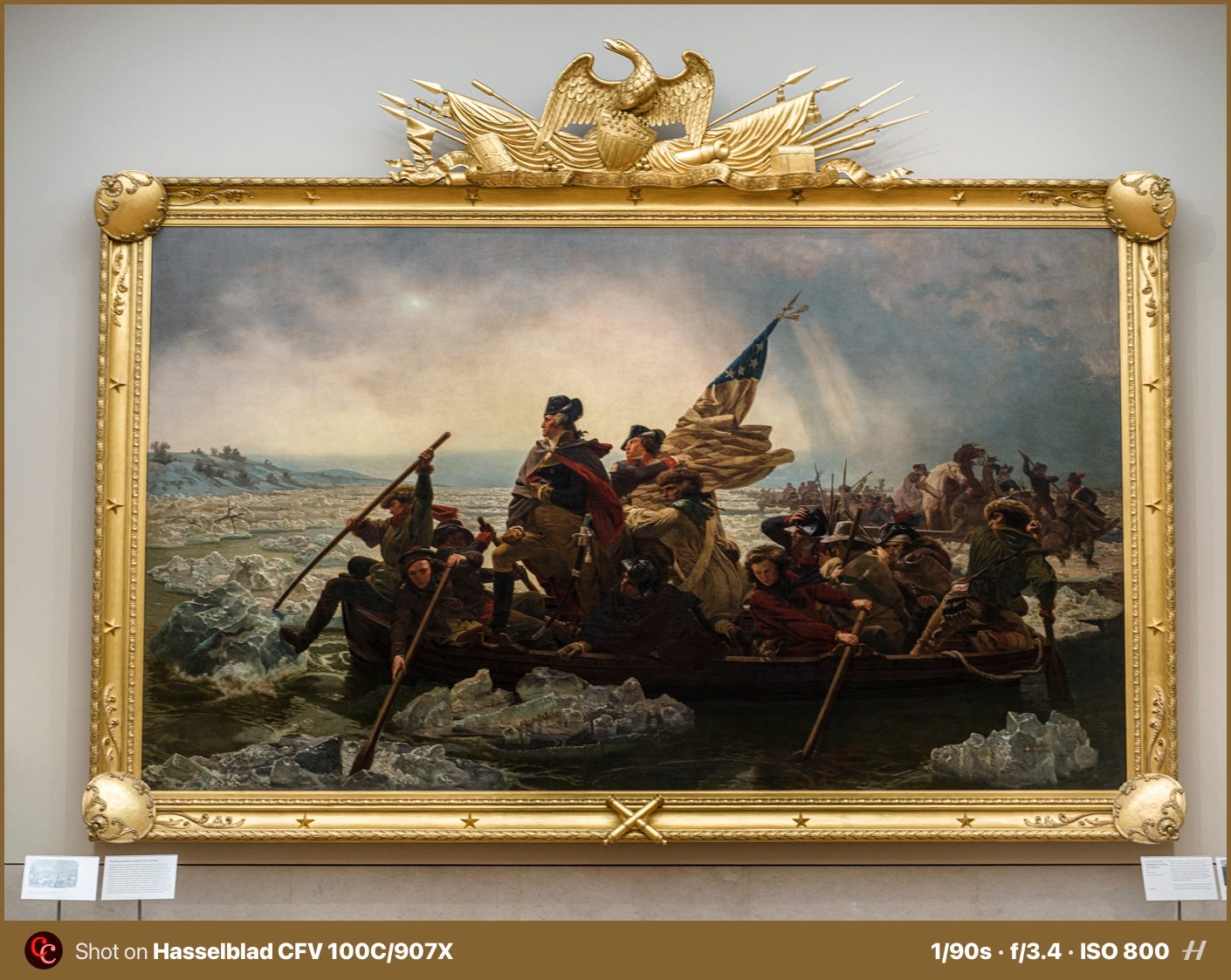
This is a special one. It’s SO BIG. I think it’s the biggest paint I’ve ever seen. Look to the description plates underneath and you can have a feeling about the size.
Washington Crossing the Delaware, Emanuel Leutze (1816–1868), 1851, oil on canvas, 378.5 x 647.7 cm. LINK.
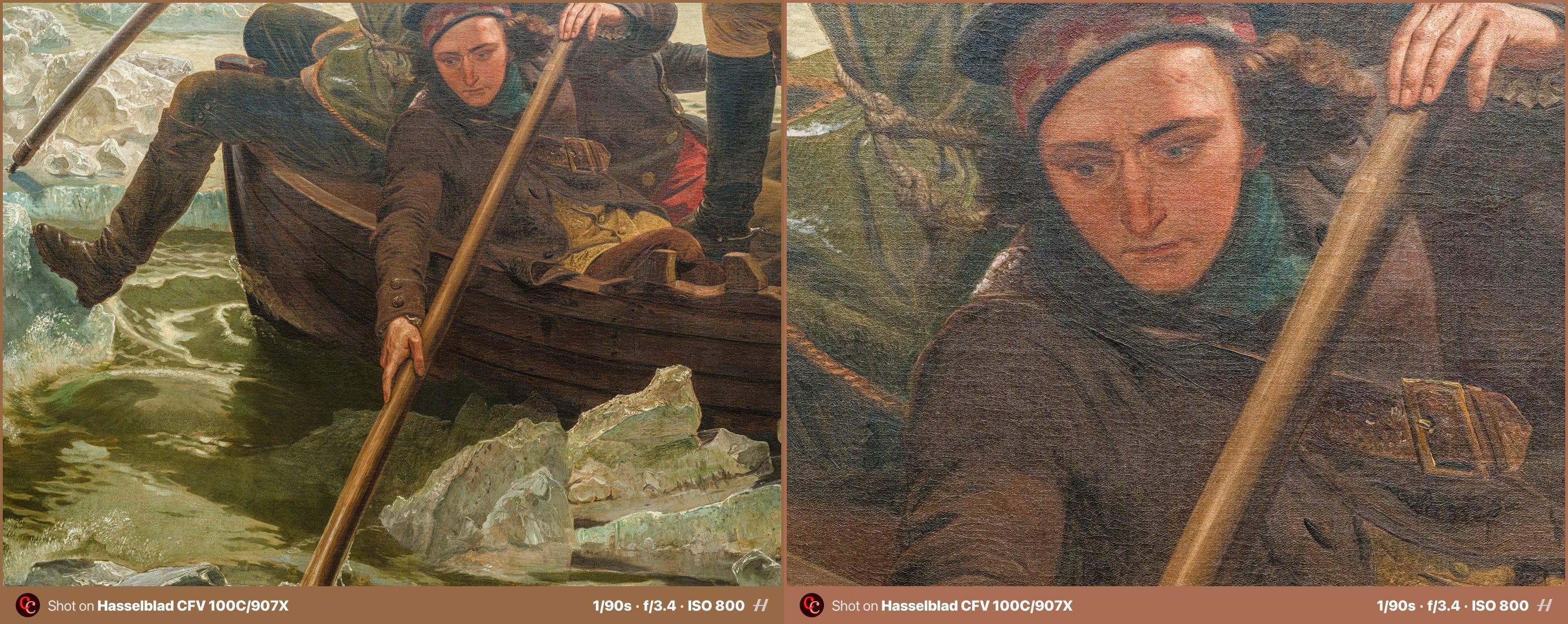
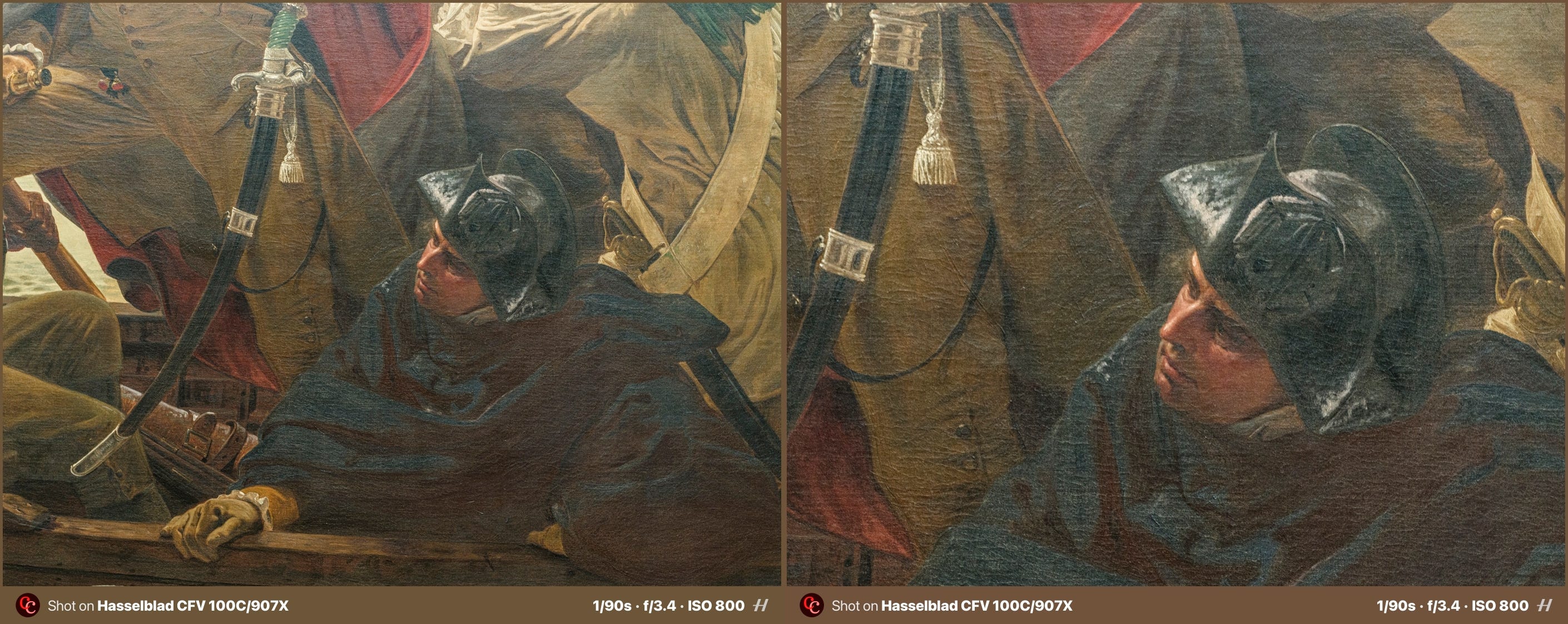
This one was delightful. Looks like large format photography, check out the details!
This epic painting honors a critical turning point in the American colonists’ war against Great Britain. It was a great success in Leutze’s native Germany, given the country’s own revolutionary fervor of the period, as well as in the United States, where it quickly became an iconic image, frequently recast by later artists.
Evoking patriotic feelings in some viewers, conflict and struggle in others, this unavoidable highlight of the American Wing continues to spark debates about political ideas. It is exhibited here in a reproduction of its original trophy-style frame, based on a photograph by Mathew B. Brady.
Hope you enjoyed seeing these details, as much as I enjoyed registering it! Please subscribe to Camera Clara, it is free!





Excellent exercise, Rafa, handling this camera seems to be extraordinary
What a terrific tour!
I loved seeing the amazing detail you showed!
I can see why it's so tough to zoom out after that.