


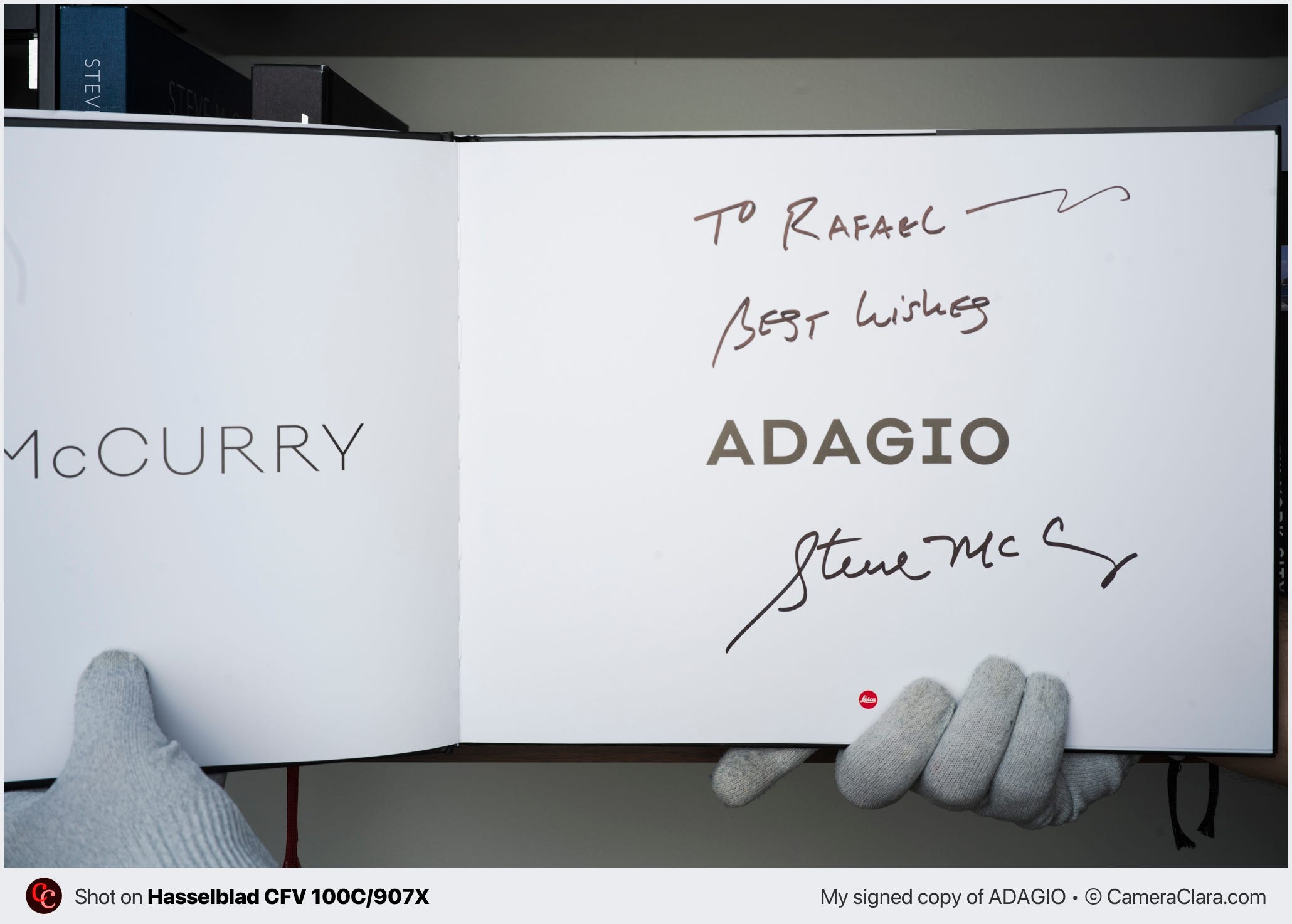
On the evening of a Friday, September 25th, I went to the Leica Store and Gallery at Meatpacking, on W. 13th Street, for the signing of Steve McCurry’s new book, Adagio.
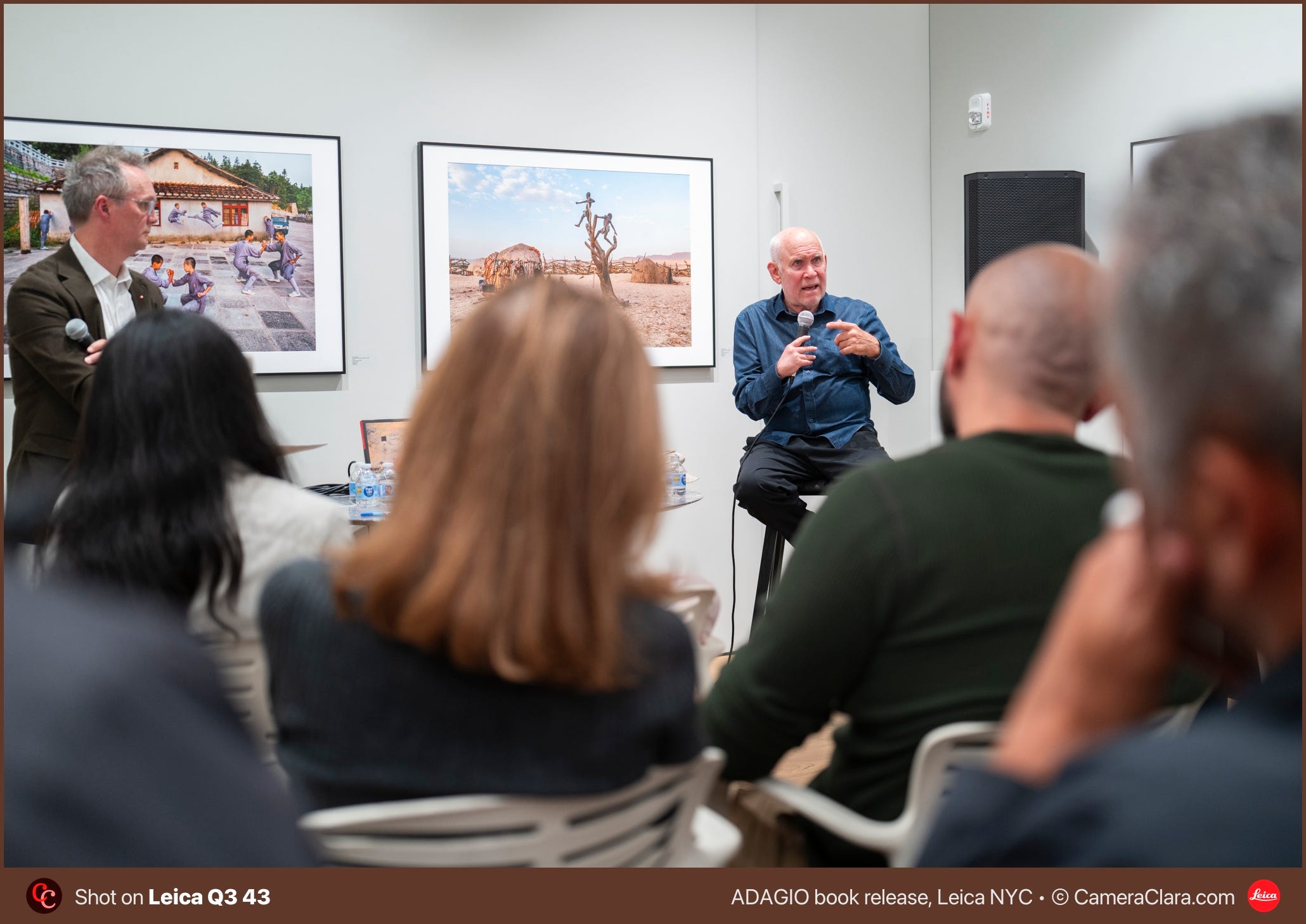
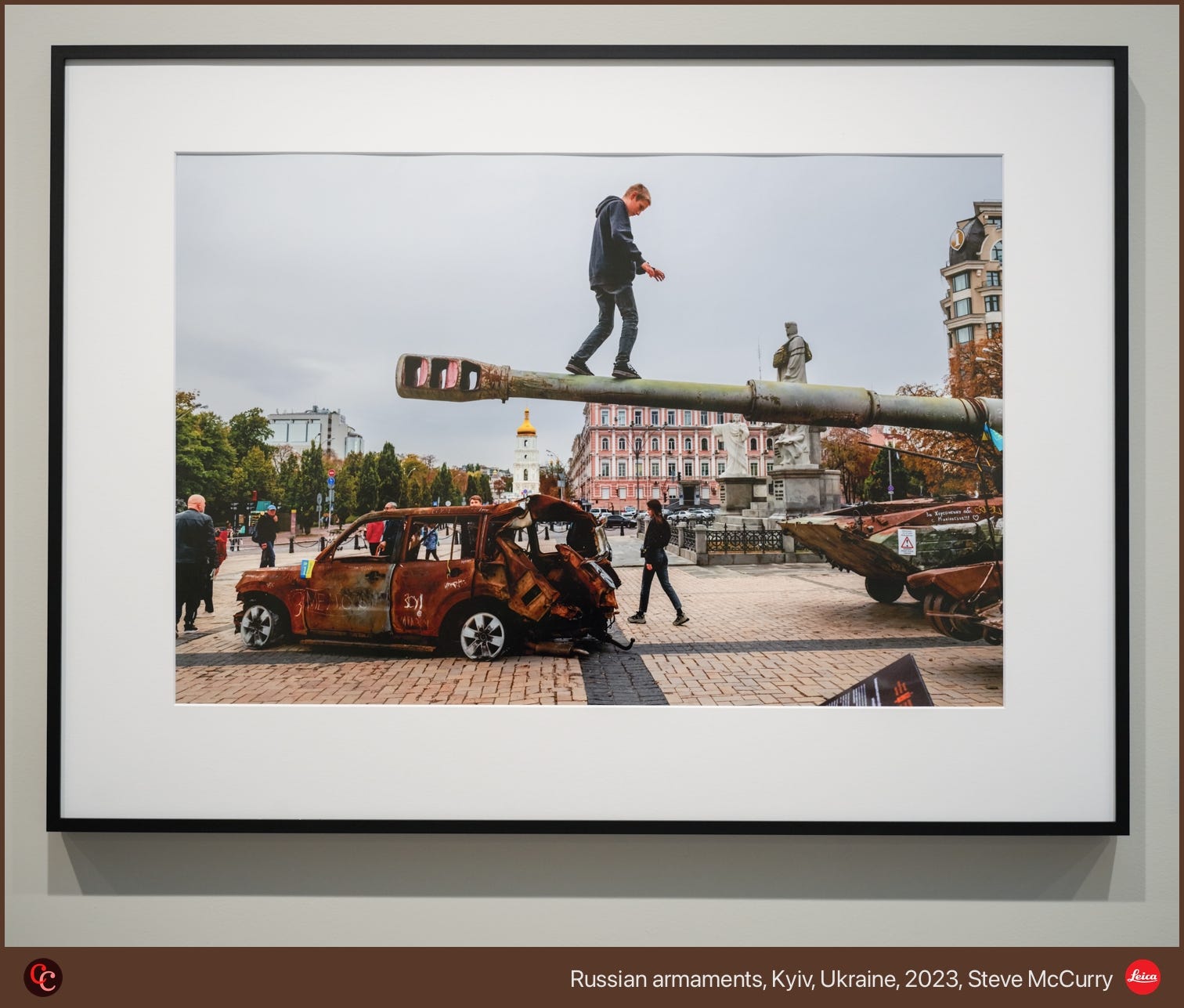
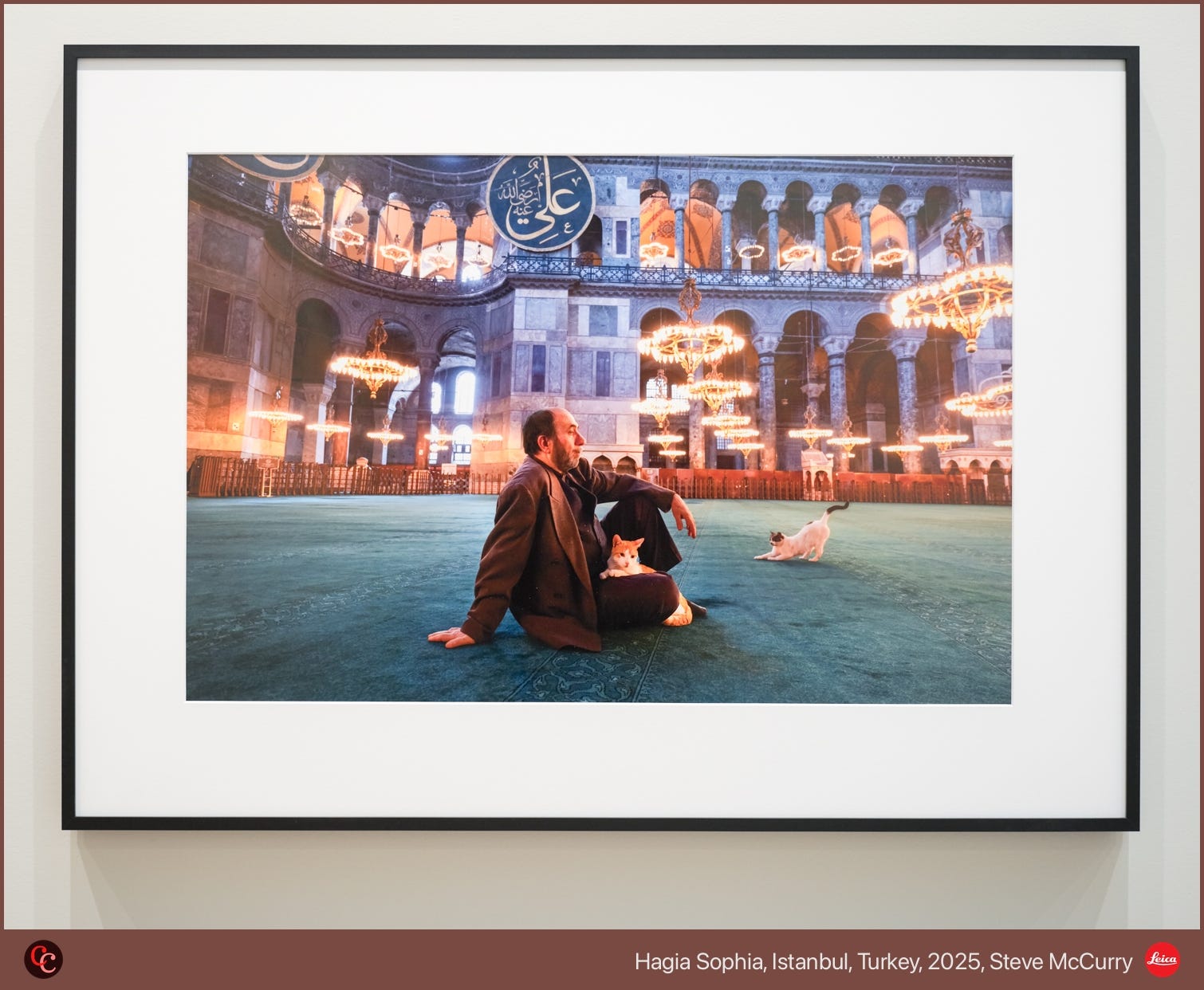
It’s the second title in Leica’s Libretto series, which are collectible books built around a single body of work, and this one gathers Steve McCurry's pictures from 1992 all the way to 2025, a good part of them never published before, plus new work made for Leica. The prints were on the walls around us (available for sale): Afghanistan, Myanmar, Ukraine, Bhutan, Madagascar, Namibia, Russia, Mississippi, Times Square. “We travel the world in this one room,” said Michael Foley, the gallery director who put the show together, and it wasn’t an exaggeration.
The event ran two hours. I sat in that audience and took many notes to write this article, both about insights and McCurry's quotes, so the substance of that talk, the humor, and the insights are all collected in here, for you, .
What I want to write is about culture, seeing, and a bit of studium and punctum, because that is where the evening got interesting...

The origin of “Adagio”
adagio /ə-dä′jō, -jē-ō″, -zhō, -zhē-ō/
adverb & adjective
In a slow tempo, usually considered to be slower than andante but faster than larghetto. Used chiefly as a direction.
noun
A slow passage, movement, or work, especially one using adagio as the direction.
A section of a pas de deux in which the ballerina and her partner perform steps requiring lyricism and great skill in lifting, balancing, and turning.
The American Heritage Dictionary of the English Language, 5th Edition.
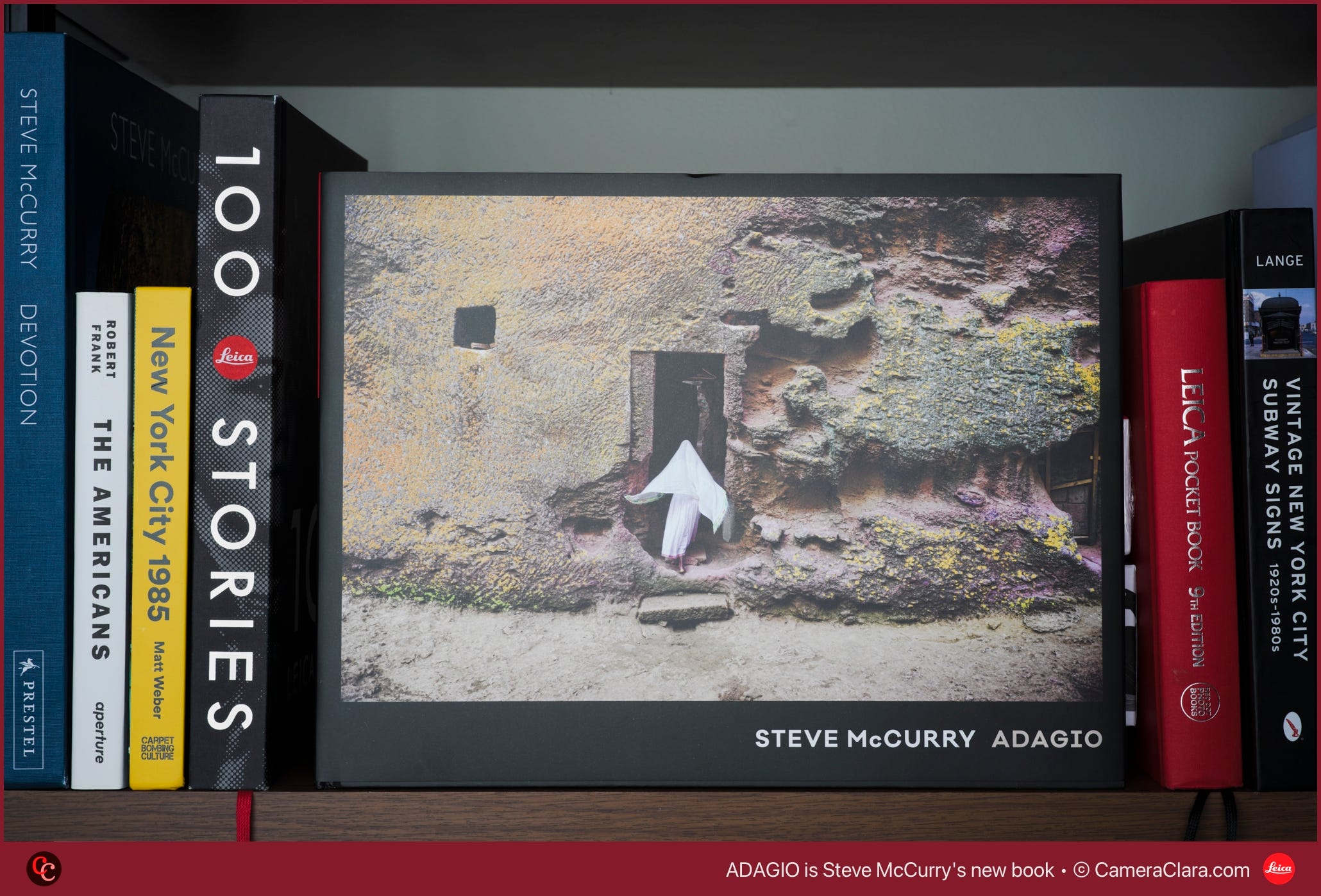
How does that fit a photographer? For Steve, most of this work is wandering and observing: moving slowly, seeing a situation, watching it, waiting for it to develop. There’s no plan, or at most a loose one. He might know he wants to walk down to the edge of the Irrawaddy River to photograph the boats coming in, and from there on it’s serendipity.
“It’s really random.”, he said. He thinks of the pictures as a diary, a kind of novel of impressions of the places that keep pulling him back: Myanmar, India, and Afghanistan.
The other half of the title is Samuel Barber’s Adagio for Strings. Barber was from West Chester, Pennsylvania, Steve’s town, and wrote the piece while traveling in Austria. To Steve, it’s simply one the most beautiful songs. “I could listen to it every day.”, he said.
Melancholy and beauty in the same breath. Look at the pictures in the book, many from places now closed off or at war, and the title makes a lot of sense.
If you’re the type of reader who likes listening to music while reading, here’s Adagio for Strings, by Samuel Barber:
Dogged persistence
Foley admitted that when he reviewed the work, he said to himself, “Wow! This guy is f***ing good!!” What struck him was the consistency. Ukraine, Namibia, Madagascar, Mississippi, Times Square, and always the same command of timing and composition, as if it had been art directed.
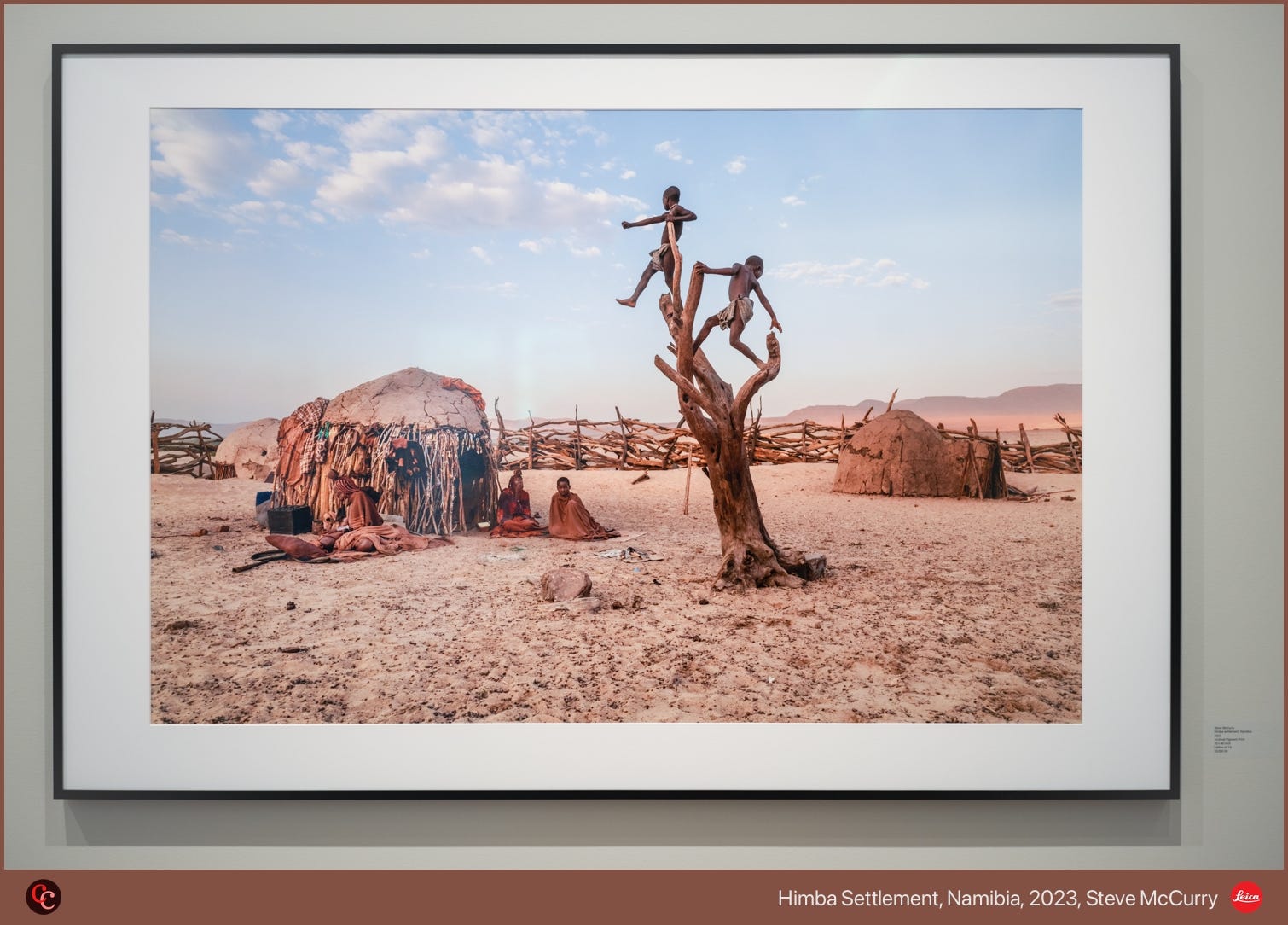
Foley pointed at a print on the gallery of two kids up in a gnarly tree, their bodies extending the branches, everyone else sitting passively below, a fence in the background echoing the shape of the tree. He asked Steve How long he was there…
“Five days.” Steve and a friend were staying in a guest house some way off, and every morning they were there at sunrise when the kids took the goats and sheep out to graze, and every afternoon they came back. Ten sessions. Out of those ten, two pictures worked, maybe three: this one, and another of a kid wrapped against the cold in a blanket with a rabbit on it, a black dog beside him.
A lot of this, he said, is just “dogged persistence”: finding a place that inspires you and going back over and over again.
When Steve is working, he is out for twelve hours a day, for weeks and months at a time, and he has been doing that for decades (I can confirm, the man's energy is unmatched, I saw with my own eyes on the workshop the day after). He said that after enough of those days, you start to understand how things move, how shapes integrate, where the juxtapositions come from, and the brain begins to see all of it at once and to anticipate the moment before it happens.
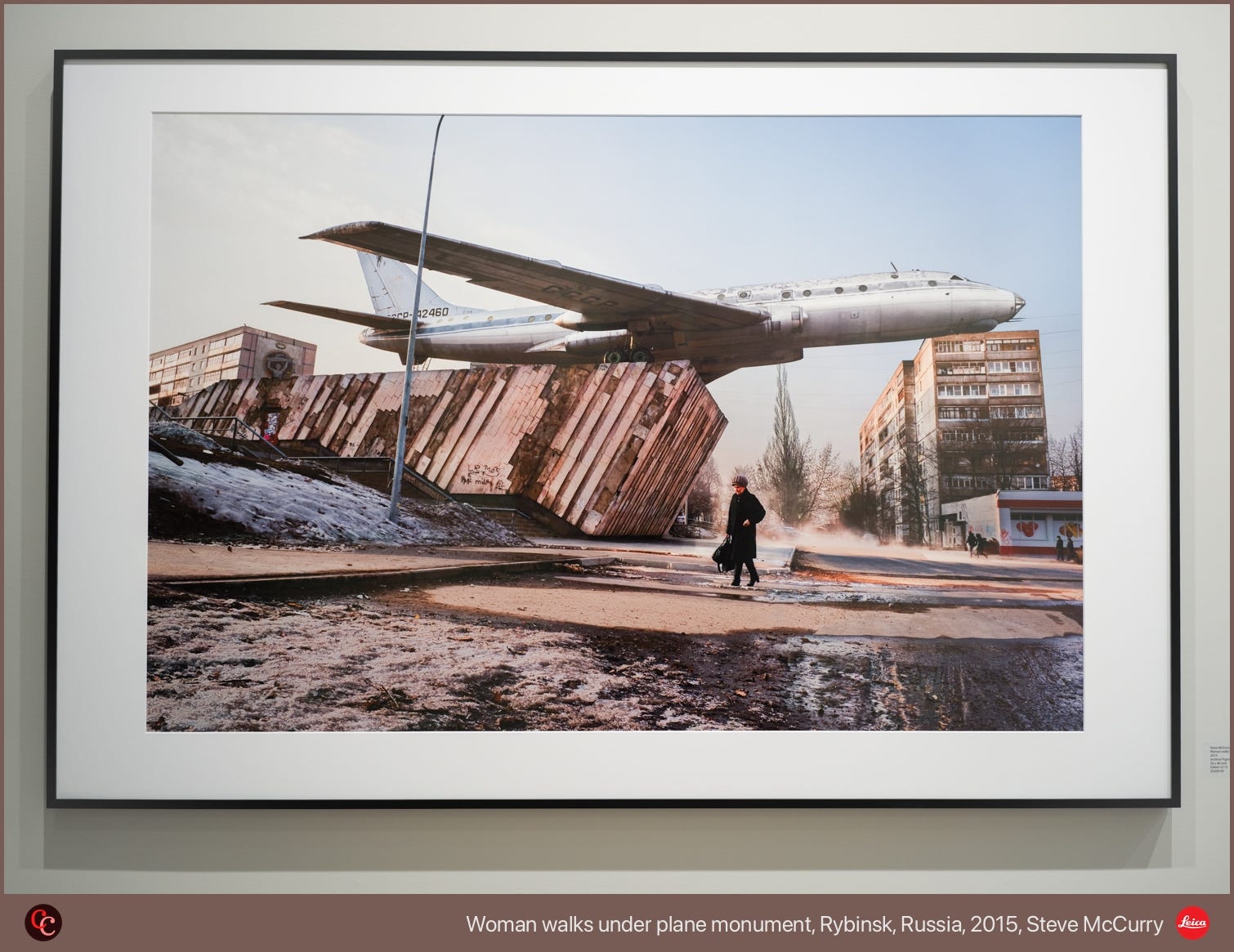
The above picture, taken in Russia, works the same way. He was staying with a friend, wandering alone, no guide, and came across an airplane parked in a field with kids playing ball around it. He had no idea why it was there (an aircraft factory nearby, it turned out). His reaction was the whole method in two words: “Totally weird.” He started working, and three pictures came out of it. There’s always an extra to it. It could be a photo of just the airplane, but no.
Madagascar, a place he had wanted to visit for years and finally did, meant leaving the hotel at four in the morning to drive an hour and be in position before sunrise. A magical place, he called it. On light, he’ll shoot any day, any time, with one exception: he doesn’t work in strong light. “My brain, in strong bright light, just shuts off.” When the sun is harsh he goes indoors and works interiors. Cloudy and overcast is his sweet spot.
Steve is married to light. He writes with it. He breathes it.

What McCurry looks at…
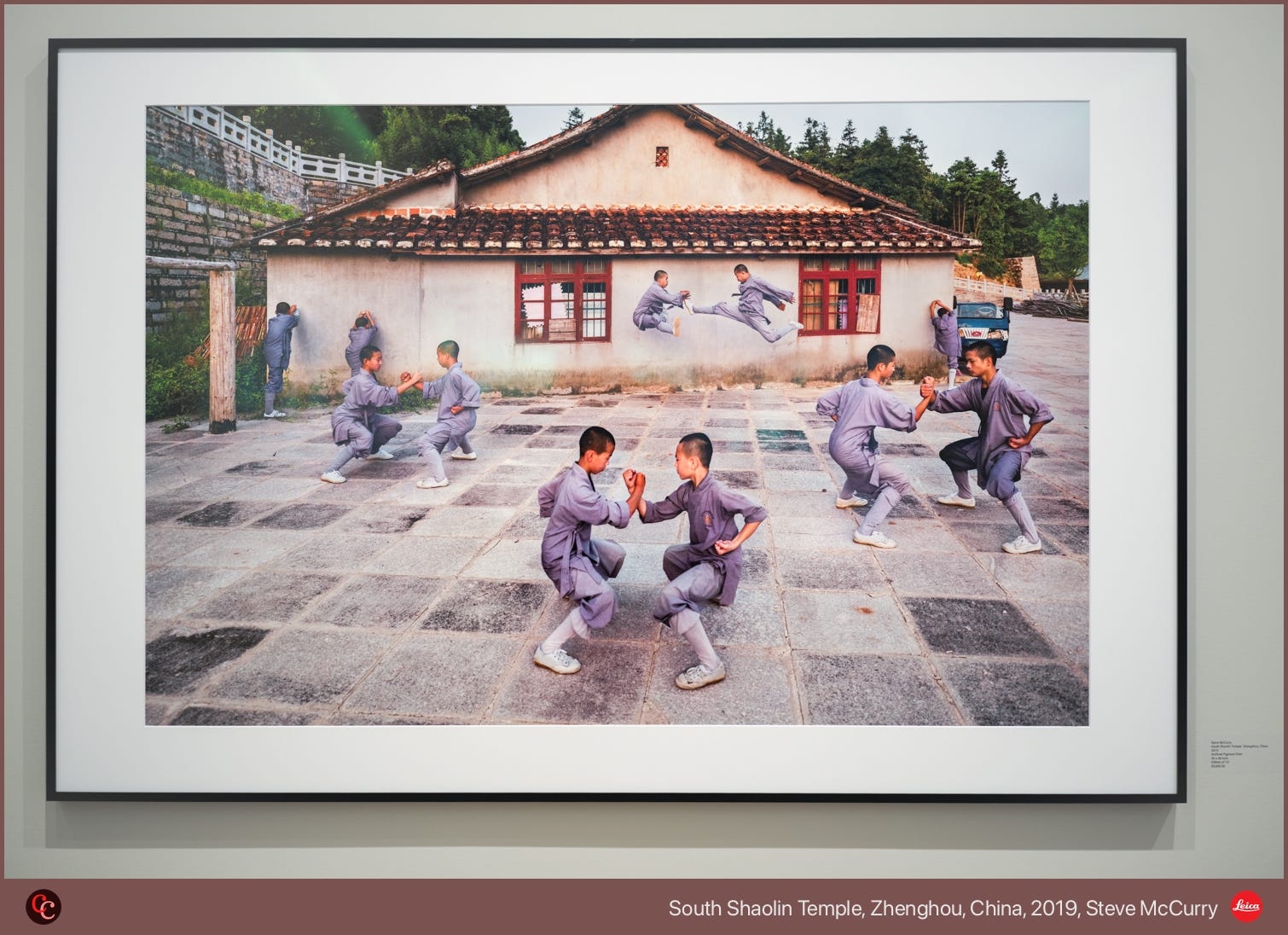
Pico Iyer wrote the book's introduction, and Foley read a line from it about “a humanist with a camera who sustains his curiosity.”
Foley then asked what makes a picture a Steve McCurry picture…
“They all came through my camera”, he joked 😄. Then, seriously: don’t think about style or signature. Don’t try to find one. Be out there looking, and, photography aside, be out there enjoying your time on this planet. See what you respond to. Shapes, design, a face, a landscape, a flower. Whatever fascinates you, ends up working.
Turns out, color is not the main driver. That’s relevant, because most of us associate his work with the saturated tones of Kodachrome, but yet, another quote from him: “Color is not what motivates me at all.”
He pointed at the gallery's walls. The Ukraine pictures, the Burma pictures, there’s not so much color in them. The monks, sure, but that’s just what they wear. What he is looking at is the list he gives his students: shapes, movement, foreground and background, layers, how people relate to the place they’re in and to each other, and the moment that is about to happen, or the "decisive moment”, as Bresson liked saying.
The red shirt
When asked by the audience, Steve needed an example of how color hijacks attention, and he found one in the audience. In a room full of people wearing black, gray and navy clothes, one person was wearing a bright red shirt.
That person was me.
Well, the red shirt, he said, was the only thing he could see. It really stands out, and I could tell, because I felt he was constantly looking at me. He joked: if I saw the guy wearing it walking down the street, I’d probably avoid it. The room laughed, I laughed, and for a few seconds I was “Exhibit A” in his case against chasing color. I left with a Steve McCurry critique of my outfit and a lesson, which honestly? It’s an awesome thing, because…
Roland Barthés (French literary theorist, essayist, philosopher, critic, and semiotician) has a name for what my shirt was doing to that room. In his book Camera Lucida, he splits what we see in a photograph into the studium, the cultural, coded content we read and understand, and the punctum, or the detail that pricks the eye and pulls it away from everything else.
I was a “walking punctum”. But punctum alone doesn’t compose a good photograph, I think that’s what Steve meant.
And the interesting thing about Steve’s answer is that he doesn’t actively chase that kind of sting. He steps around it, so the picture can earn its sting from a gesture or a moment (the kid’s movement in the tree, the rabbit on the blanket) rather than from a loud color that happened to walk by.
Which raises the obvious question: “if color isn’t what he looks at, why stay in color and not go full B&W?”, someone in the audience asked…
The answer was better than the joke: "Because the robes are red!"
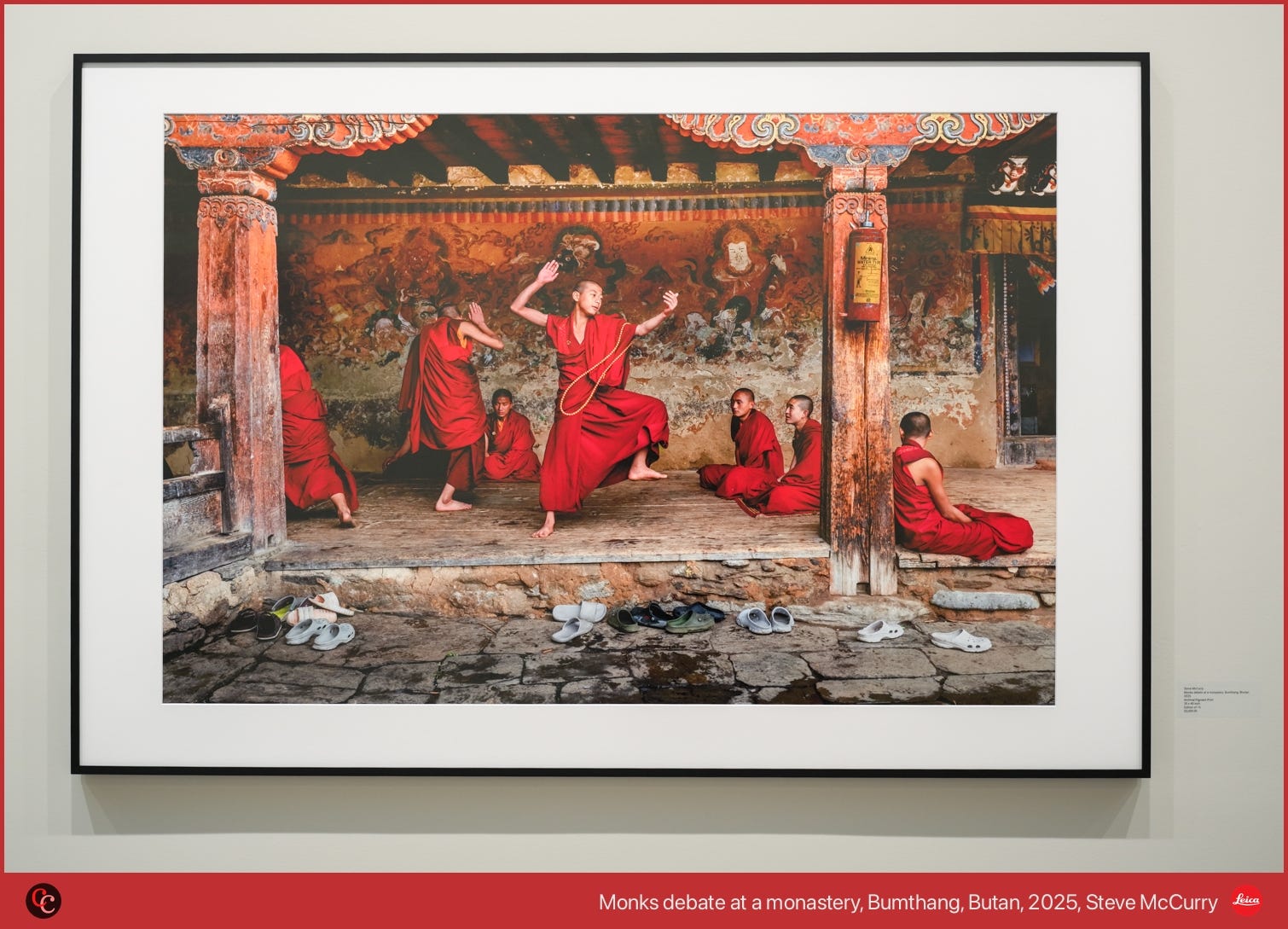
The monks of Bhutan and Tibet wear that color, and it sets them apart from the monks of Japan, China, Thailand or Sri Lanka. Hinduism is full of color and symbolism, and the temples are extraordinary. Color isn’t what he hunts though. It’s a way to convey information.
It helps tell the cultural story, and the story happens to be in color. That is the Studium side of the picture (if you want to keep Barthes’ vocabulary). Color is in the pictures, for sure, but it’s just not on the list of things he’s looking for.
Being there
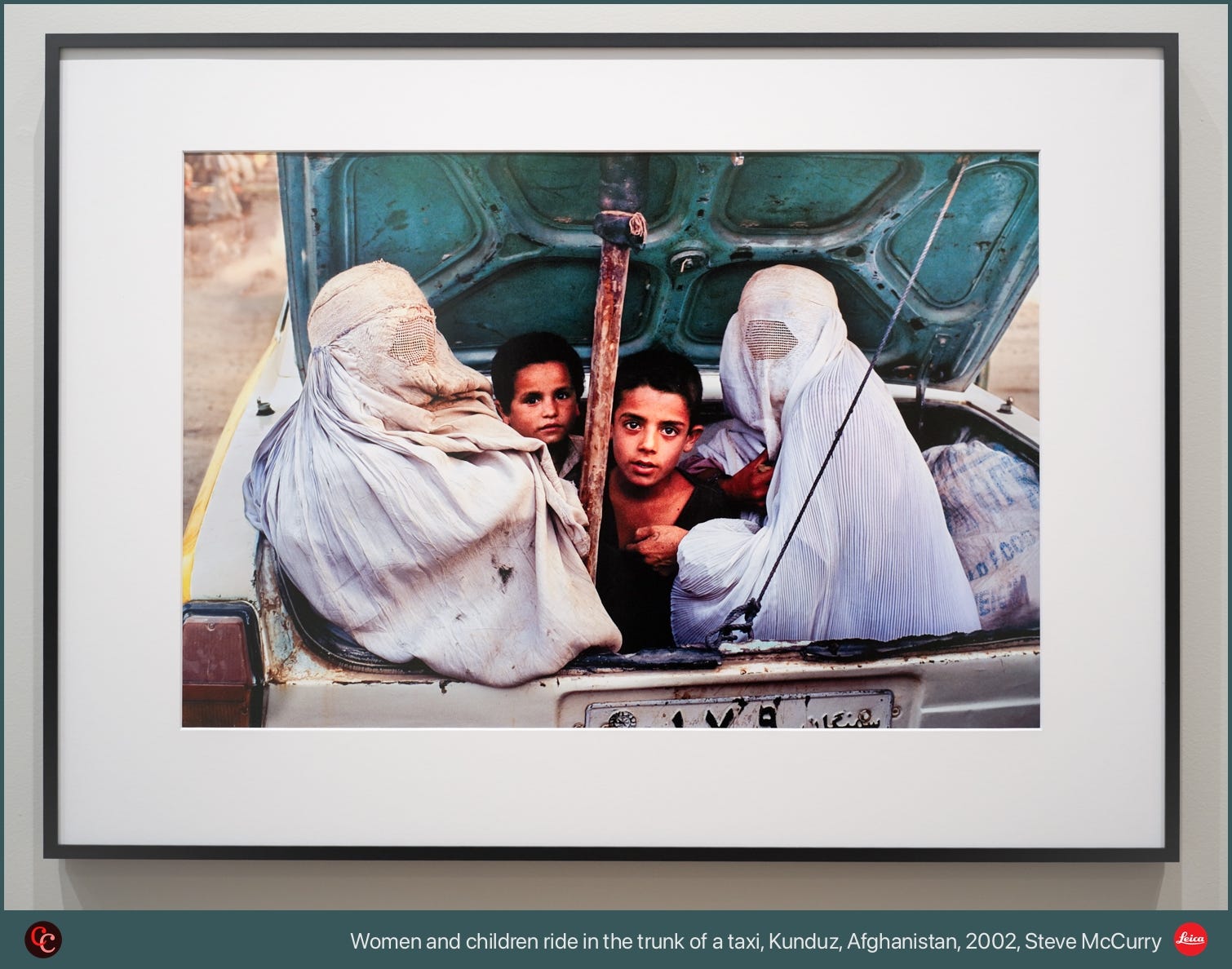
Foley asked what Steve understood then that the rest of the world failed to see: extreme hardship and poverty, in a dangerous place, and people who persevered anyway.
Steve described a boy in a candy factory, ten or twelve years old, up at three in the morning to work the boiling sugar under a manager who looked like a hard character. The contrast, he said, blows your mind, and it remains so today.
How involved does he get with the people in front of the lens? Honestly, most of the time there isn’t a lot you can do. But there was one time, during fighting between the Taliban and the Northern Alliance, when a wounded soldier lay on the ground while fighters walked past him. Steve and his companions kept working, and when it got dark and they were heading back, the man was still alive. They put him in their taxi, drove him to a hospital and carried him into the emergency room. “We literally saved that guy’s life.” Usually, though, by the time he arrives the Red Cross and the other humanitarian outfits are already there, and then his job is different: unless somebody is there to tell the story, the word doesn’t get out, and the word has to get out somehow.
Steve is done with war zones now. Ukraine, a few years ago (twice) was the last. What interests him is culture: next month (October 2026) it’s Calcutta, Varanasi, Bhutan and Nepal, with friends he has known for years. Asked whether he ever did anything ridiculous for a picture, he said no, but anywhere with mortars and bullets flying you do wonder why you got yourself into it. Then you survive, and you go back to your family.
Culture? All Camera Clara members love it! If you're not subscribed yet, this is a good moment. With Camera Clara articles, you will learn a lot about photography culture, techniques, fine art, books, publications, and everything awesome that photography brings to us all!
“A white guy from Philadelphia”
Being there comes with a question every traveling photographer eventually hears. A working photographer in the audience, 25 years into his career, said he still gets asked why he thinks he can tell other people’s stories, and wanted to know if Steve gets challenged that way.
“All the time.”, he said. He called the argument something I’ll soften to nonsense. “Indian photographers are welcome to wander the streets of New York and Philadelphia; we live on this planet together.”, he added.
He got into all this as a 12 year old boy looking at Brian Brake’s pictures of India. He isn’t there to explain anyone’s culture, he said. He’s there to live his life, to observe, and to come away with his own personal observations, and he has every right to do that.
“You don’t have to like it.”, Steve added. He has been to India more than eighty times, something like five years of his life all together, and on his latest trip through Calcutta, Varanasi, Delhi and Mumbai, doing talks and interviews, exactly one person raised the argument. In 80+ trips, he said, nobody ever asked “what a white guy from Philadelphia” was doing there.
Cell phones and mass tourism
“What has changed in the world since he started?”, Foley asked.
Two things, without hesitation: cell phones and mass tourism.
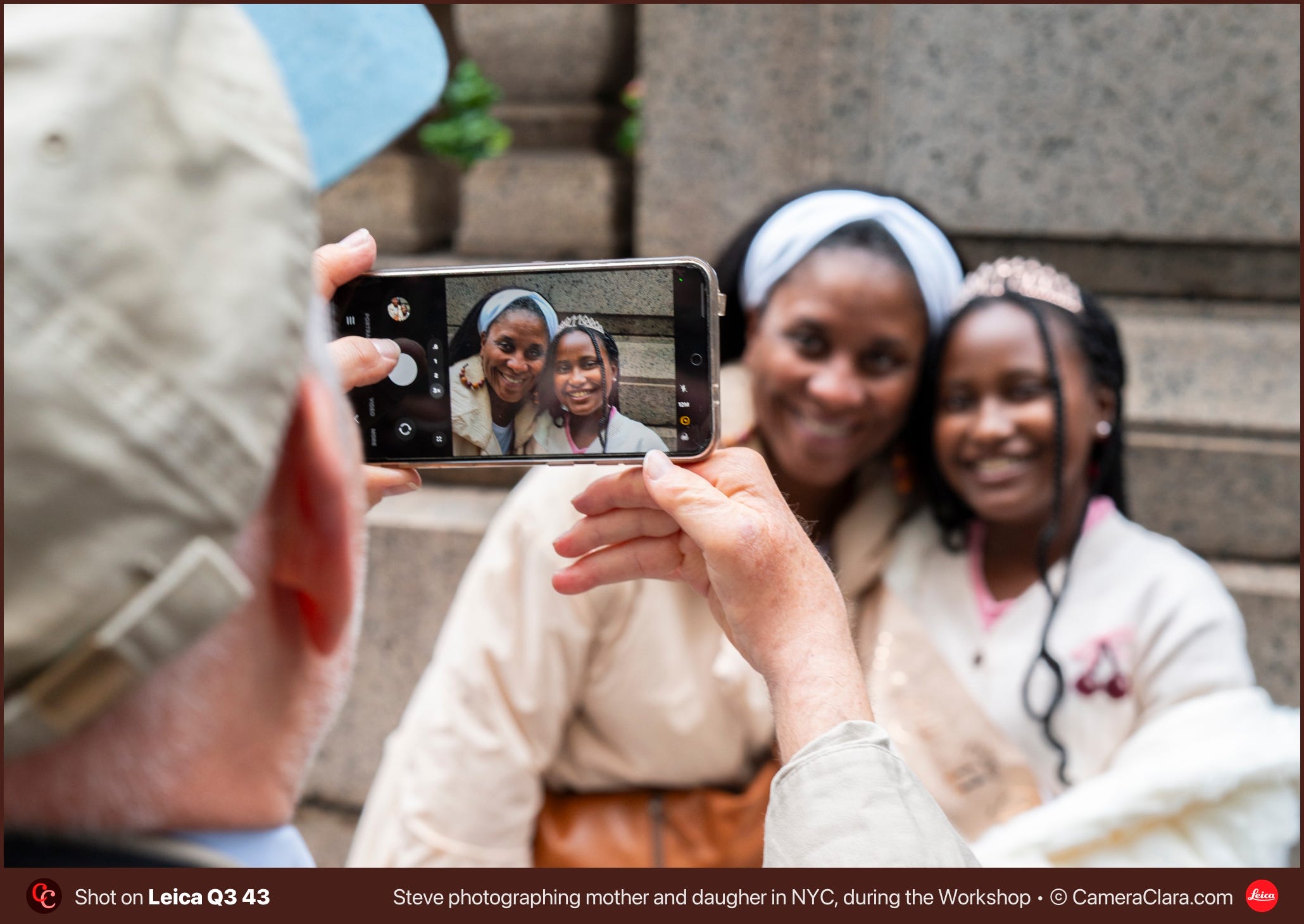
There was a time when you walked into a village and ten or twenty kids would follow you everywhere. Cartier-Bresson described them as burrs sticking to your legs. Ten years ago, in a tiny village in Rajasthan, Steve walked into a tailor’s shop and a little kid was watching a TV show on his phone. The kids see the whole world now. A foreigner in town is no big deal. “You’re like invisible,” he said, and he means it as a good thing. The kids are still curious, just not about him.
Delhi in August felt like a different city from the one he remembered, and better: life has improved. Like walking through Greenwich Village or Tribeca today after knowing them in the sixties. He is just as protective of this city. He can list the losses and the near misses: Robert Moses wanting to run a highway through lower Manhattan, the transformation of Penn Station, which still makes him sad every time he thinks about it, Grand Central saved only thanks to Jacqueline Kennedy. For a man who has spent his life photographing things that disappear, it makes sense.
When asked if Steve has he ever retired a picture because its subject became uncomfortable, he categorically said No. The only reason he retires pictures is that forty years later he has better ones.
Film, digital, and AI
What has stayed the same across film, digital and now AI? “You still have to walk around.” That is where the pleasure is for him: the discovery, the looking, the exploring. From Kodachrome to digital the process is identical: you arrive somewhere, it’s a blank canvas, you think there’s nothing here, you start looking, and suddenly you see a lot of things. Sitting at a computer generating pictures with AI is not where it’s at, he said. Maybe for someone who is an artist on a computer, but not for what he does. “The pleasure is in the looking.”
What did change is everything after the shutter. He hands his cards to an assistant, they go through the pictures together, darken here, open the shadows there, fix a file that came out flat. The great thing compared to thirty years ago is the printer in his studio: he prints immediately, looks at it, decides it’s too dark or wonders how the face came out all red, and goes around again until the print looks the way the scene looked when he shot it. He remembered black and white nights in the darkroom until four in the morning, printing over and over, better, better, better, and then coming back the next day and liking the first one. Dodging and burning is easier and more precise now. He doesn’t drive the software himself; his assistant does, and he tells her what to do.
Who’s making up the rules?
A photography student in the audience had been told to turn in 36 pictures a week and asked how to edit down from the 300 they were shooting. Steve was more surprised by the teacher than by the student. “Who’s making up the rules?” Shoot this much or that much, use this camera or that camera, a Holga or a cell phone, whatever you want. Winogrand shot a lot. The idea that you’re supposed to limit yourself is one he isn’t sure about.
His advice to a 16 year old in the room and to his own younger self was the same. Photograph your family, your friends, your neighborhood, your city. Go to a party, go to a friend’s house. Don’t wait for some grand project. Don’t worry about whether the pictures are good or bad, forget that. Make pictures that are fun. Fifty years from now you won’t care whether they were good. “You’re going to care about the memories.” He does this himself, almost every day, at home, mostly with his phone. Dinner, family, whatever is happening. It’s just easier that way.
I (Raf) find that a very simple and ingenious approach to photography, which AI will never replace simply because AI didn't live the moments with you, and photography is a snapshot of a real-live moment, simple as that.
On approaching strangers: that goes case by case. Life unfolds and sometimes you have to shoot without asking, because you can’t walk up to two lovers on a park bench and ask them to redo the embrace. “Could you do that again?” No. Generally people are fine with being photographed. Sometimes not. And geography matters: in Asia, South Asia, China, Japan, people are very cool about it; head the other direction, toward the West, and it gets tense.
No plan B
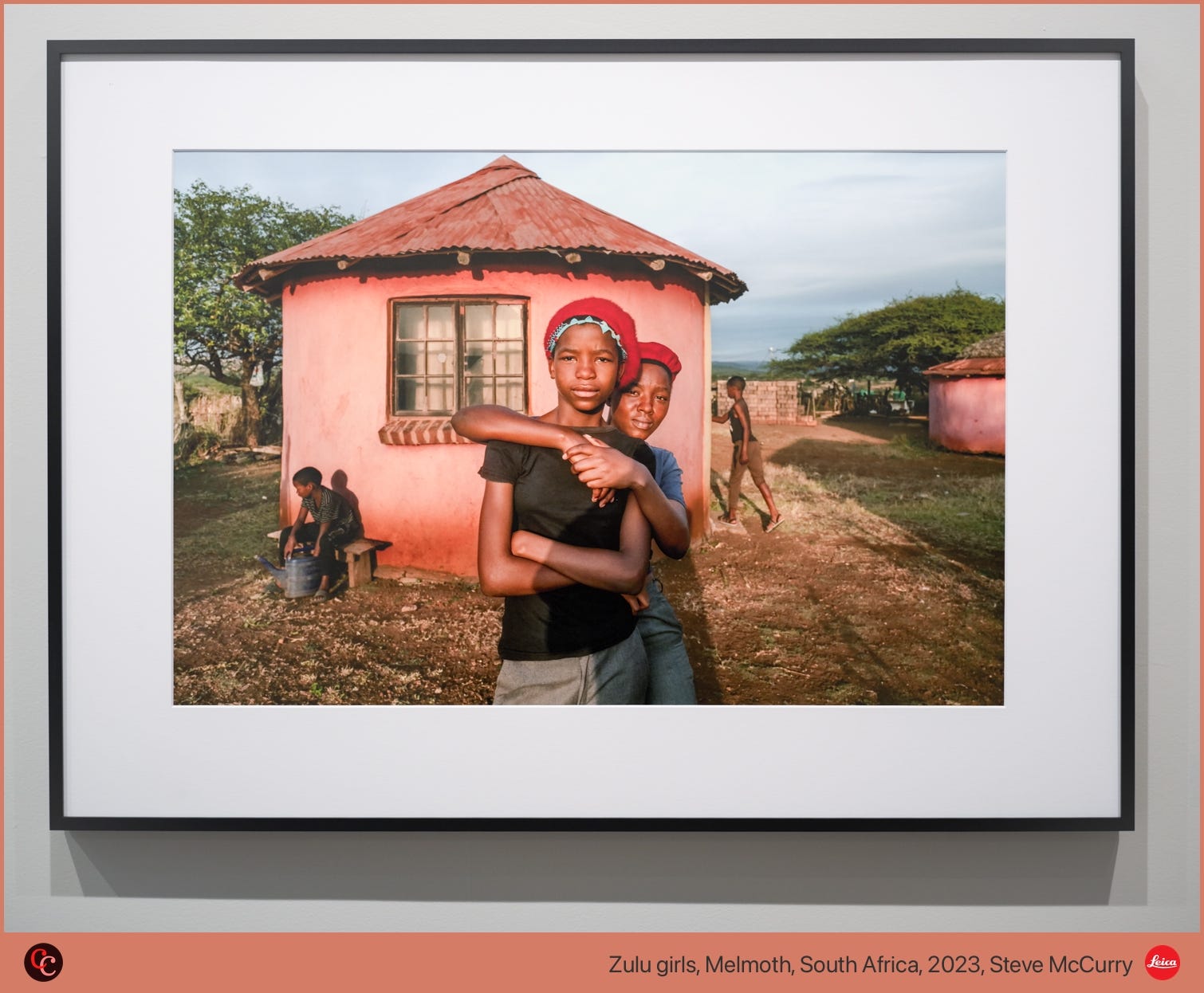
Had he ever lost his passion? “Never.” The thought of quitting had never even occurred to him until somebody asked. There was never a plan B. Well, plan A was filmmaking. In his third year of college, getting desperate about what to do with his life, he took cinema courses, then cinematography, and inside that a class in still photography. It was the cheap way out. Film needed a crew, a cameraman, sound, lights, and the stock was so expensive that one 35mm canister costs as much as 1 second of motion picture.
Steve has a great sense of humor. When asked when did he realize he was good. he answered “Right away 😆.”, followed by a “just kidding”. Then the real answer: a workshop with Lisette Model in her New York home, where she said some nice things about his pictures, and later Elliott Erwitt, whose book was the first photo book he ever owned and who became a friend after Steve joined Magnum. He would have continued without the encouragement, he said; he was already set on traveling to India.
And if it hadn’t worked out? “One of those bike messengers.” Then, honestly: a filmmaker, or a carpet trader. He loves carpets from Afghanistan and Iran, Pakistan makes great ones, India too, the guys in Morocco. “I would have had a rug store,” he said.
What I took home
I went for a book signature and came home with a method and lots of excitement for the next day's workshop with him.
Slow down. Go back tomorrow, and the day after. Look at shapes and movement and how people relate to the place they’re in, and let color be information rather than the point. Photograph your dinner. Shoot as much as you want, because nobody is making up the rules. And if you’re a big guy in a red shirt, know that Steve McCurry would rather cross the street than let you into his frame 😆.
I’m taking it as a compliment to the shirt, without knowing the best was about to come in the day after…
The Leica Akademie Masterclass with Steve
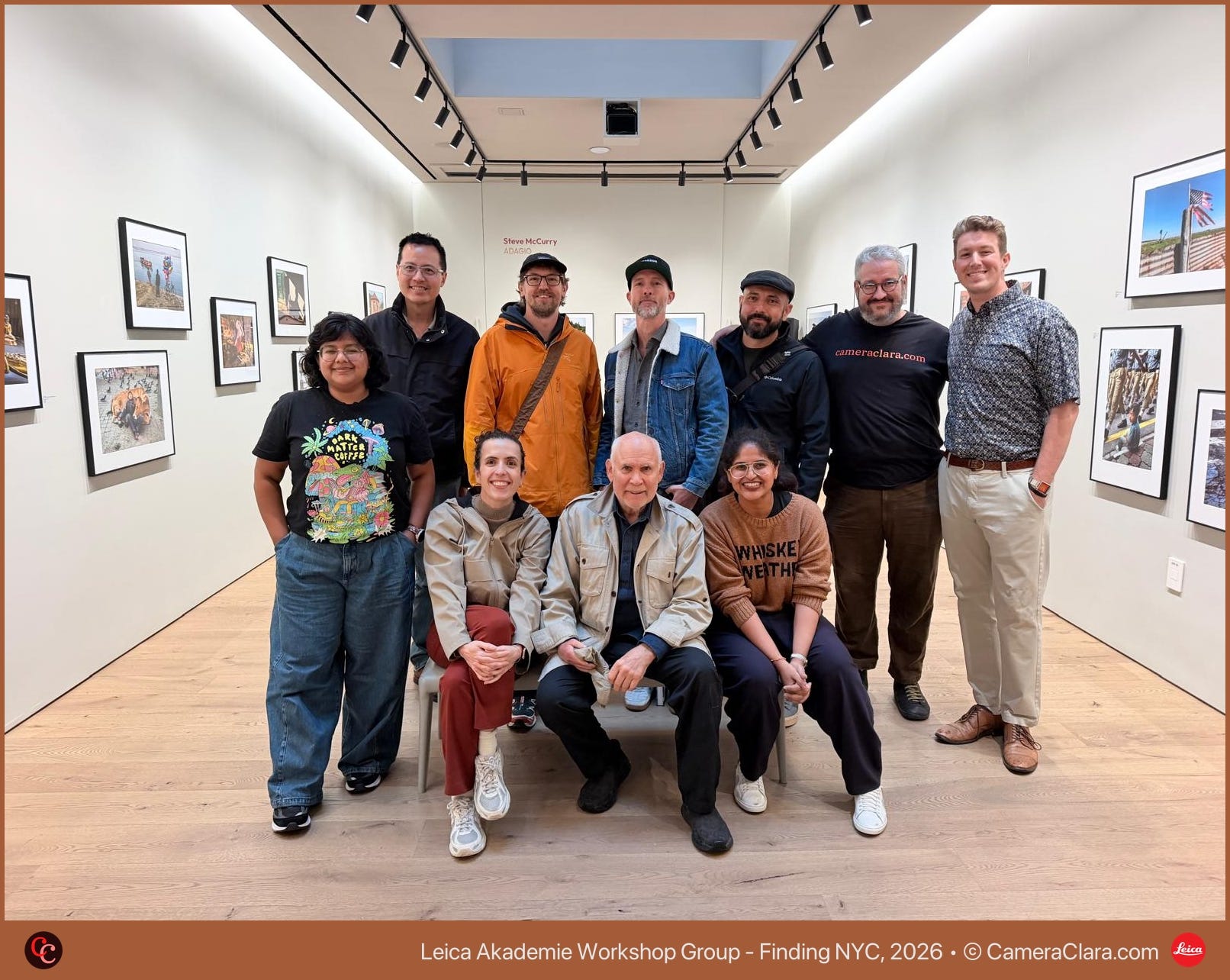
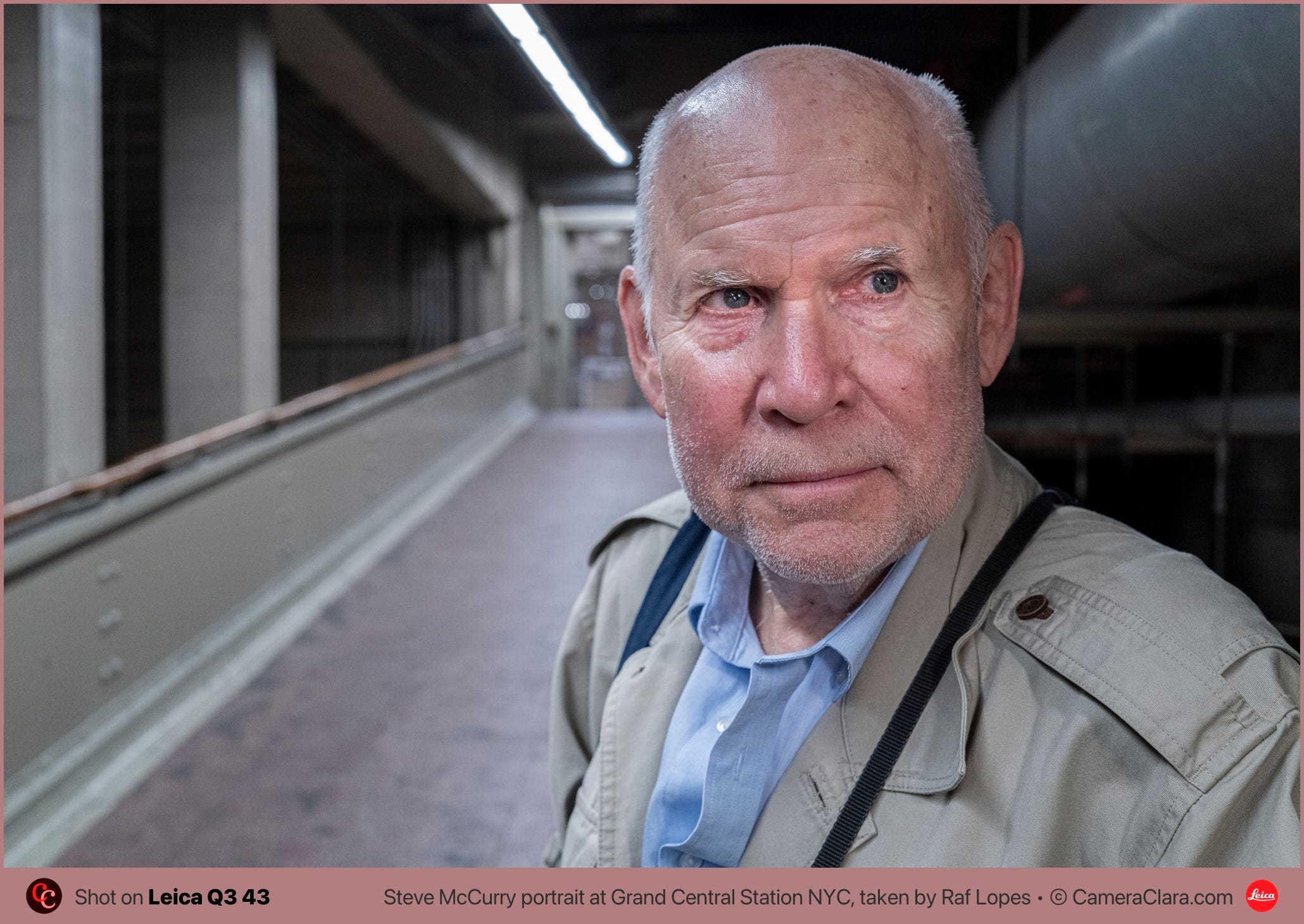
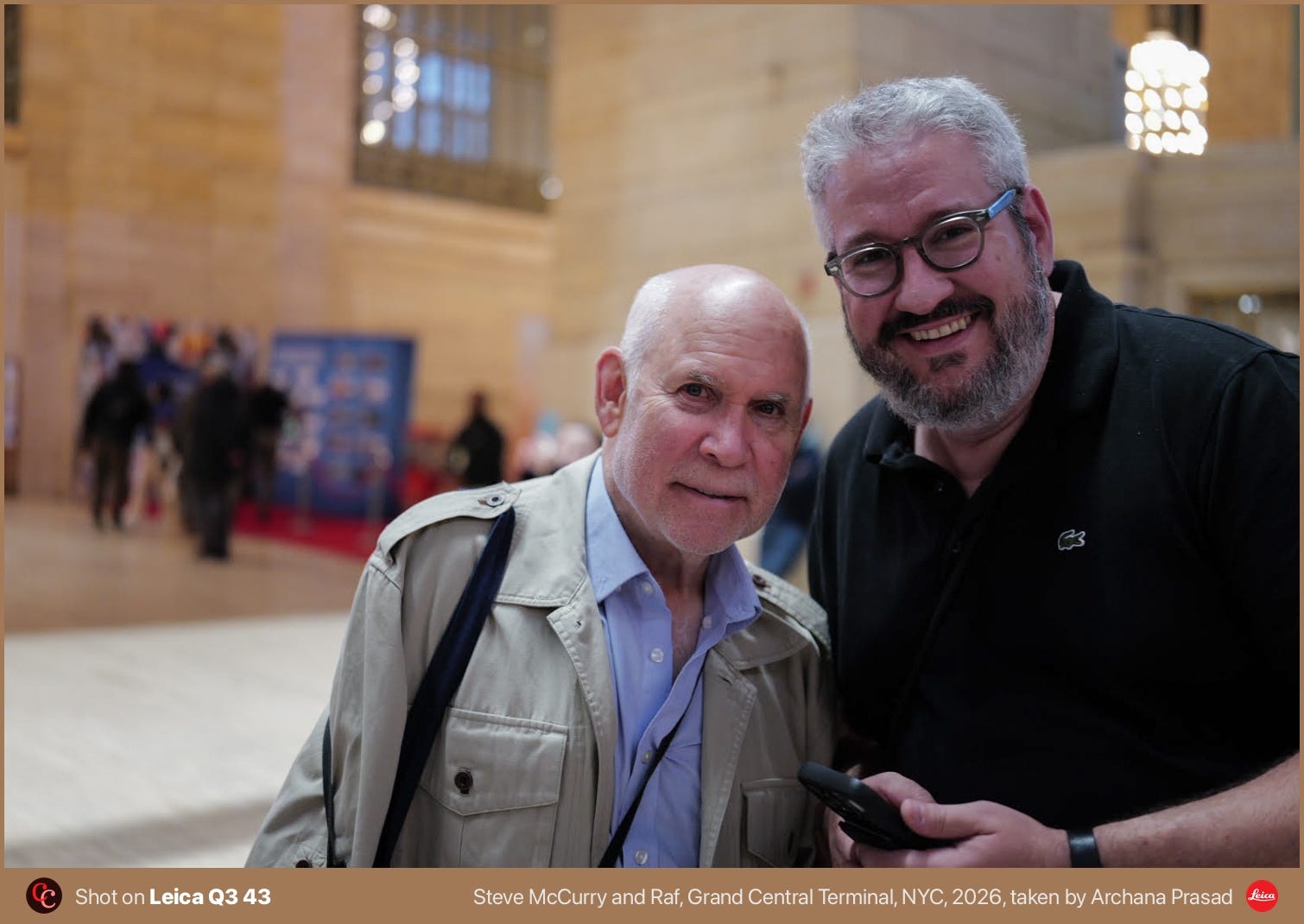
The day after the signing, it was workshop day! It’s a Leica Akademie USA masterclass called Discovering New York: a full Saturday photographing in the streets of the city, starting at the Grand Central Terminal and Bryant Square Park, shooting into the evening, with a group lunch in between, and then a critique and review session on Sunday afternoon back at the gallery. The group is kept small (nine of us this time), and Leica lends you a camera for the weekend if you want to try one, I got a Q43 and got in love with it!
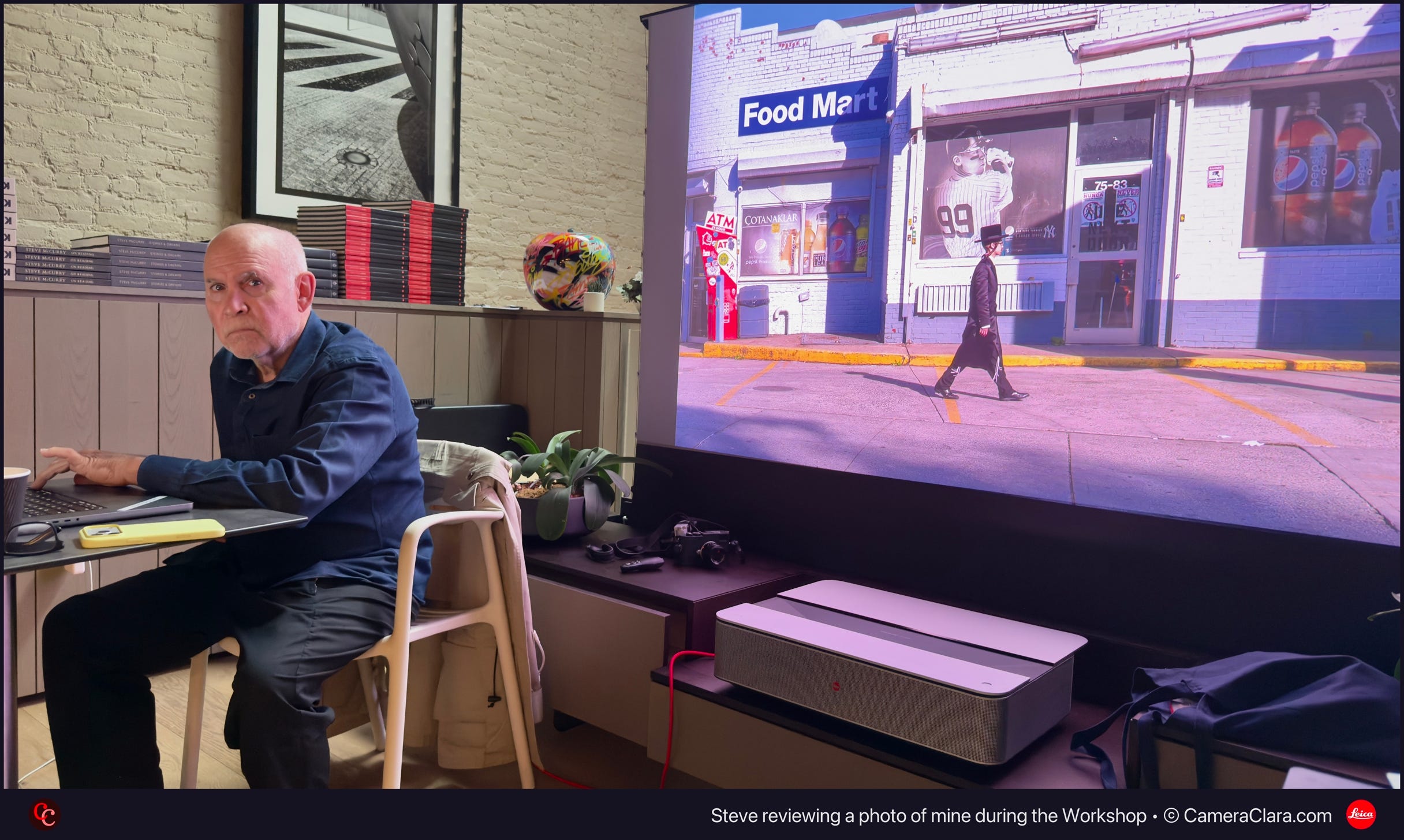
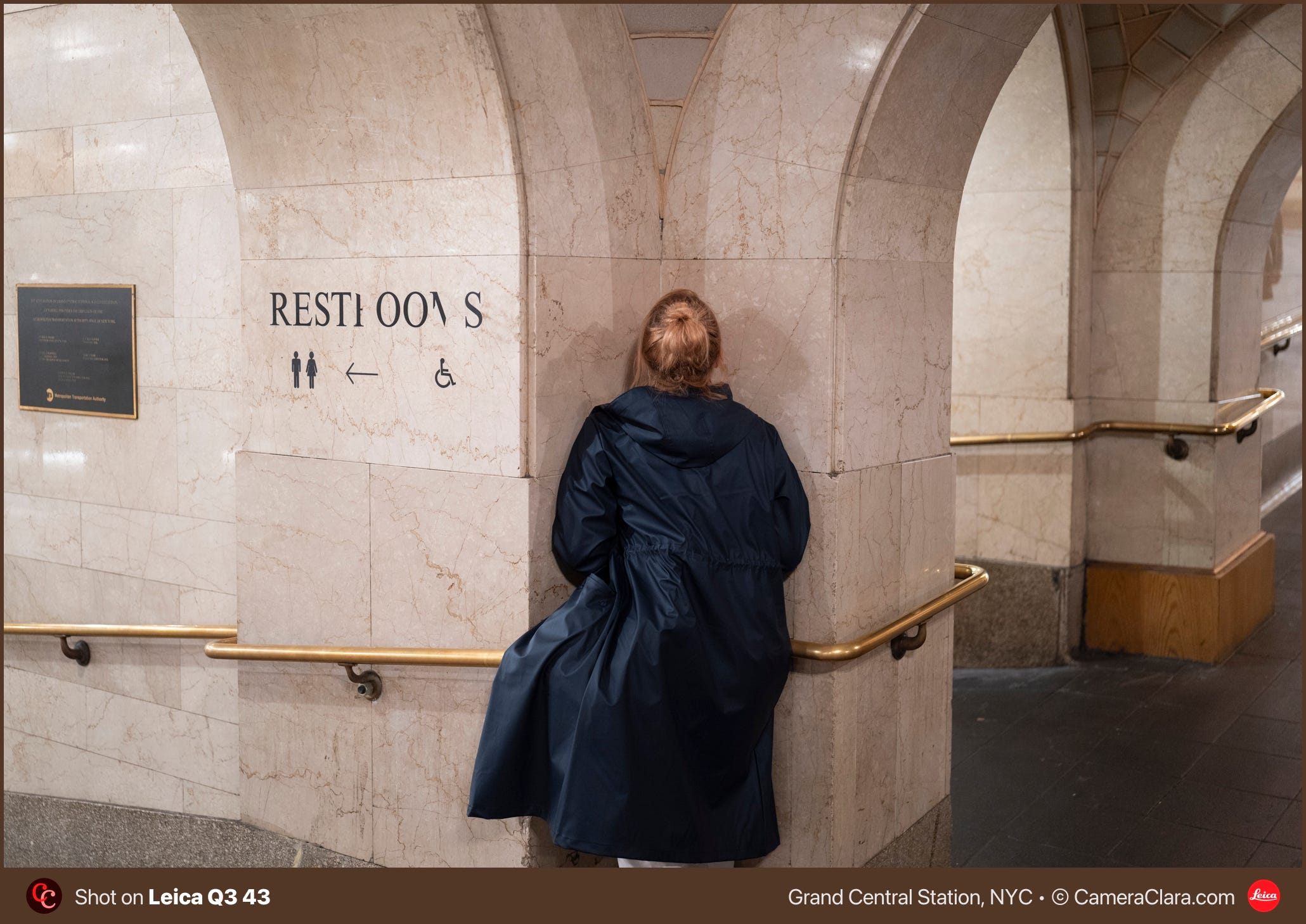
Image Stabilization on the Q43 really made some Grand Central shots possible without cranking up the ISO dial. I will surely write another article about the Workshop, with my photos, some videos I did, and things I had learned.
Steve’s energy at 76 years old (or mid 60s, as he jokes) is unmatched. He is a natural at photography (as we all know), and if you spend five minutes with him you will notice not only that, but also what a humble and interesting person he is.
I highly recommend doing his Workshop. If you are interested in doing a photography workshop with Steve as well, there are a few coming up. In October he is back in India for a workshop in Kolkata and Varanasi with Zoom Photo Tours, his first workshop there in more than 25 years, and the same trip he mentioned on stage. Then Venice, October 24 to 27, 2026, and Kathmandu, Nepal, March 20 to 27, 2027. No new date has been announced yet for the New York edition, but Leica Akademie USA keeps a waitlist at AkademieUSA@Leica-camera.com for the Leica workshops.
If travel isn’t in the cards, he filmed an online course on the streets of Rome with Masters of Photography. Everything is listed on his news page.
I had the best weekend of my life, and Steve McCurry and I became friends after all this interaction and knowledge exchange.
Steve McCurry: Adagio is on view at the Leica Store & Gallery New York, 406 West 13th Street, through October 18, 2026. More on the book and exhibition here.

Thanks for reading Camera Clara, the Publication that helps you learning more about photography culture, keeping high standards with fine art, publications, prints, books, and all the good elements photography can offer to us all. ❤️
Please consider subscribing to for more articles right in your inbox! Quality over quantity, with the forever love for film photography and its techniques. With a paid subscription, you can also send me a DM anytime, and we can arrange video calls where I can help you with your photograph needs, up to you, of course, no pressure!

Absolutely sensational! What a privilege to spend three days learning from this master! Steve was one of the people who inspired me to leave engineering behind and pursue photography. Long may he thrive, and thanks for sharing this, Rafa—your *Camera Clara* is becoming an excellent benchmark in the photography market. Congratulations!
Sounds like you had a great time! Super post!