


Some weekends ago I spent a Sunday morning in the Meatpacking District, on the cobblestones outside the Leica Store, for the first Cars & Coffee that Rétromobile New York has run in the city. Cars, coffee, cameras, and a lot of people worth talking to. That last part is the one that stays with me. I loaded CineStill 800T. On paper this is the wrong call. 800T is balanced for tungsten light, the warm orange of indoor bulbs, and here I was under a hard, blue, cloudless sky. The textbook says correct it with an 85 filter or expect everything to skew cold. I left the filter at home. I metered box speed, 800, with the M7's center-weighted reading, and let the film do what it wanted.
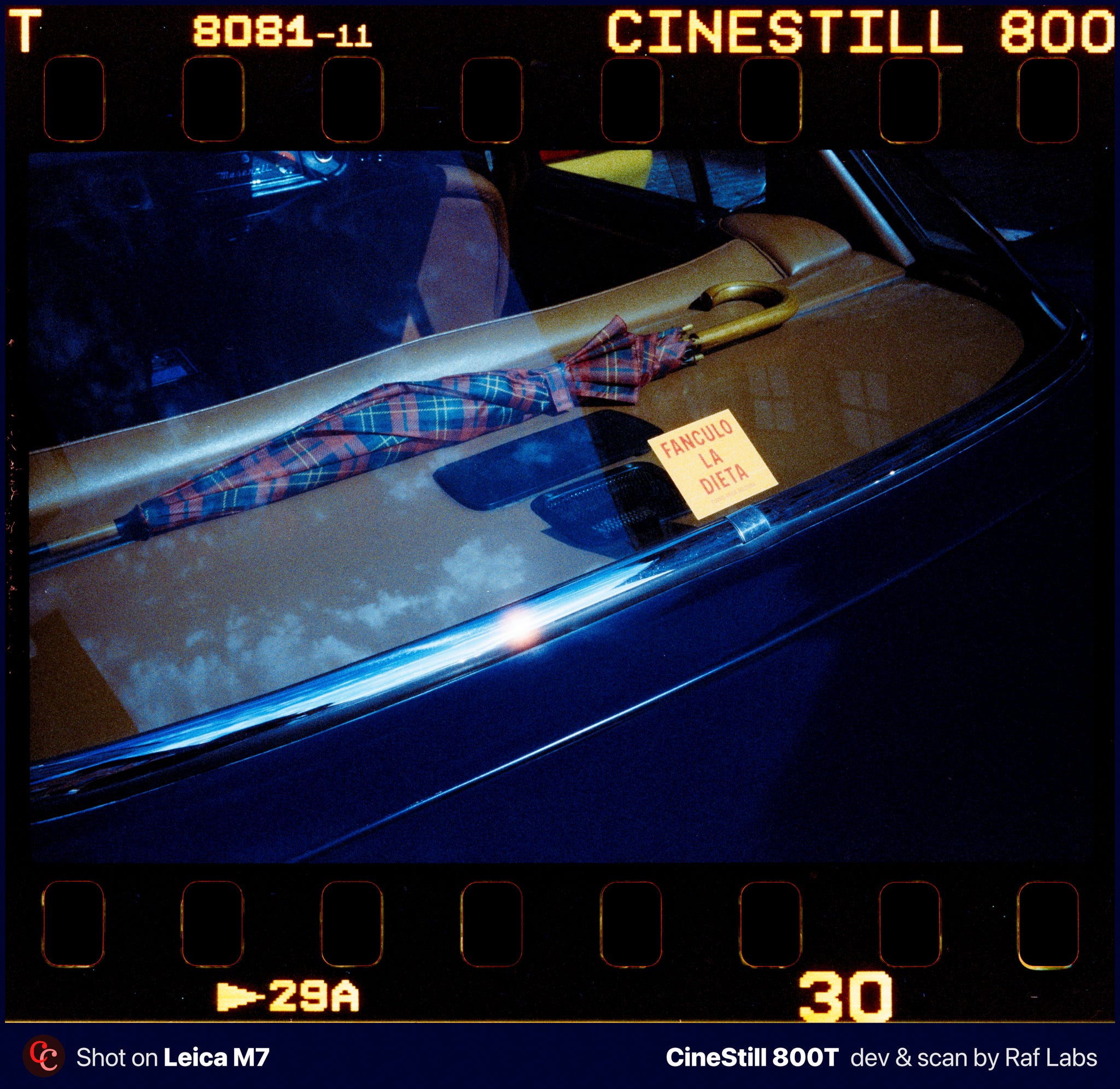
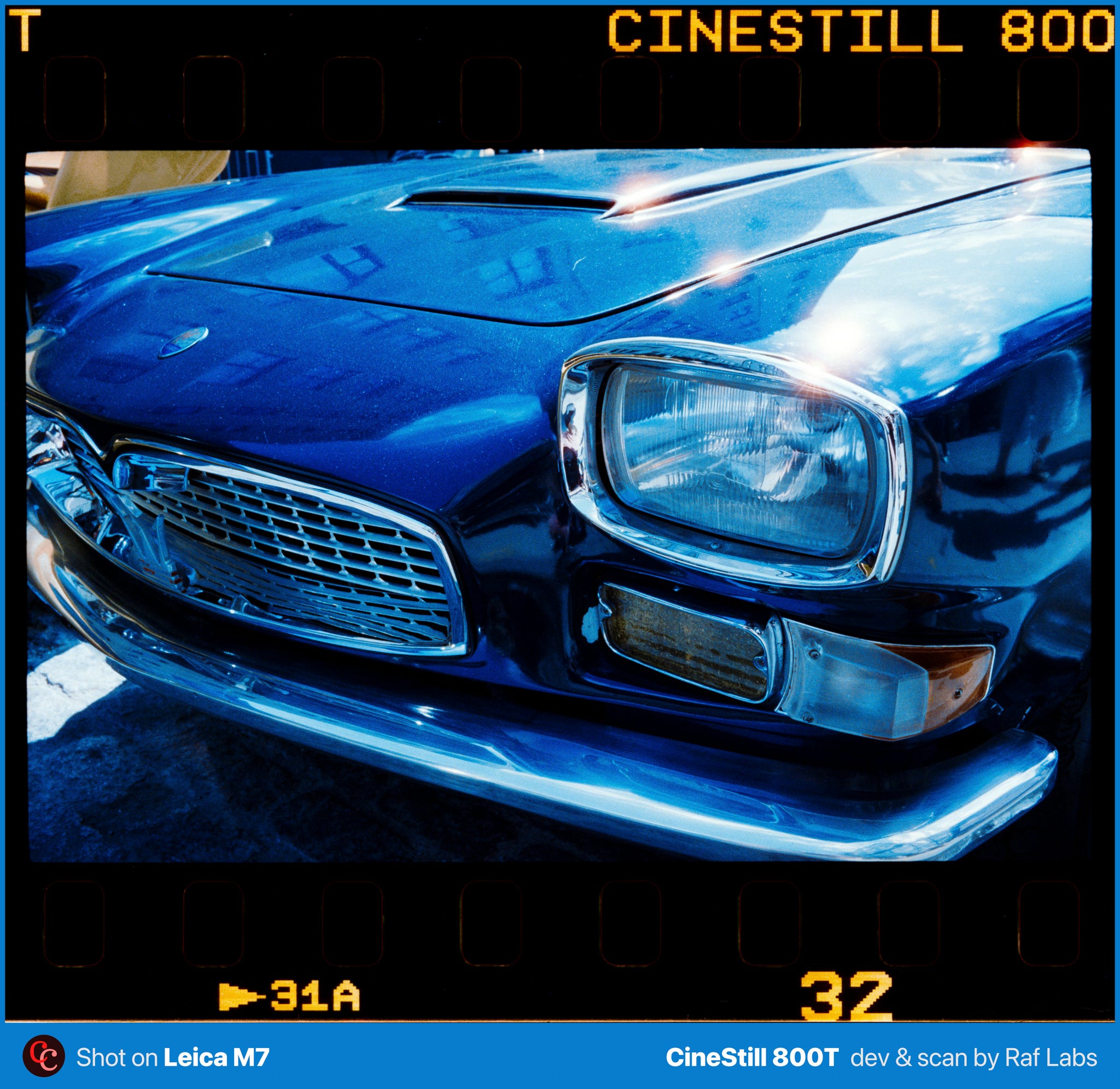
What it wanted, it turns out, looked right. The blues went deep and a little electric, the reds stayed rich, and the cool cast sat on the chrome in a way I liked more than a "correct" version would have. There is no right or wrong here. There is the film you have and the cars in front of you, and sometimes they just agree.
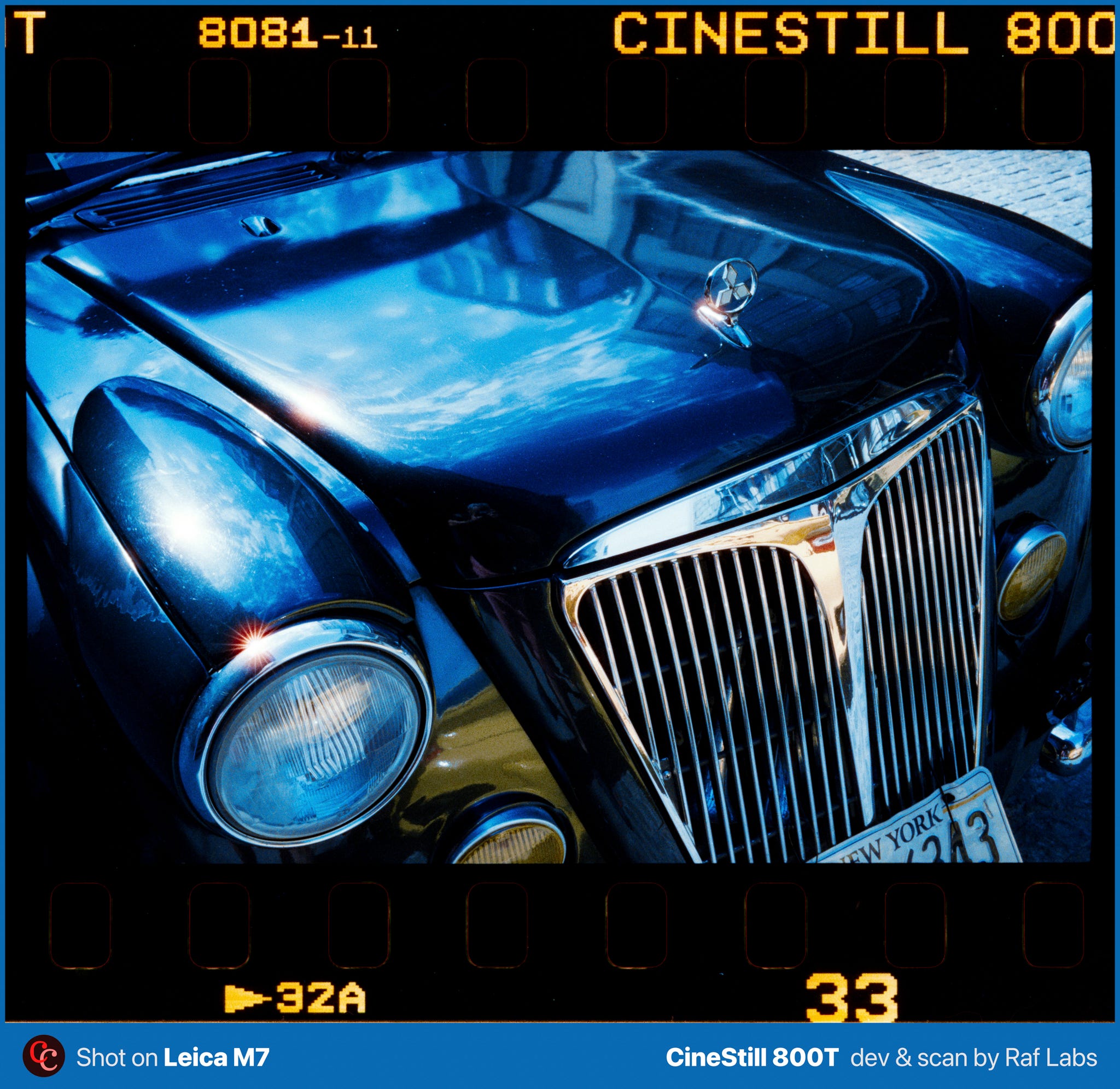
I went in expecting halation because I could see it coming when framing: little stars of specular light bouncing off bumpers, off a hood, off a headlight rim. 800T is known for haloing those bright points in red, and in a dark night scene it can bloom hard. Here, in daylight at box speed, the highlights were small and tight, so the red glow stayed gentle, I like saying the’re sexy without being too vulgar, looks like medium format. A soft ring around a headlight instead of an explosion. On 35mm that restraint reads as elegant rather than a gimmick. I'll take it.
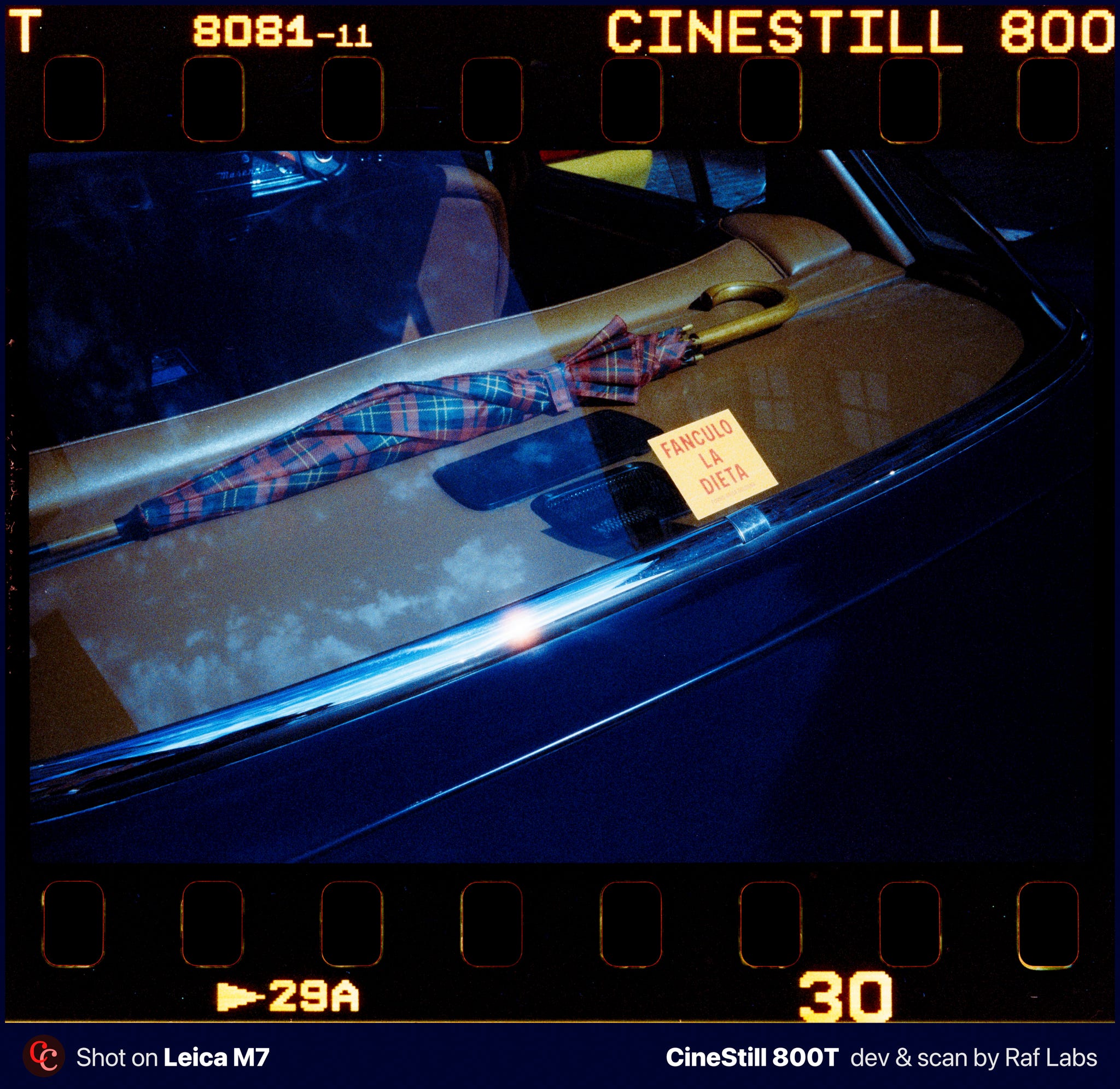
The cars earned the trip. There was a deep blue Maserati with a tartan umbrella tossed on the rear shelf and a sticker in the window telling the diet exactly where to go, which felt like the most honest thing at the whole event. A red Mercedes 380SL on Jersey plates, parked next to a white roadster wearing a small American flag. A dark blue Ferrari with a period New York plate, all that bodywork folding the sky into itself.
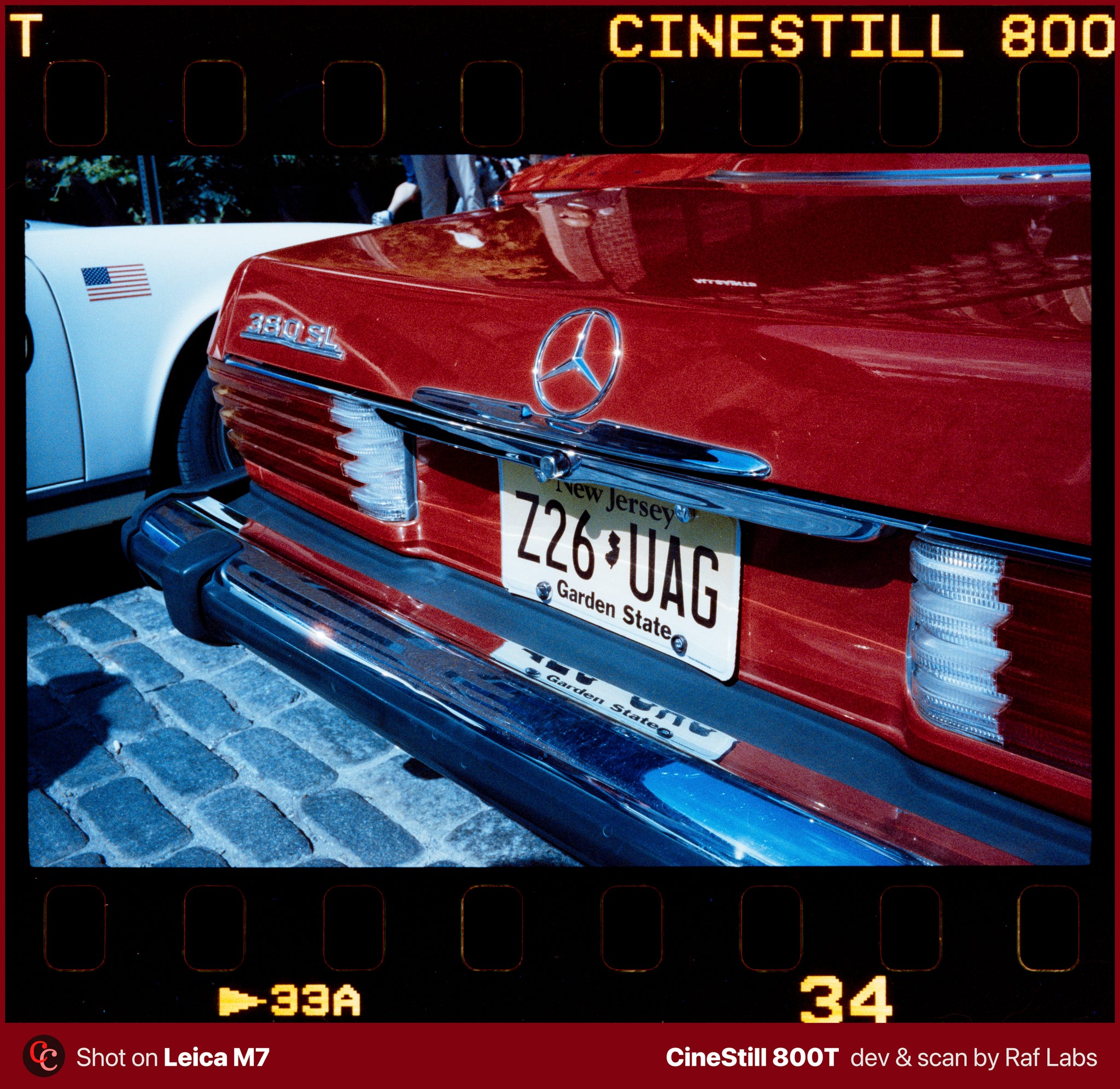
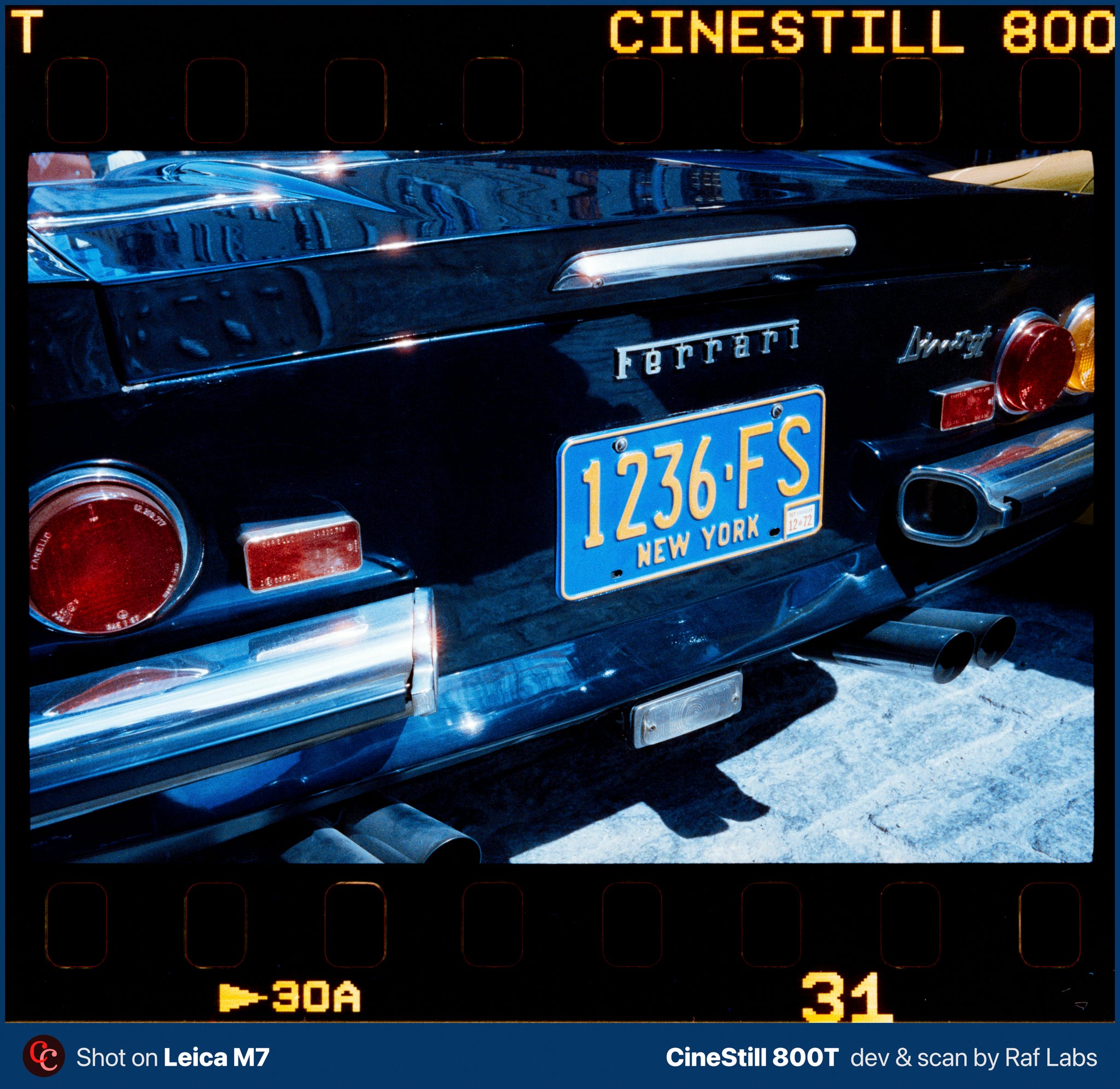
And then the one I keep coming back to. I half-recognized it on the day, and a little digging confirmed it: the red roadster on my last three frames is a 1957 BMW 507, brought by Gooding Christie's as the auction centerpiece. BMW built only a few hundred, and this was one of 34 Series 1 cars. I didn't know any of that when I shot it. I just liked the shape. The giveaway is sitting right there in my interior frames, two little Christie's cushions on the seats. I photographed the star of the morning without realizing it.
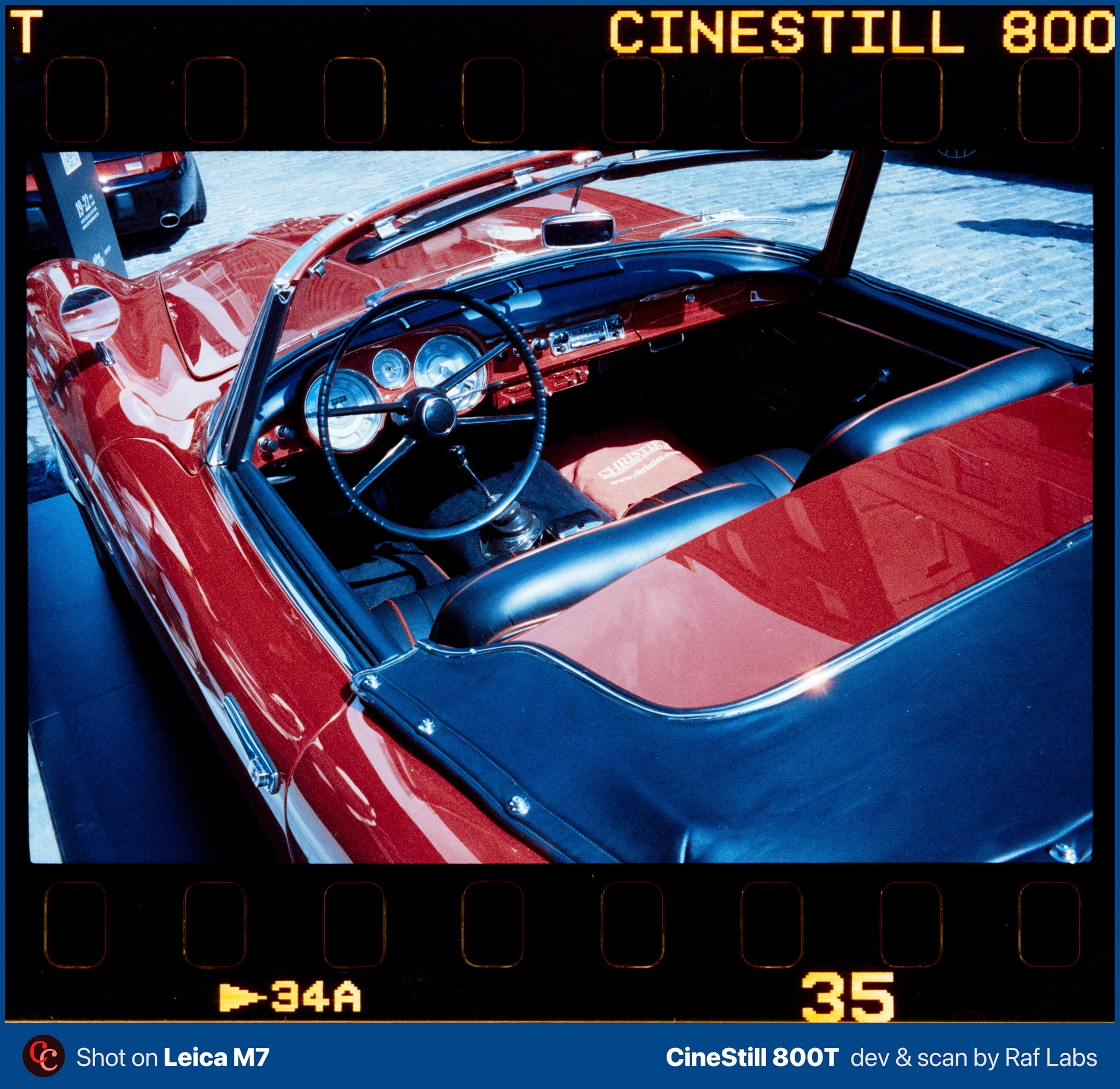
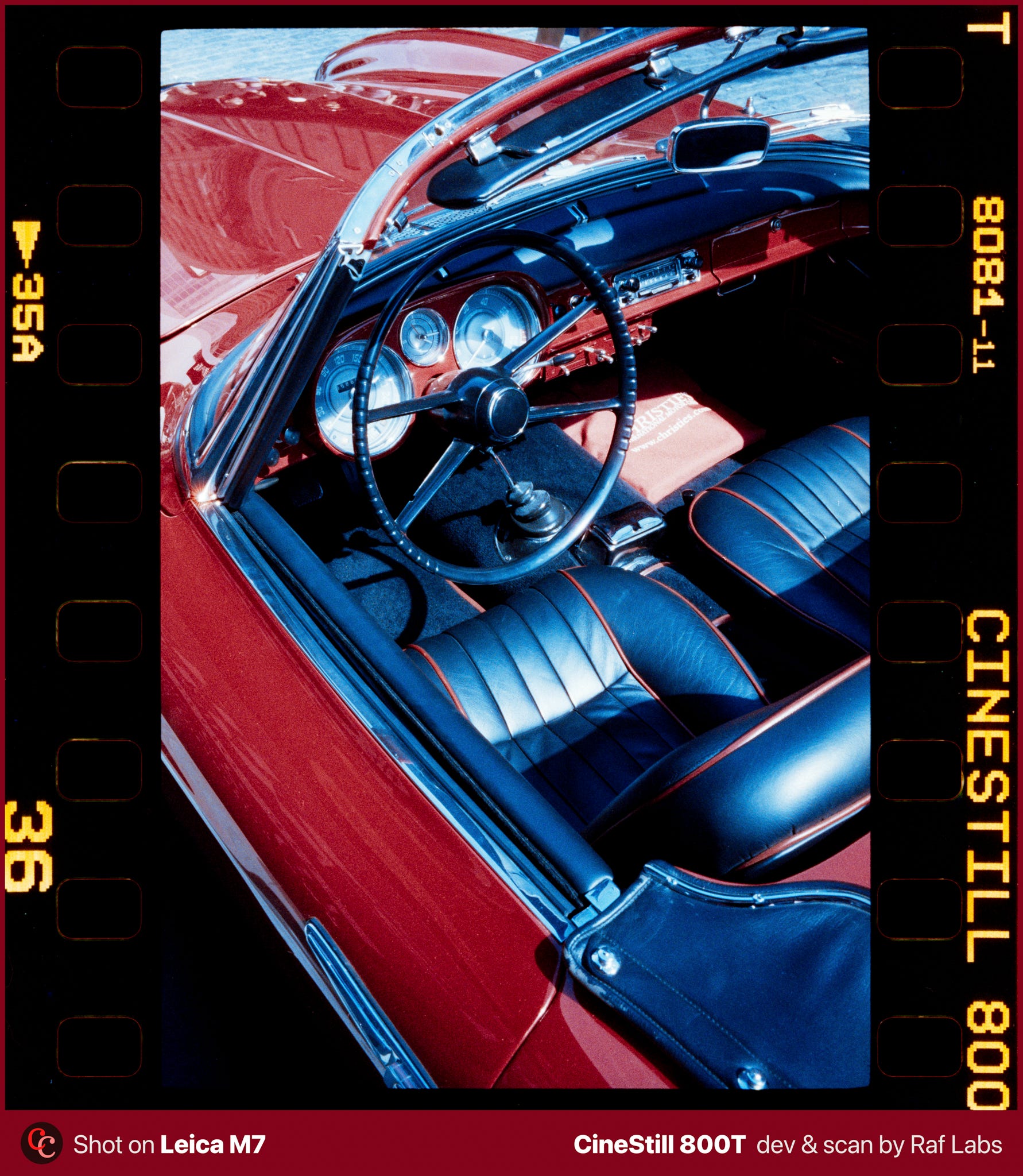
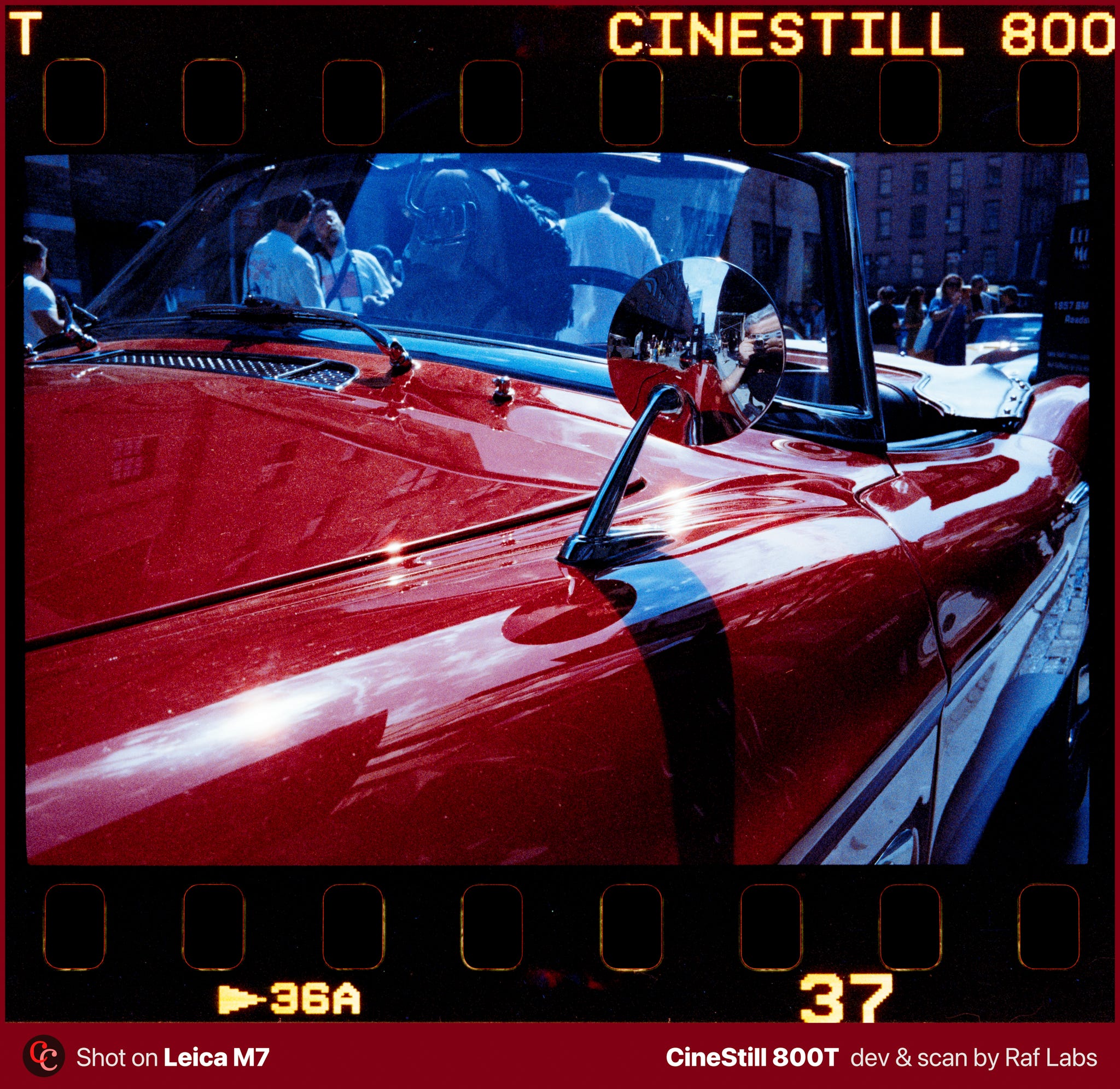
This is the part where I say something about Leica, and I mean it. The store didn’t need to host a car meet. It did, with Duane Wilson of Porsche Stimmung, because the people who fuss over a hand-built lens are usually the same ones who notice a perfectly set ride height. That overlap is the whole point. Leica stays a strong brand less for any single camera and more for mornings like this one, where the gear is the excuse and the community is the thing that actually shows up. You don’t build that with a spec sheet.
I have more frames from that day still waiting, shot on Kodak VERITA 200D (the new prohibited film for photographers), the new daylight-balanced cinema stock that I’m about to run through ECN-2 at home. After a roll of tungsten film bent to fit a sunny morning, I want to see what a film that actually wants the daylight does with the same cars. More on that when it’s dry.
I’ll do another post when I develop the ECN-2 film. Don’t send that to Kodak.

If you like this kind of thing, film, old cars, and the small accidents that make a frame, subscribe to Camera Clara and pass it to the one friend who’ll get it.
