


Disclaimer: I bought this film with my own money, like everything I cover here. Kodak didn't send me the film roll (c'mon Tim Ryugo, what are you waiting for? 😛)
The Kodak Ektar 100 is the only color negative film that makes me feel like I’m shooting slide without the slide-film stress. Punchy, contrasty, saturated almost past the point of believable. People online call it the finest-grain color film Kodak makes, the marketing is honest for this film stock.
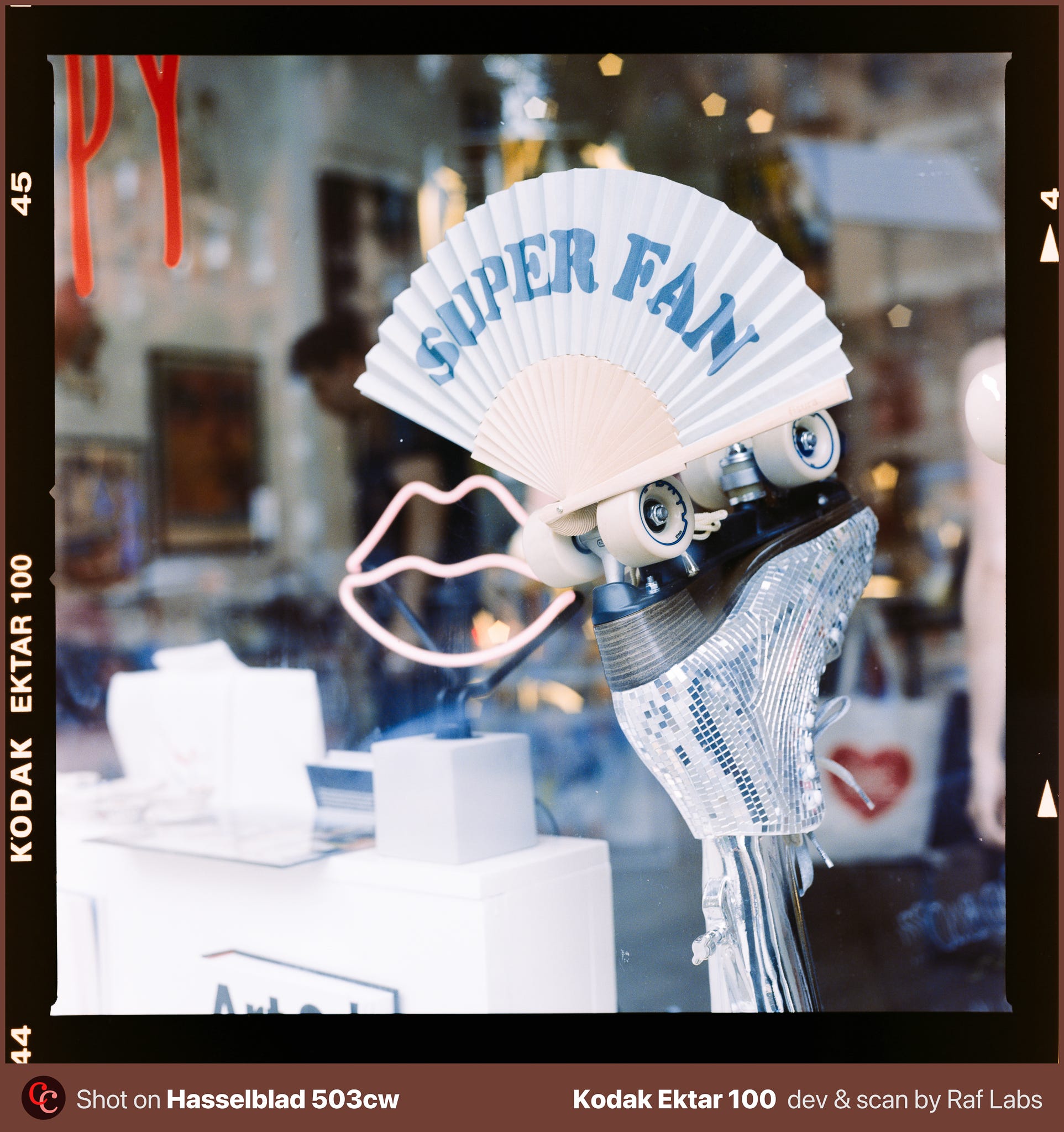
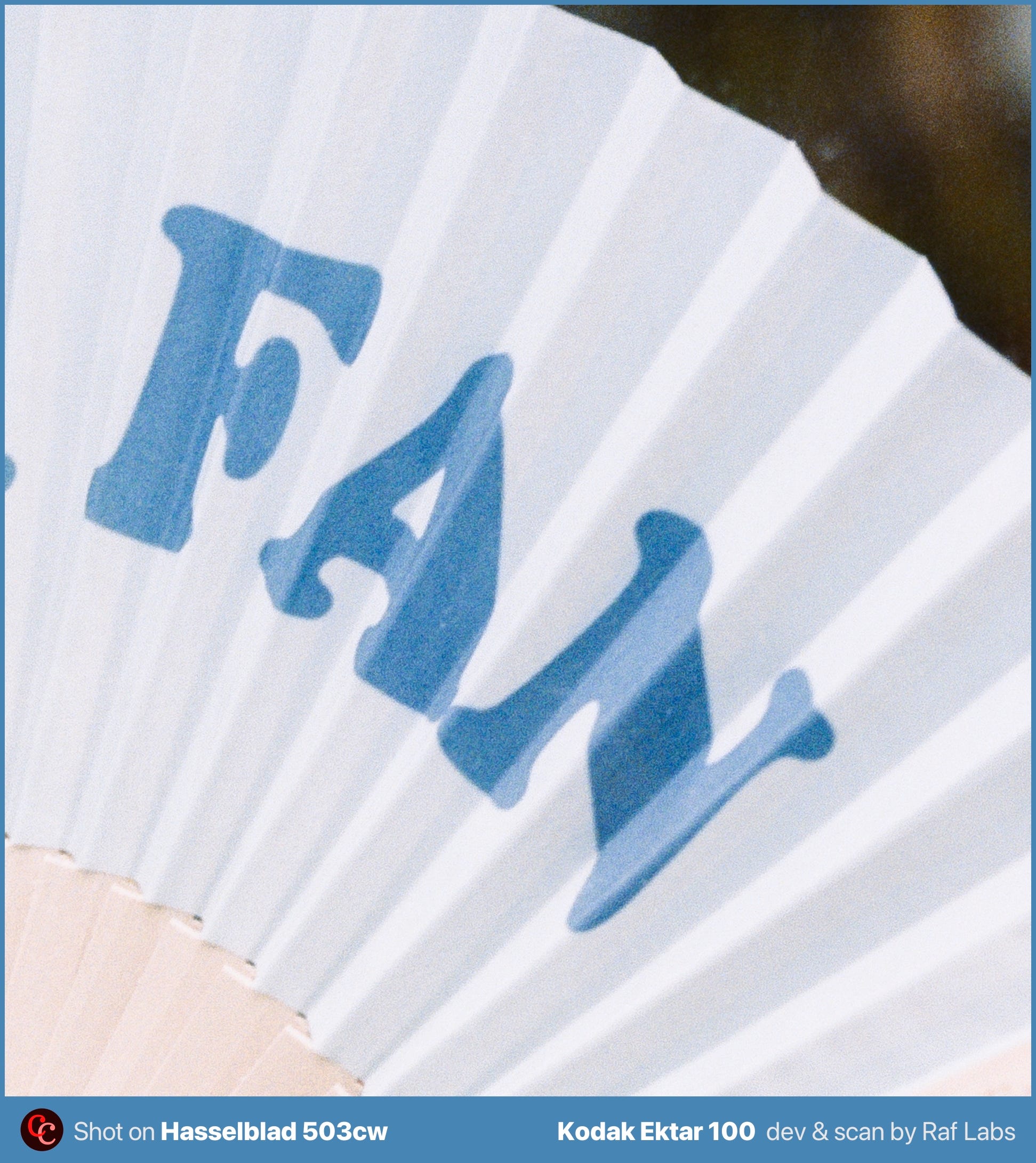
It's a fil stock with strong opinions, meaning if you shoot against them and you’ll be annoyed, but if you shoot with them, you walk away with postcards like the ones you're about to see in this post.
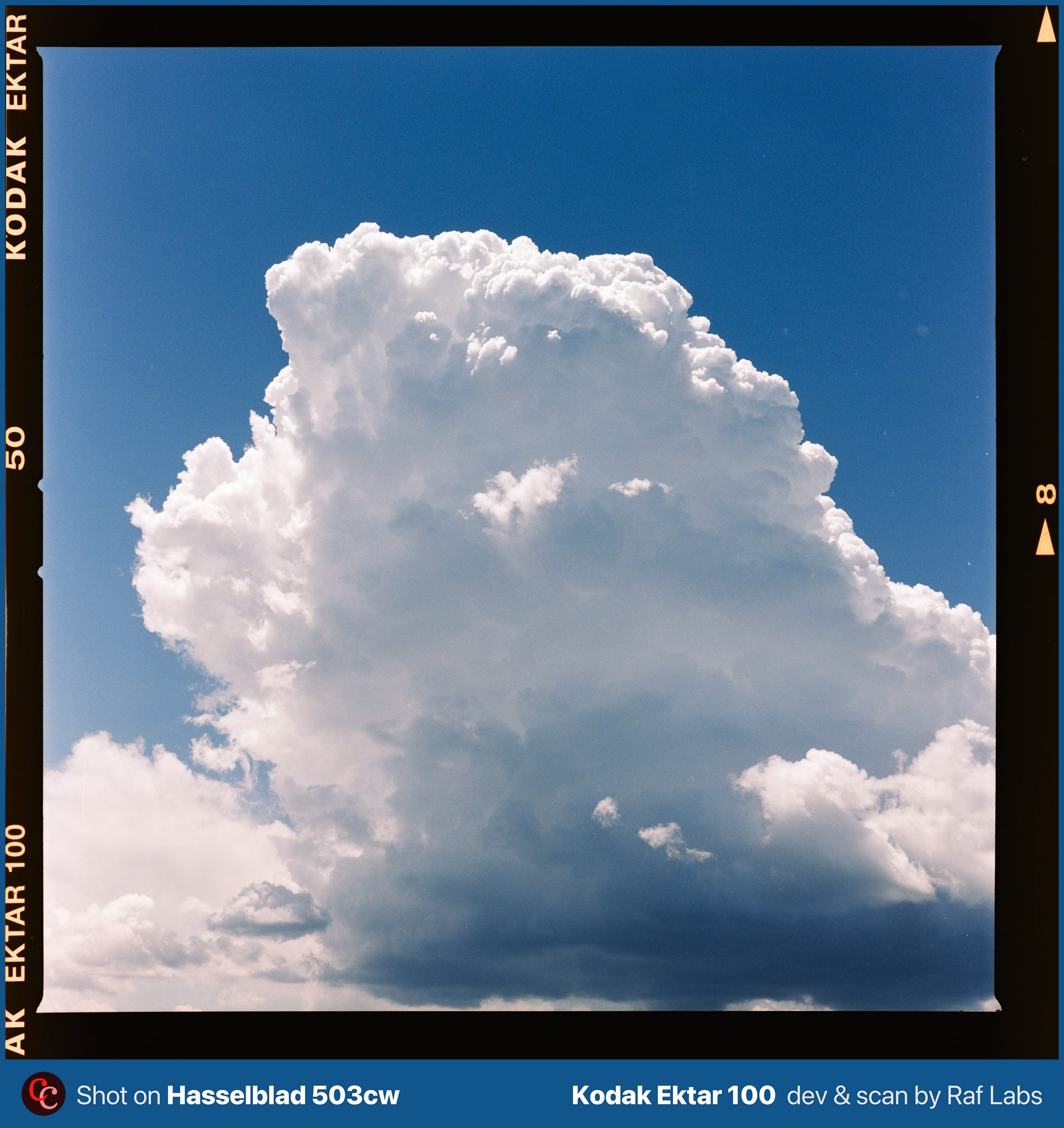
The blues, we have to talk about the blues
Look at that cloud. That deep, slightly cyan blue is Ektar doing what it does, and it’s why I load it for skies, water, anything with a real blue in it.
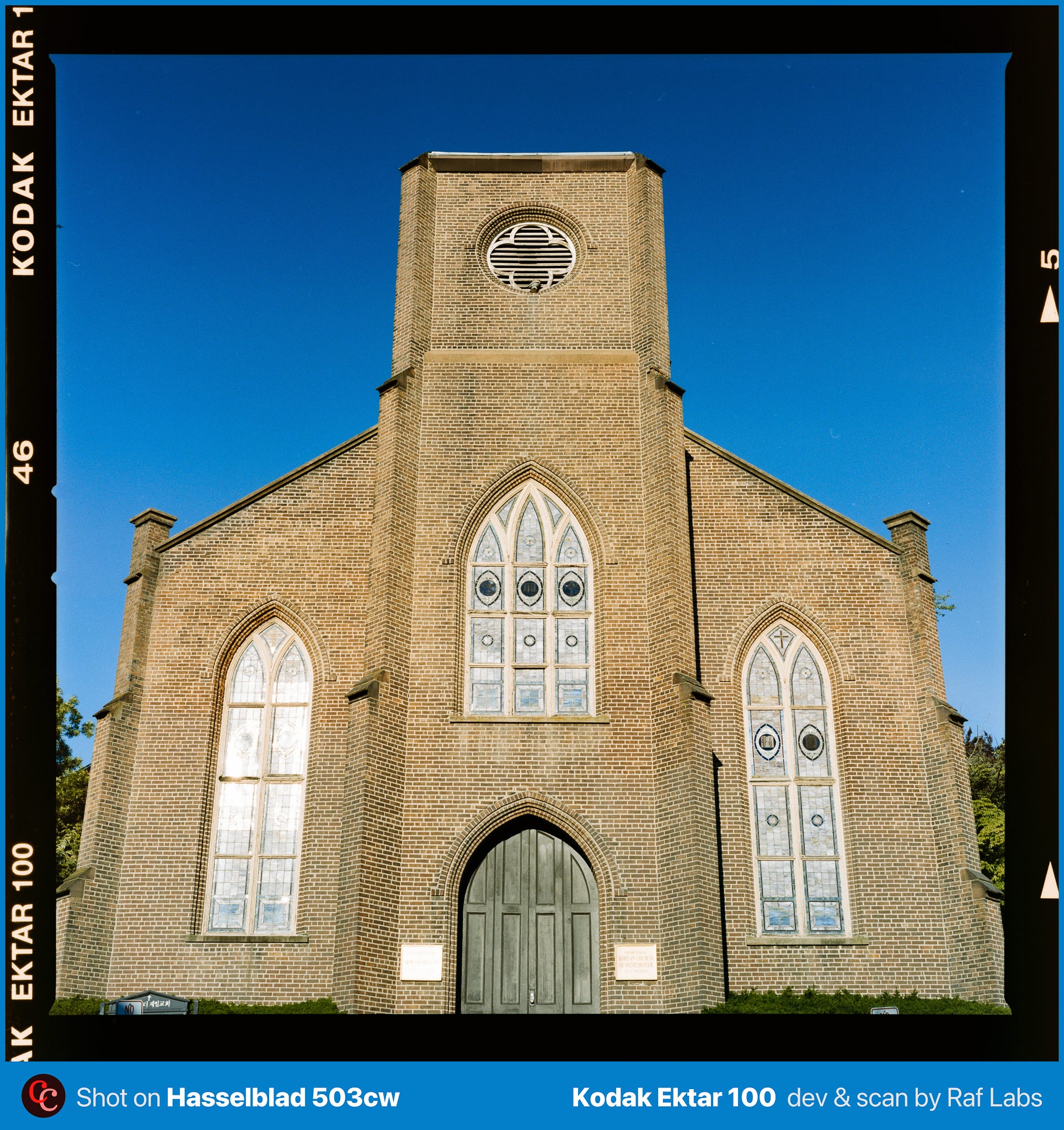
Ektar wants sun. If you hand it a flat grey day, the color goes quiet, sometimes a little cold. Hand it hard daylight and it sings. I meter for the shadows like any negative film, but I don’t push into overexposure the way I would with Portra, because Ektar’s highlights leave sooner. Look at roof of the car below: the bright edges are sitting right at the top of the range, almost gone. One more stop and they’d be blank paper, but if you nail the exposure, the film delivers.
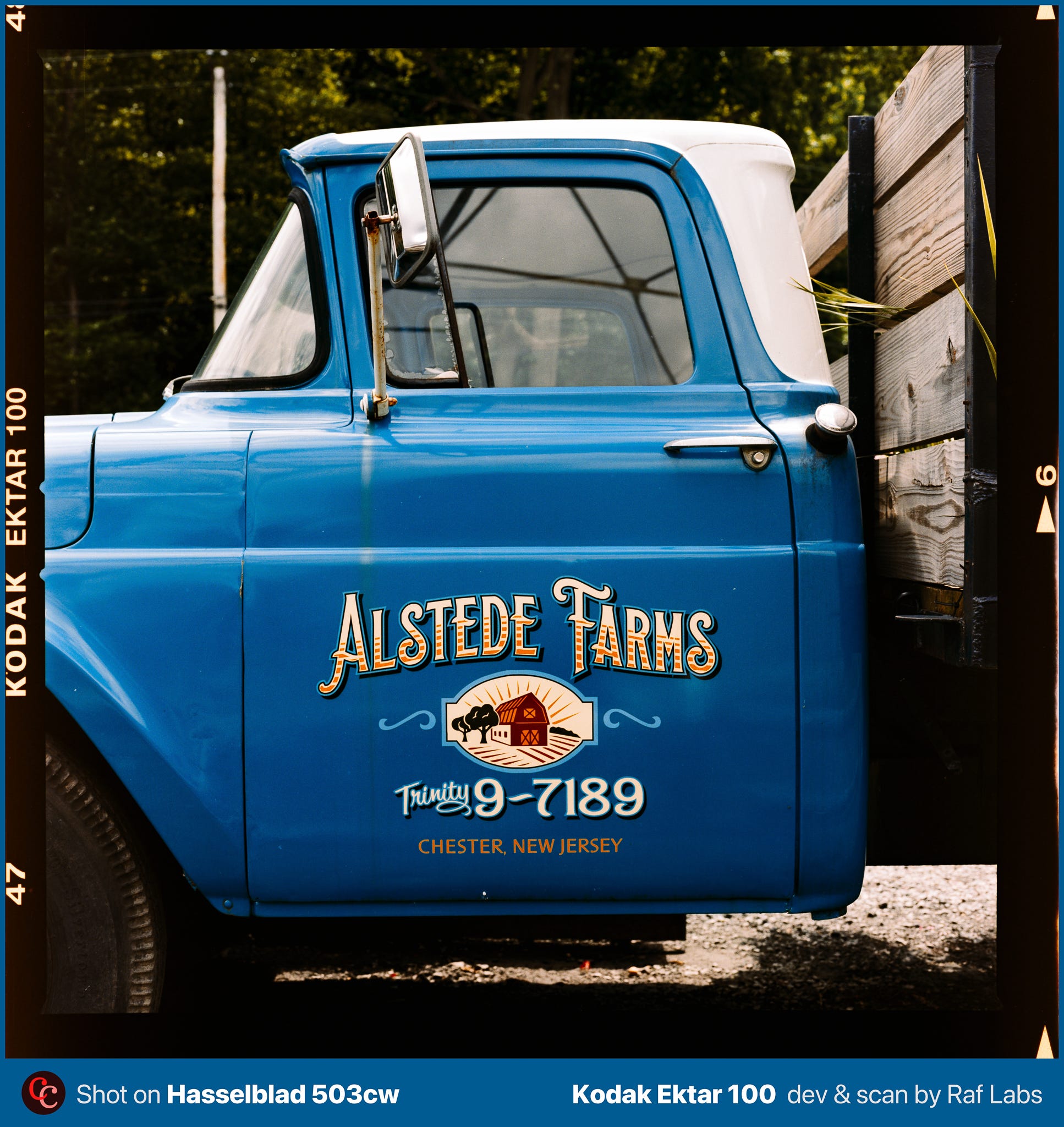
That old farm truck is my saturation test. The blue body is shouting, the orange lines on the lettering holds, and it still looks like a real truck on real gravel. That’s the line this film walks. Light, colors, and contrast (but not too much).
Fine grain, and why it scans so clean
People assume the fine grain is Ektar’s secret. But Ektar and Portra run the same grain tech, T-grain, so that’s not where the difference lives…
Quick version for anyone who hasn’t met the term. Most film uses chunky, pebble-shaped silver crystals. T-grain uses flat, tabular ones that catch light better and pack tighter, so you get finer grain and sharper edges at the same film speed. Kodak built it for the T-Max b&w films first.
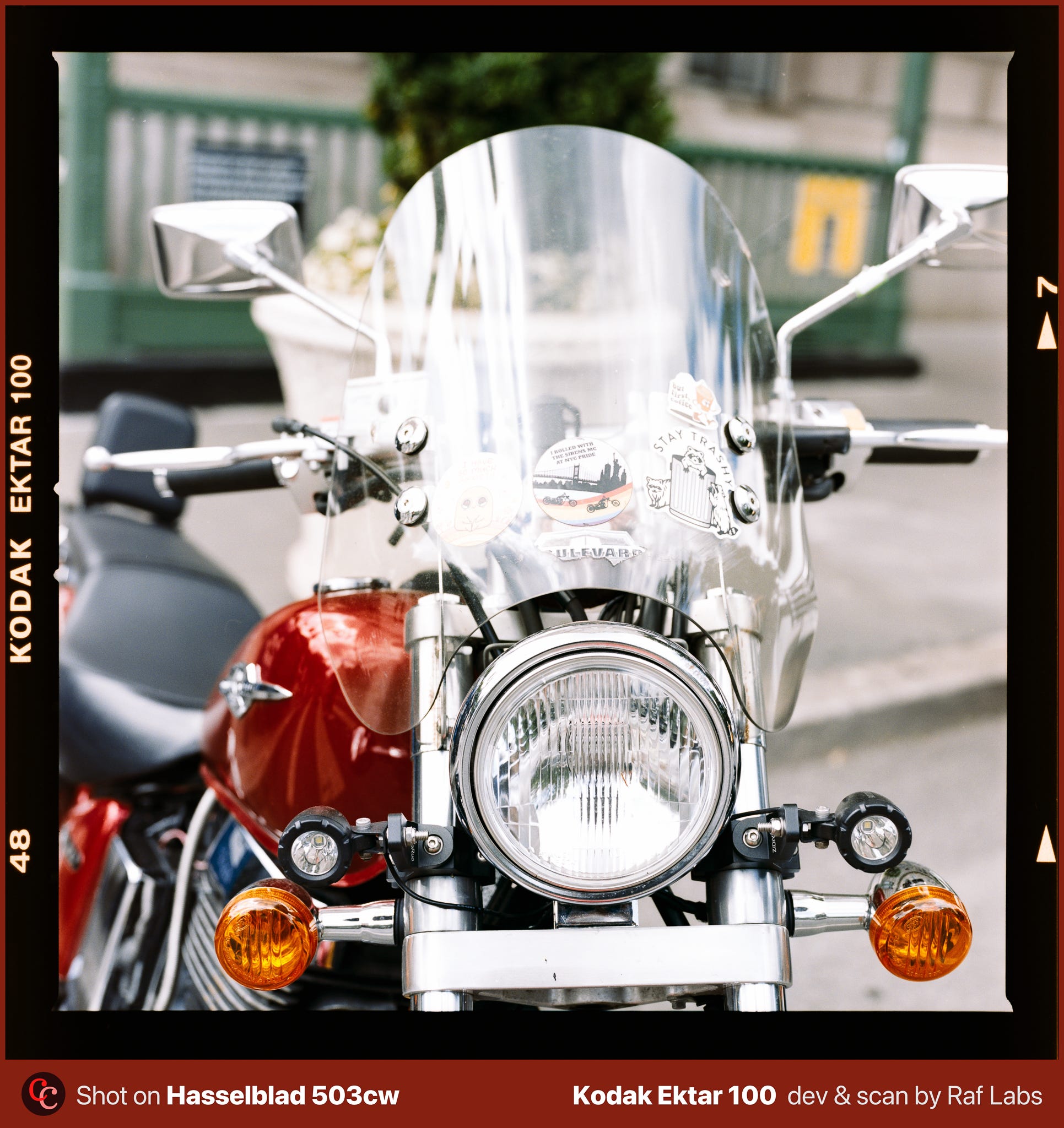
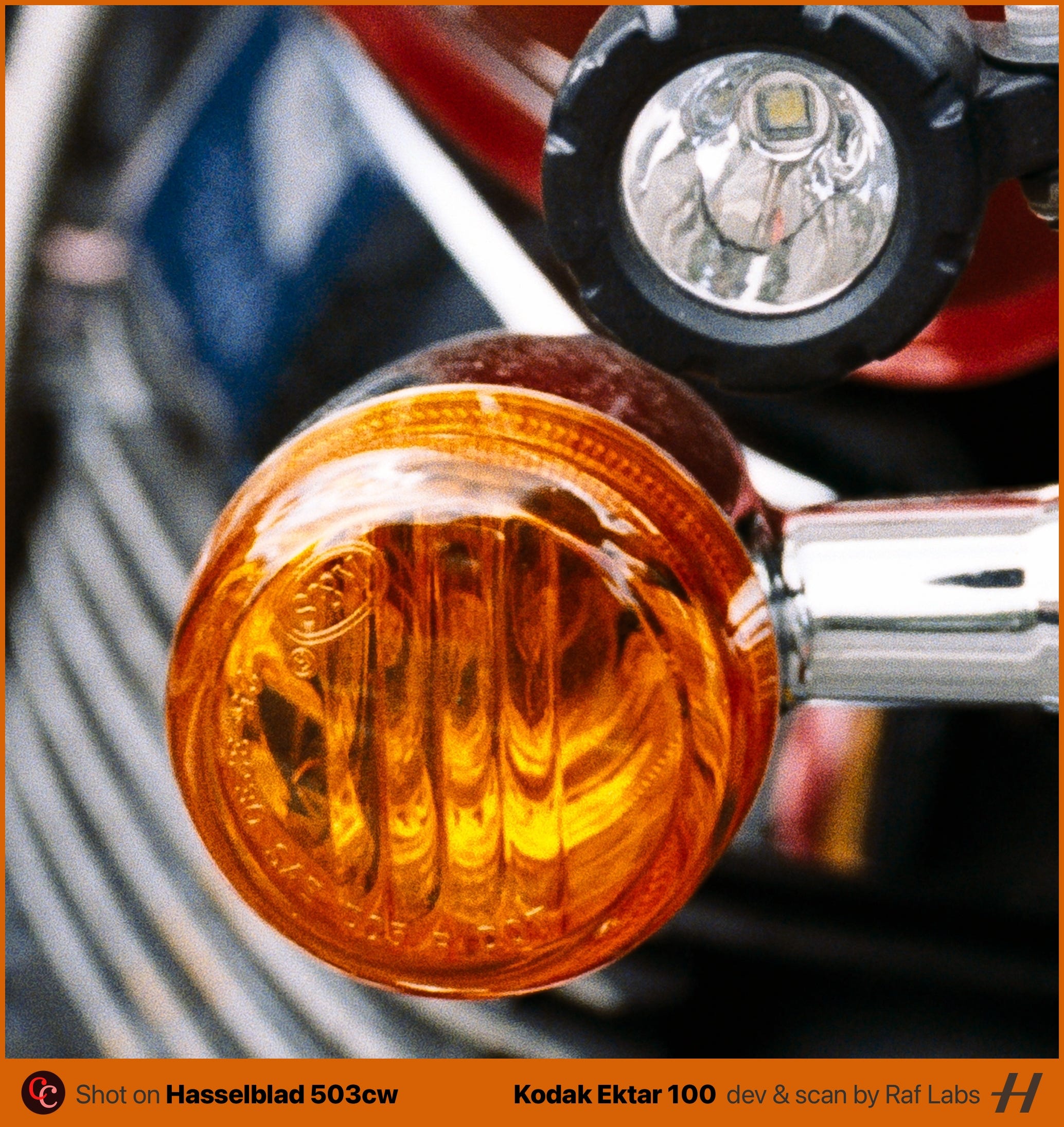
Ektar scans so clean!! I’ve pulled detail out of these negatives I had no right to get.
A landscape film (and that’s quite the point)
If you remember one thing, remember that Ektar is built for scenery. Bridges, water, stone, big open sky. The internet mostly agrees, and so do I !
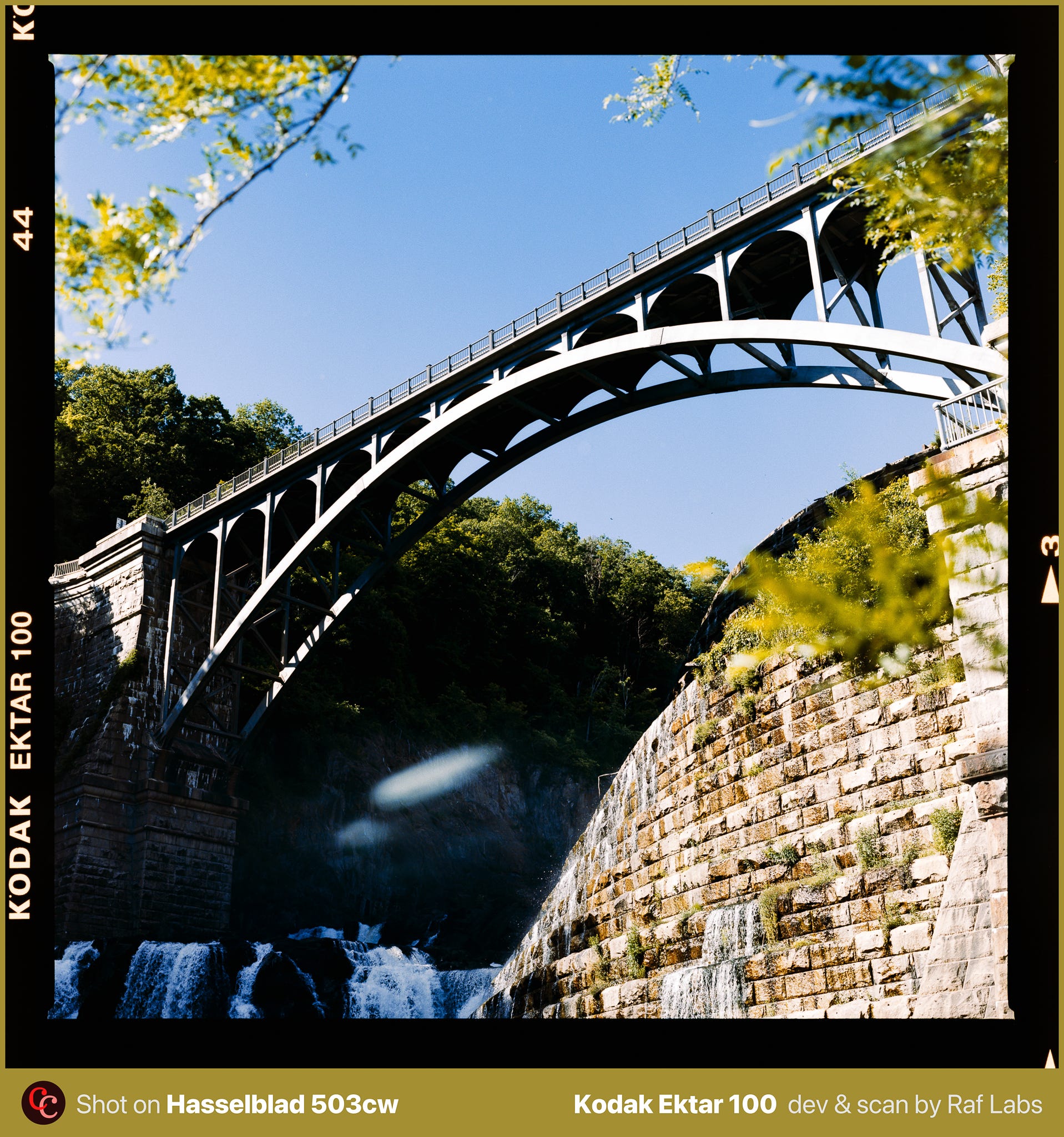
That George Croton Dam (above) frame is everything I want from a roll of it. Deep sky, white water, warm old stone, every tone separated cleanly. Shots like this are why I forgive the price. I wish I had it in my last trip to Mexico, where I visited the Chichén Itzá pyramid…
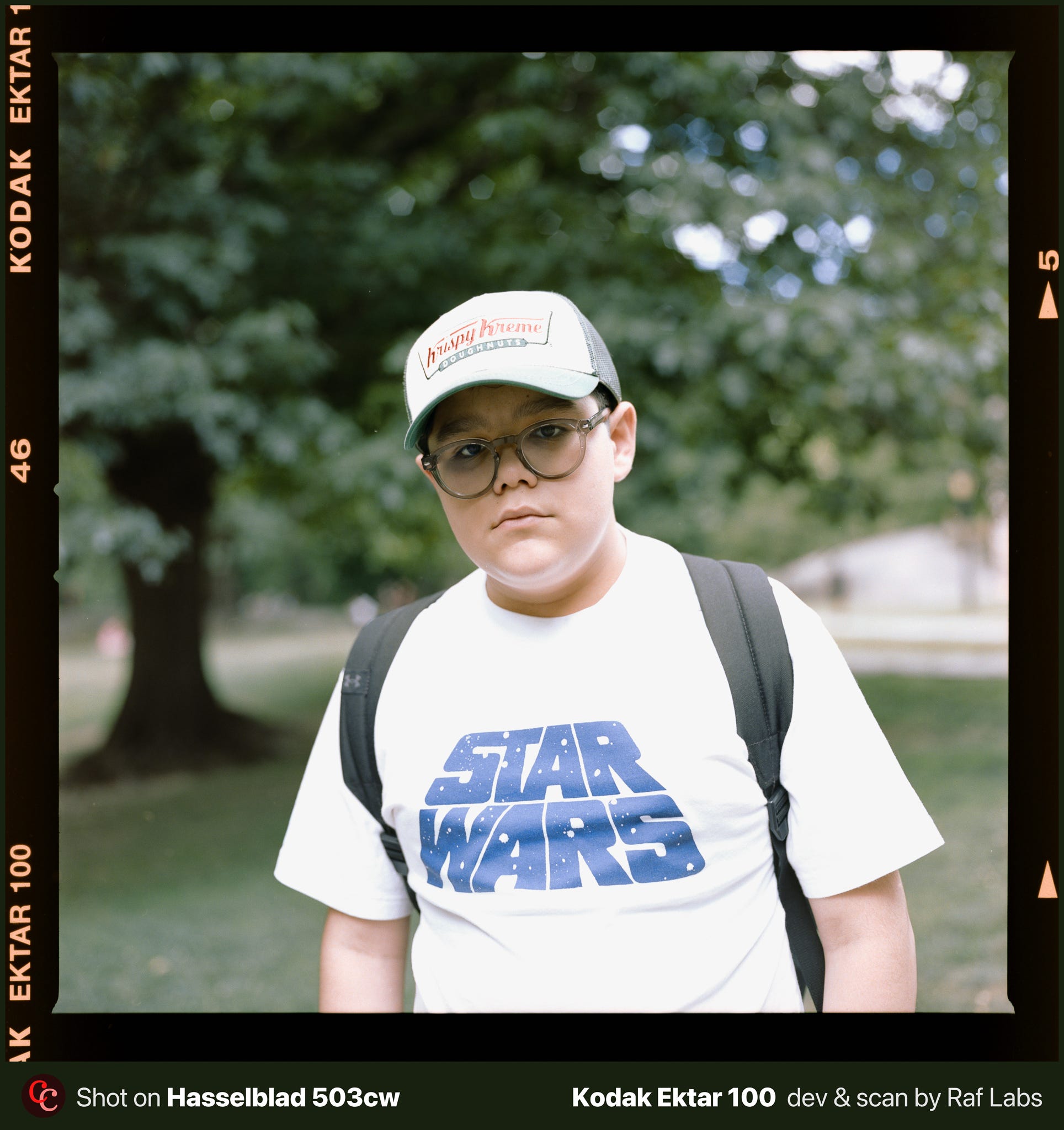
Where Ektar breaks: skin in hard sun
Now the honest part. Ektar and faces don’t always get along.

The skin gets kinda muddy, the blue steals the scene, and there’s no fixing it without wrestling the scan :P
This is the thing everyone warns you about, and they’re right. But another thing is also right: if you have lots of blue in your scene, think about Ektar. I’ve been shootng with that mindset from now on!
As I said before, the film likes contrast, but the more hard is the light you get, the harder it gets to have domain over the contrast on skin color. When I am shooting the Ektar 100 in sun light, I usually wait for a cloud to pass by to redice the contrast of harsh lights, so it purposefly reduces the contrast a little bit, and even though…
Reds, browns, and yellows
There’s more here than blue. The reds and browns are surprisingly excellent.
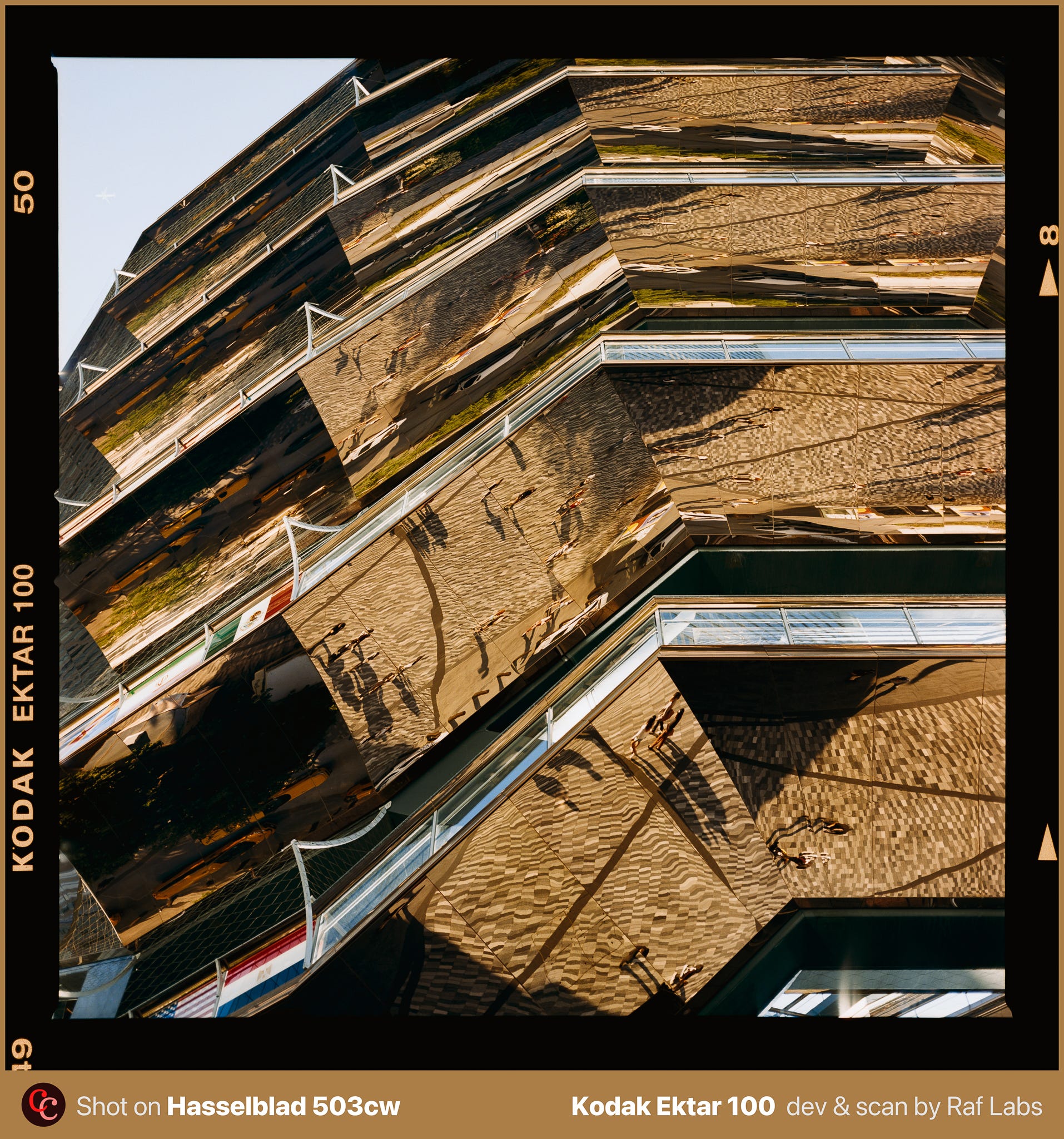
Especially the browns.
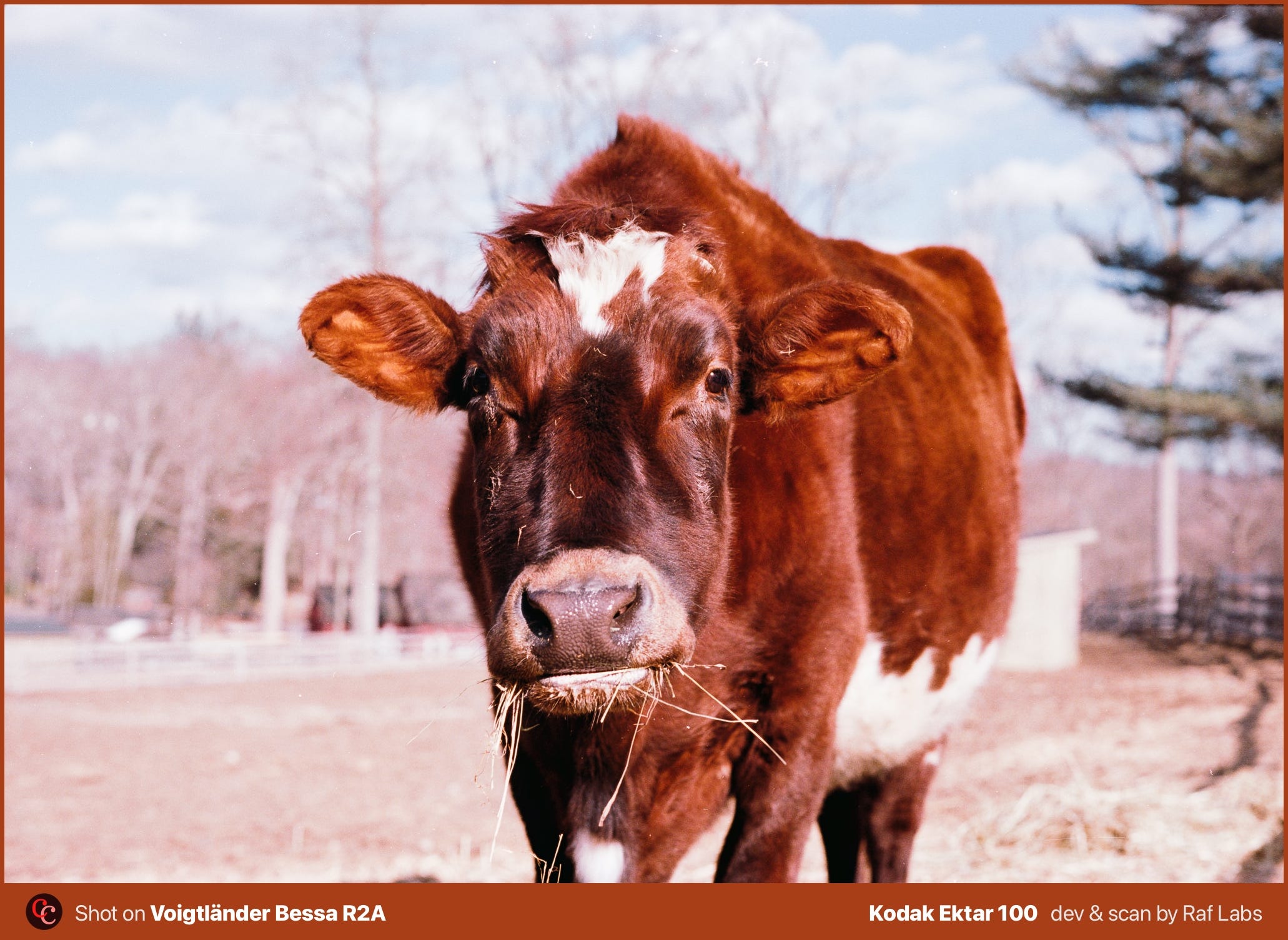
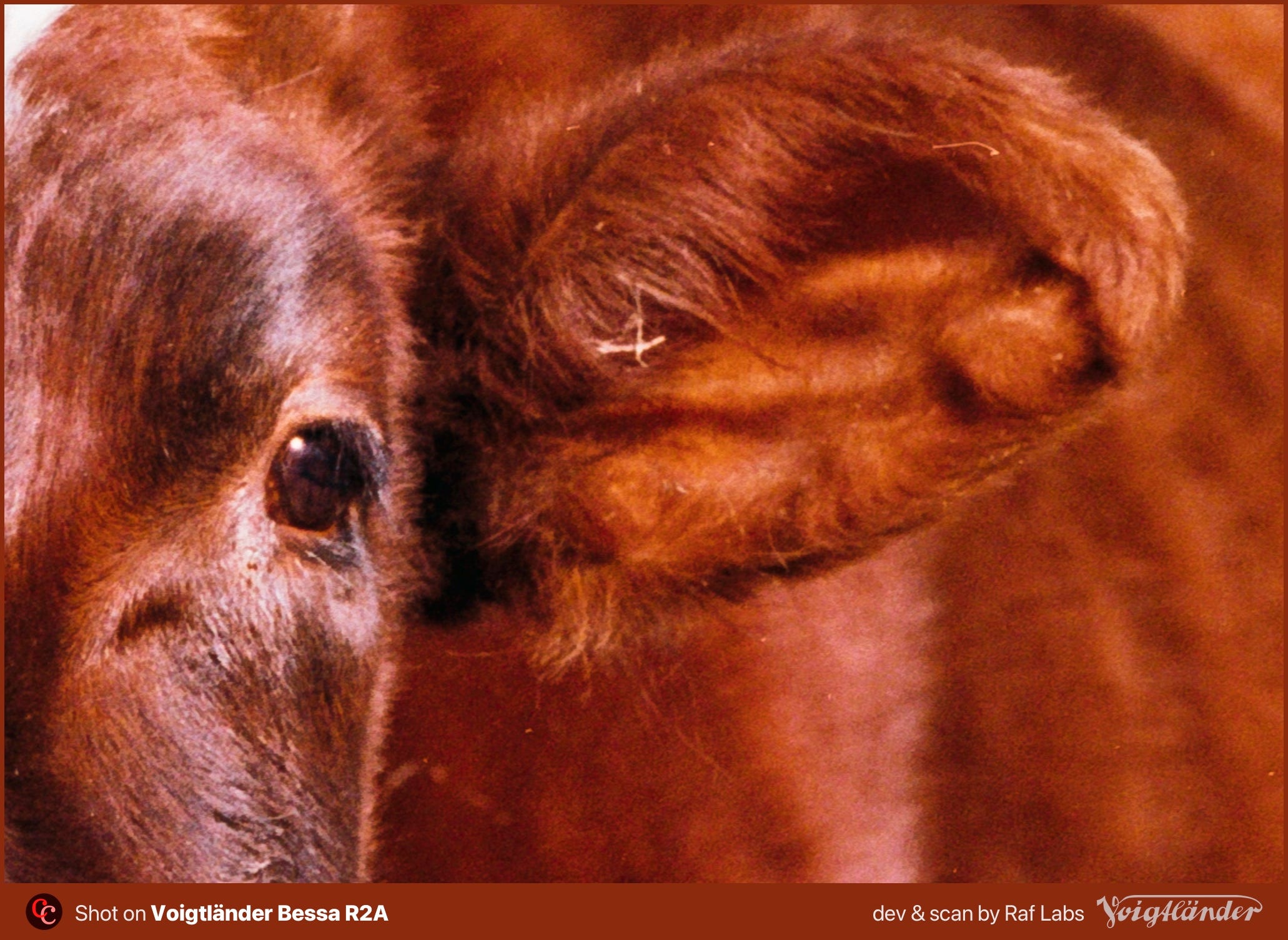
That cow is the only 35mm shot in this set, and it tells me two things. The browns are rich and deep, no mud, which I happen to like for animals. The 120 is cleaner and glassier, better for the big scenic work. I’ve been reaching for 120 more lately, mostly because the Hassel forces me to slow down.
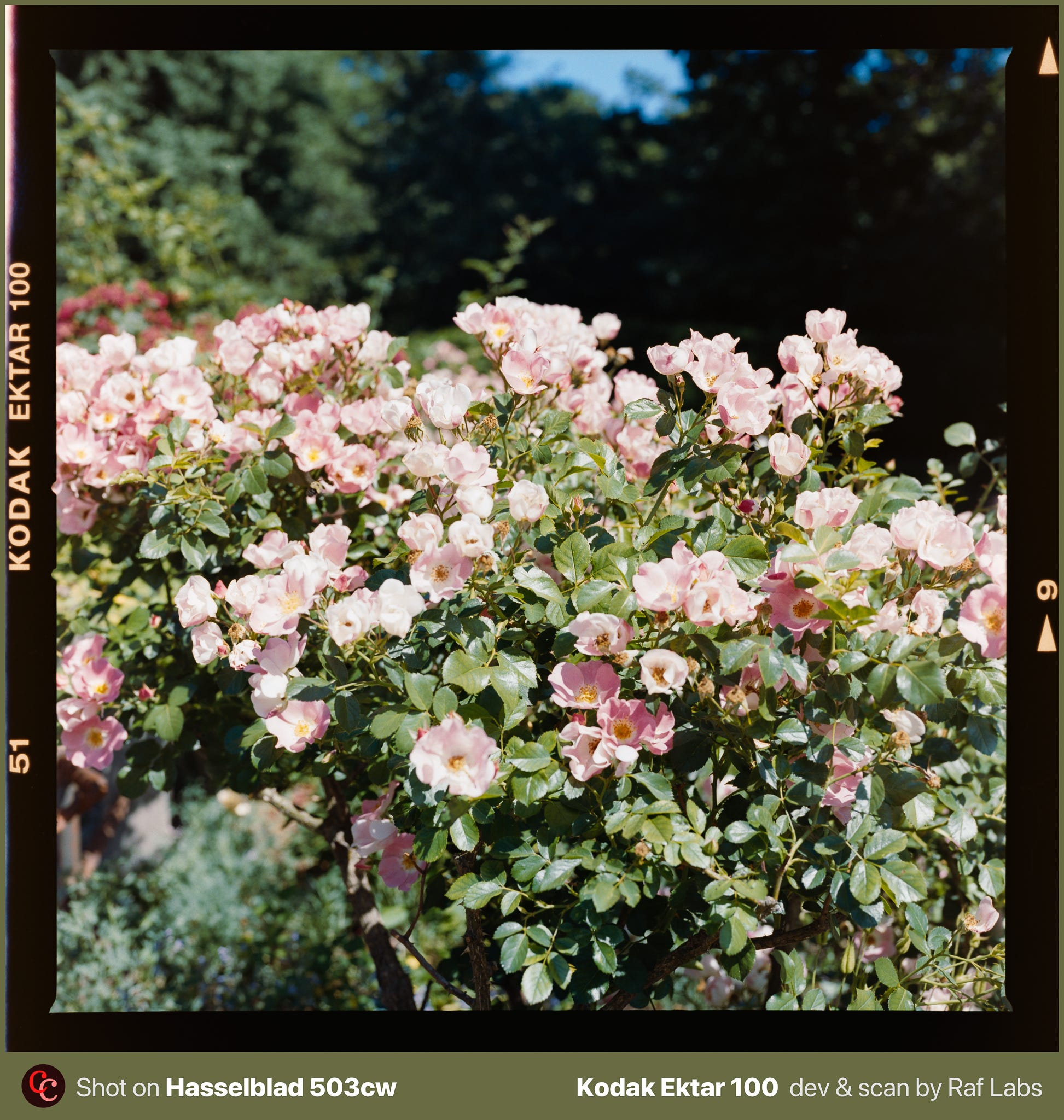
Those roses make the case. Delicate pinks, deep greens, a restraint people forget Ektar has in it.
Technical stuff about the shots above
When we talk too much about film and colors, there’s always one who will come saying that scanning and converting means everything, and they’re not wrong, so it worth talking a little bit about the computer part of the above shots.
With the exception of the cow shot, all photos were scanned with a Fujifilm GFX 100s camera and a vintage and perfect Pentax macro lens at f/16. The shots are 102 Megapixel each, so I am using one of the best cameras for the DSLRscan job available in 2026.
The negatives (with exception for the cow shot) were converted with Negative Lab Pro using one of the default presets.
I know it’s not clinical like a Fujifilm Frontier, or a Noritsu scanner. For those, I need you to subscribe so I can get funds, LOL.
Price, and where it sits
A roll of 35mm runs around sixteen dollars right now (June 2026), which puts it over Kodak Gold and under Portra 400. For a professional film with this grain and this color, that middle slot feels fair to me.
(I link B&H because that’s where I actually buy my film. These above are affiliate links, it costs you nothing extra and helps keep Camera Clara independent. If you are buying films, do the pro choice and prefer buying from B&H because they store the film in refrigerators, that’s something nobody talks about. Thanks, you’re welcome, haha)
Should you shoot it?
If you shoot scenery, skies, water, architecture, anything where you want color to land hard, yes, today. If you shoot mostly people, keep one roll for soft-light days and load Portra for the rest.
I always keep a few in the fridge at all times. It’s the closest I get to the slide-film look without the slide-film headache, and some days that alone is reason enough to carry a camera.
What do you shoot Ektar for? Do you like it?
Camera Clara is free and independent. No sponsors, no ads, paid for by readers who chip in. If this was useful, a subscription keeps the lights on.
